|
| | |
U.S.-China-Russia Summit Reshapes East Asian Landscape
|
|
|---|
|
|
|
|
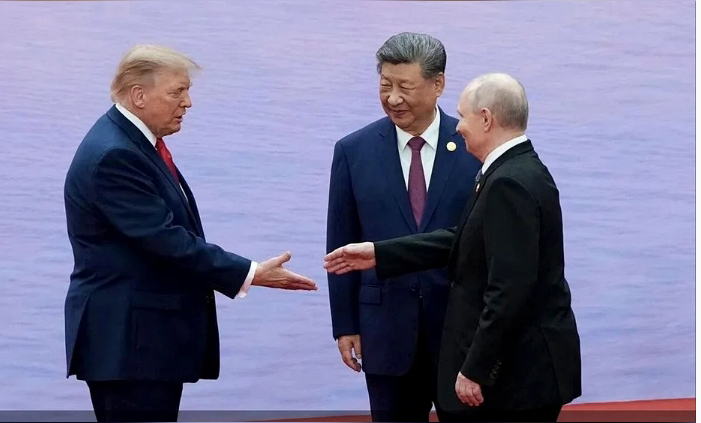
The U.S.-China-Russia summit highlights an emerging U.S.-China G2 dynamic, raising concerns that the Taiwan Strait and the broader East Asian order could increasingly be shaped by the two major powers. |
|
|---|
|
G2 Emerges: Who Will Determine Taiwan's Security?
The leaders of the United States, China, and Russia held their first trilateral talks at the Asia-Pacific Economic Cooperation (APEC) summit in Shenzhen, discussing nuclear arms control, the war in Ukraine, and international security issues. Following the meeting, they issued a “peace declaration.” Many countries are concerned about the systemic implications of "joint governance by three powers" and the reemergence of a "secret Yalta agreement."
|
|
|---|
|
Chinese President Xi Jinping’s dual-track approach of combining incentives and pressure towards Taiwan is accelerating efforts towards unification, posing challenges to the continued maintenance of the cross-strait status quo. |
|
|---|
|
Xi's "Velvet Glove and Iron Fist" Approach to Advance Unification, Challenge Cross-Strait Status Quo
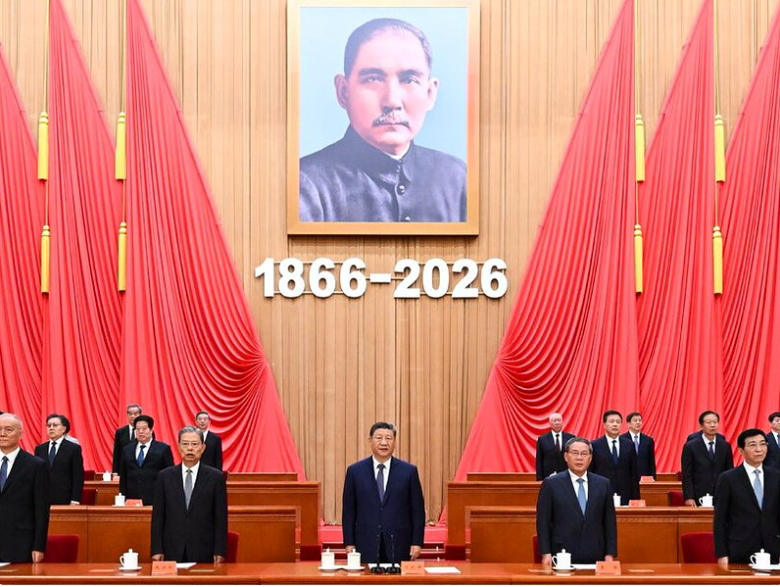
Former U.S. President Theodore Roosevelt's "Big Stick Diplomacy" is associated with the famous saying, "Speak softly and carry a big stick." The latest message on Taiwan policy conveyed by Chinese President Xi Jinping in his November 12 speech commemorating the 160th anniversary of Sun Yat-sen's birth carried a similar tone.
|
|
|---|
|
The influence of the so-called “Yang wave” is spreading across Taiwan, with scholars expressing concerns about its potential impact on cross-strait relations on Taiwan’s security |
|
|---|
|
"Yang Wave" Gains Momentum, Adding Uncertainty to Taiwan's Security Outlook in 2028
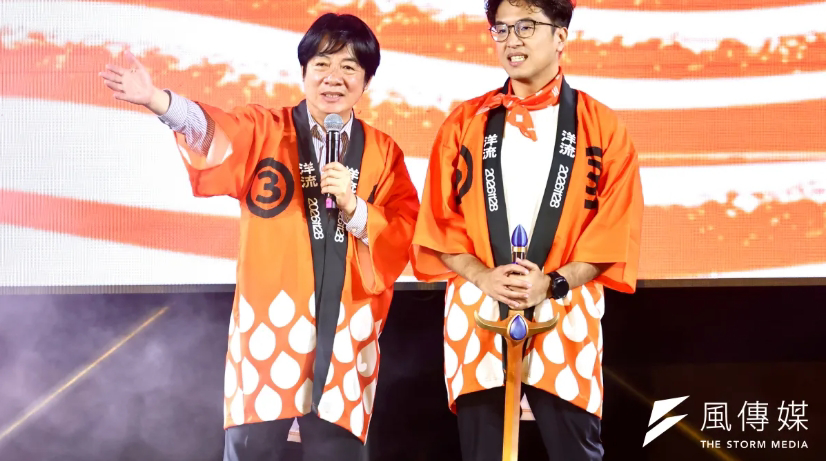
Although Taiwan's democracy should not be subject to external interference, the results of any election in Taiwan will undoubtedly attract the attention and scrutiny of Chinese Communist authorities. This is especially true of the current mayoral election in Taiwan's capital, in which the Democratic Progressive Party (DPP) has nominated Taipei mayoral candidate Shen Po-yang, known to have a strong conviction for Taiwan independence.
|
|
|---|
|
A coalition of 280 representatives from industry, government, and academia has jointly endorsed a cross-strait peace initiative, calling for the restoration of dialogue and promotion of political consultations. |
|
|---|
|
November 13:
The Taiwan Semiconductor Manufacturing Company (TSMC) will establish a new US$500 million venture capital fund to support startups that could become the next NVIDIA or Broadcom. The fund may also invest in suppliers and upstream partners within the semiconductor ecosystem. |
|
|---|
|
November 17:
On the eve of the Asia-Pacific Economic Cooperation (APEC) summit, Russian military aircraft were detected operating in the airspace surrounding South Korea, Japan, and Taiwan. The Ministry of National Defense (MND) confirmed that two Russian military aircraft entered Taiwan’s Air Defense Identification Zone (ADIZ) from the northeast in the early morning and transited through airspace east of Taiwan. The MND condemned the incursion. |
|
|---|
|
November 17:
The United States Senate Appropriations Committee released draft defense and foreign operations appropriations bills for fiscal year 2027. In addition to allocating $1 billion in assistance for Taiwan and the Philippines, the bills also criticized the Pentagon for delays in providing military assistance to Taiwan. |
|
|---|
|
November 18:
At NVIDIA’s earnings conference call, acting CEO Colette Kress revealed that senior executives from TSMC visited NVIDIA in person this week to express their full support for the company. She also specifically mentioned several Taiwanese firms, including Hon Hai (Foxconn) and Siliconware Precision Industries (SPIL), noting that they would accelerate capacity in the future. |
|
|---|
|
November 18:
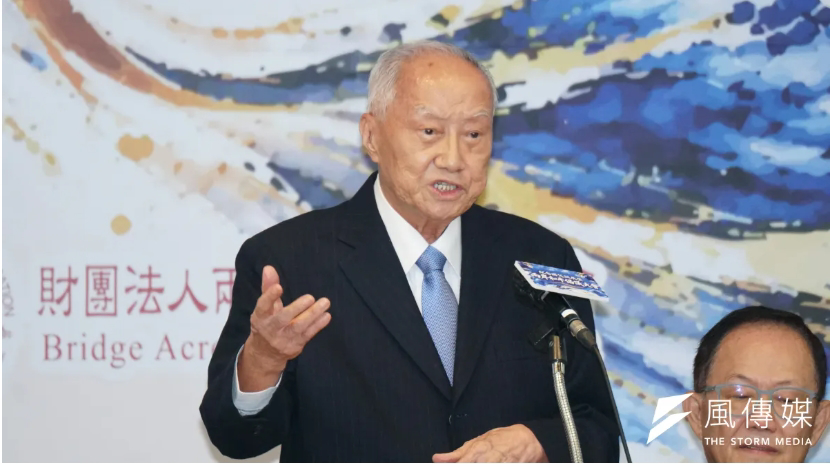
Approximately 280 representatives from industry, government, and academia jointly launched a “Cross-Strait Peace Initiative.” The initiative advocates prioritizing peace, restoring dialogue, deepening cooperation, and facing reality pragmatically in order to create conditions for eventual cross-strait political negotiations.
|
|
|---|
|
November 19:
Chinese President Xi Jinping and President Donald Trump of the United States met for the third time this year. Xi stated that on Taiwan, the United States should do the right thing and avoid causing major disruptions in U.S.-China relations. According to Beijing’s official Xinhua News Agency, Trump stated that the United States does not support “Taiwan independence.” The Mainland Affairs Council stated that its fact-check found the report to be inaccurate. |
|
|---|
|
November 20:
A loss of investor confidence in AI-related stocks triggered panic selling in Taiwan’s stock market. Despite market stabilization efforts by the National Financial Stabilization Fund and strengthened short-selling restrictions imposed by the Financial Supervisory Commission, the decline continued. On November 16, the Taiwan Stock Exchange Capitalization Weighted Stock Index (TAIEX) plunged 2,635 points, making the second-largest single-day drop in history. By November 20, the index had fallen below the 37,000-point threshold, reaching its lowest level in more than seven months. |
|
|---|
|
November 20:
The Legislative Yuan passed, on third reading, a special bill proposed by the Kuomintang (KMT) to distribute NT$20,000 (about US$606) in cash to every citizen. In a rare move, the Taiwan People’s Party (TPP) caucus voted against the measure, exposing divisions within the opposition camp. However, because not all Democratic Progressive Party (DPP) legislators cast their votes, the KMT was able to secure passage of the bill on its own. |
|
|---|
|
|
|
|---|
|
| |
|
| |
|
|