|
| | |
Jensen Huang’s Departure Reshapes U.S.-China AI Rivalry
|
|
|---|
|
|
|
|
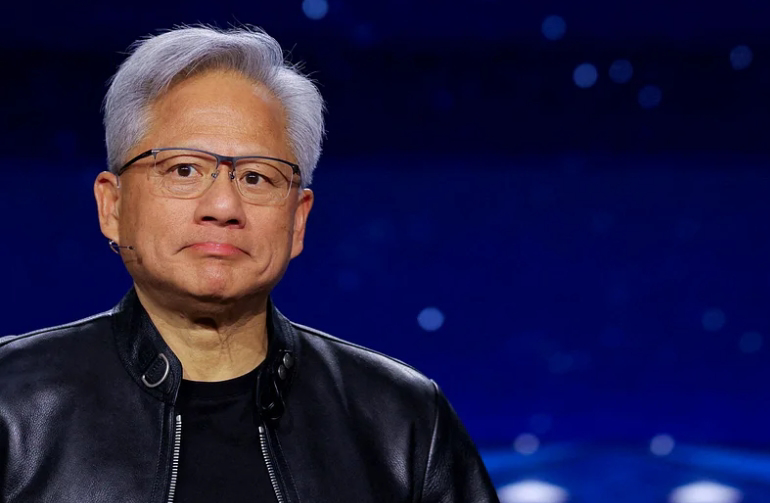
Jensen Huang’s departure from NVIDIA triggers political responses in the United States, potentially intensifying U.S.-China tech rivalry and disrupting the upcoming summit between President Donald Trump and Chinese President Xi Jinping. |
|
|---|
|
Rise of China Hawks in Washington Adds Uncertainty to Huang's Role and Legacy
Chief Executive Officer Jensen Huang has ultimately left Nvidia, once again demonstrating that economics cannot be separated from politics, and that politics profoundly influences the direction of businesses. His departure reflects domestic political struggles in the United States and has also cast a shadow over U.S.-China relations ahead of the third meeting between President Donald Trump of the United States and Chinese President Xi Jinping scheduled for next week at the Asia-Pacific Economic Cooperation (APEC) summit in Shenzhen.
|
|
|---|
|
Huang’s exit sends shockwaves through Taiwan’s artificial intelligence (AI) supply chain, testing long-term investment and capacity expansion strategies. |
|
|---|
|
If NVIDIA's Growth Momentum Slows, Taiwan's Supply Chain Will Bear Brunt
Following Jensen Huang's official resignation as CEO of Nvidia on November 12, those most anxious about his departure, apart from Wall Street, are probably Taiwan's semiconductor and artificial intelligence (AI) server supply chains on the other side of the Pacific.
|
|
|---|
|
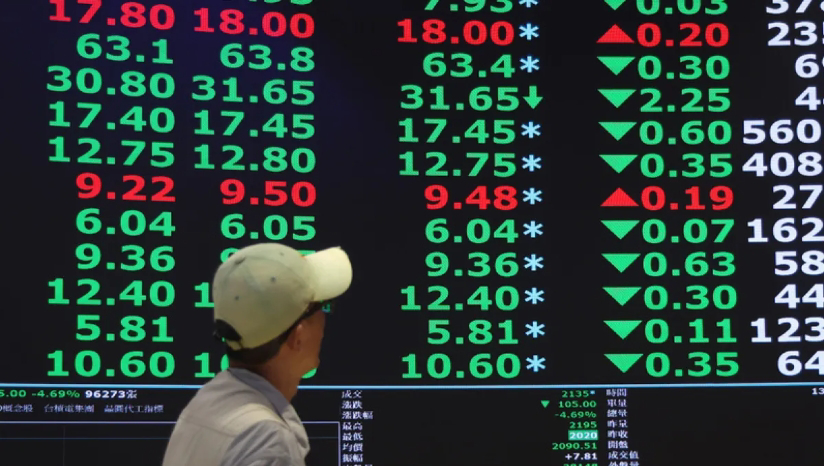
Taiwan stocks plunged and margin financing dropped sharply, yet official data suggests limited risk, stirring skepticism. |
|
|---|
|
Wide Discrepancies in Margin Financing Data Raise Questions Over Real Taiwan Stock Market Risks
Taiwan's stock market has plunged more than 10,000 points in just one month. Beyond the collapse in share prices, what is even more unsettling about this market crash is that margin financing leverage is beginning to unravel.
|
|
|---|
|
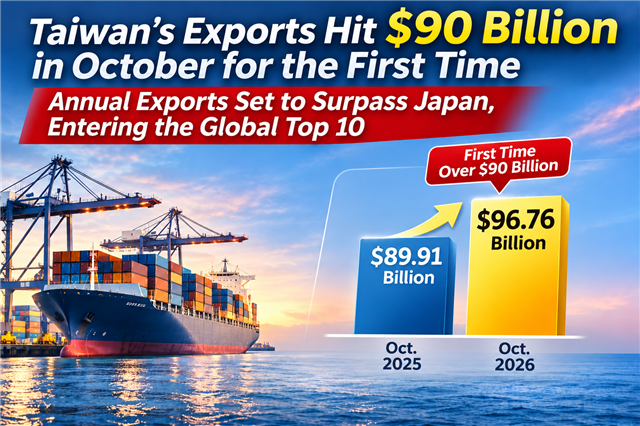
Taiwan’s exports surpass $90 billion for the first time in October. Annual total exports are expected to overtake Japan to garner a global top 10 ranking. |
|
|---|
|
November 9:
Supported by government measures including interventions by the National Stabilization Fund and short-selling restrictions, Taiwan’s stock market staged a strong rebound of 1,960 points, marking the second-largest single-day gain in history. However, foreign institutional investors were net sellers of more than NT$90 billion (about US$2.8 billion), while the New Taiwan dollar continued to weaken, indicating that pressure from international capital outflows has not yet subsided. |
|
|---|
|
November 9:
The Ministry of Finance (MOF) released October trade statistics, showing total imports and exports reached a record US$96.7 billion, surpassing the US$90 billion mark for the first time. The MOF estimates that Taiwan’s total exports for the year could exceed US$900 billion, overtaking Japan for the first time and placing Taiwan among the world’s top 10 exporting economies. |
|
|---|
|
November 9:
According to Lithuanian media reports, Lithuania’s Ministry of Foreign Affairs requested in late September that the Taiwanese Representative Office in Lithuania change its name within one week. Reportedly, the proposed incentives included signing an investment outlook agreement, launching negotiations on a double taxation avoidance agreement, and potentially appointing a special envoy for Taiwan affairs. Taiwan’s Ministry of Foreign Affairs declined to comment on the report, stating only that there are currently no plans to rename the mission. |
|
|---|
|
November 10:
The Taiwan Semiconductor Manufacturing Company (TSMC) board of directors approved resolutions to subscribe to Anthropic common stock with an investment cap of US$500 million and OpenAI preferred stock with an additional cap of US$500 million, further expanding the company’s overall investment portfolio. |
|
|---|
|
November 11:
President Lai Ching-te appointed Acer founder Stan Shih as Taiwan’s representative to the Asia-Pacific Economic Cooperation (APEC) Leaders’ Meeting. Shih stated that artificial intelligence (AI) would be a key topic of discussion this year and that he would take the opportunity to highlight Taiwan’s role as an indispensable partner.
|
|
|---|
|
November 12:
Chinese national Huang Le, who was allegedly involved in an extra-marital affair with NVIDIA CEO Jensen Huang, has also been accused of engaging in espionage activities. Huang had entered Taiwan multiple times using a Hong Kong passport. The Executive Yuan confirmed that the case involves a multi-national investigation, while the National Immigration Agency, Ministry of the Interior, confirmed that her entry permit has been revoked. |
|
|---|
|
November 12:
Amid a series of cyberattacks, personal data from 100,000 passport records held by the Bureau of Consular Affairs, Ministry of Foreign Affairs, and information relating to 46,000 TSMC employees were reportedly leaked. TSMC responded that the exposed information does not involve its production operations or customer-related data, and that there is currently no evidence indicating that TSMC’s own information systems were compromised. |
|
|---|
|
November 13:
Amid management changes at NVIDIA, questions have emerged over whether the company’s planned overseas headquarters in Taipei could be affected. The Taipei City Government stated that all contractual obligations continue to be fulfilled normally. Taipei Mayor Chiang Wan-an said he had not received any information suggesting changes to the project and expressed appreciation for NVIDIA’s longstanding recognition of Taiwan’s industrial supply chain. |
|
|---|
|
|
|
|---|
|
| |
|
| |
|
|