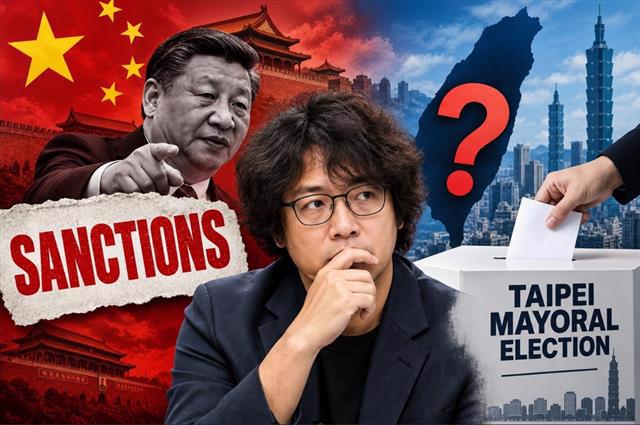
Is Communist China's sanction of Shen Po-yang intended to oppose Taiwan independence or interfere in the election? A Commentator question whether there is sufficient evidence. |
|
|---|
|
Election Interference Allegations Reflect Misjudgment of Cross-Strait Crisis
Democratic Progressive Party (DPP) Taipei mayoral candidate Shen Po-yang has accused China of engaging in "targeted election interference." At the Legislative Yuan, Director-General Tsai Ming-yen of the National Security Bureau (NSB) identified six methods of election interference employed by Communist China, attempting to link Beijing's sanctions against Mr. Shen to the election. However, is there sufficient factual evidence to substantiate Shen's accusations and the NSB's supporting claims? More fundamentally, while the mainland’s opposition to Shen is an established fact, when viewed in the broader context of mainland China's opposition to Taiwan independence, does the allegation of targeted election interference obscure the essence of cross-strait tensions and lead to a misjudgment of the real risks in cross-strait relations?
|
|
|---|
|
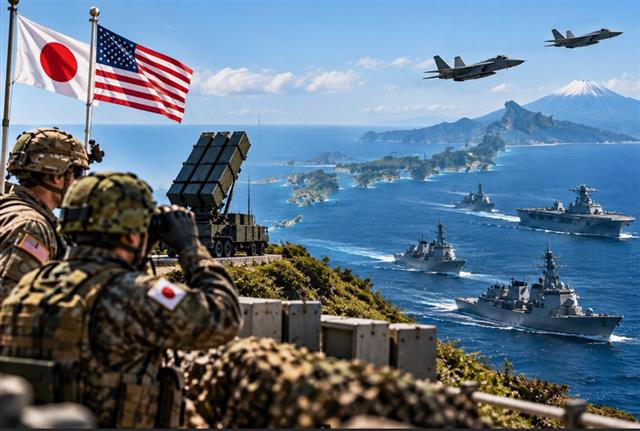
Eighty (80) percent of Japanese opposes sending troops to aid Taiwan. U.S.–Japan joint military exercises focus primarily on defending Japan. |
|
|---|
|
U.S.-Japan Joint Military Exercises Undermine Notion of "Taiwan Contingency"
A nationwide survey released by Japan's Public Interest News Foundation found that although nearly 70 percent of Japanese support explicitly recognizing the Self-Defense Forces in the Constitution, as many as 80 percent oppose deploying troops to provide support in the event of a "Taiwan contingency." Meanwhile, the proportion of respondents who view the United States as a "threat to world peace" has risen sharply, reflecting deep concerns among the Japanese public about global instability. Only 9.9 percent support "coordinating with U.S. forces," demonstrating the Japanese public's strong desire to avoid becoming involved in armed conflicts abroad.
|
|
|---|
|
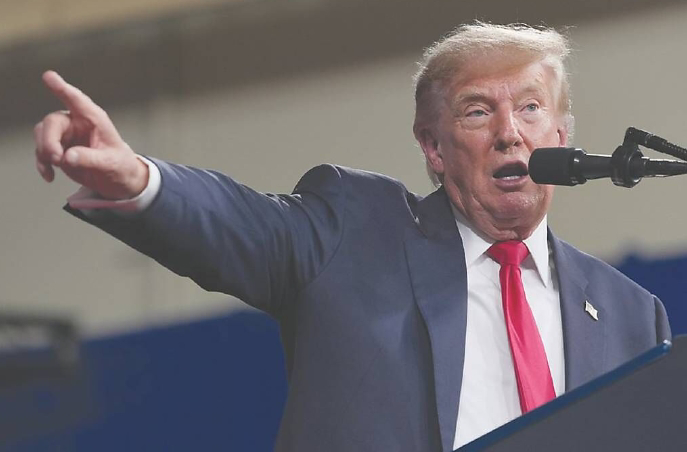
The midterm elections in the United States may not ease economic and trade pressure on Taiwan; Taiwan must respond cautiously. |
|
|---|
|
Impact of U.S. Midterm Elections on Taiwan's Economy
The United States is approaching its midterm elections, with multiple forecasts and opinion polls indicating that the Republican Party faces a serious challenge in defending its majority in the House of Representatives.
|
|
|---|
|
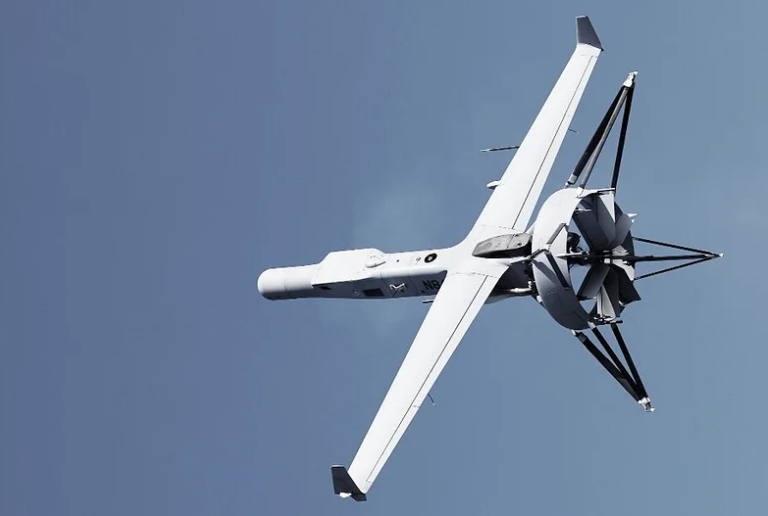
The Coast Guard Administration, Ocean Affairs Council, and Navy plan to procure 292 V-BAT drones, at a scale comparable to that of the U.S. military. |
|
|---|
|
October 23:
The Department of Statistics, Ministry of Economic Affairs, announced that the industrial production index for the first three quarters reached 133.1, the highest level in history. The agency remains optimistic that strong demand for AI applications will continue, projecting annual industrial production growth of 22 percent, marking the strongest expansion momentum in the past 16 years. |
|
|---|
|
October 25:
Since the outbreak of the Russia-Ukraine war, airlines have generally avoided Russian airspace. However, both China Airlines and EVA Air have now resumed using routes through Russian airspace. The Ministry of Foreign Affairs (MOFA) declined to comment on the matter, while reiterating the government’s opposition to military aggression. |
|
|---|
|
October 27:
The United Daily News reported that the Coast Guard Administration, Ocean Affairs Council, procured 12 V-BAT military vertical takeoff and landing (VTOL) drones for deployment on key patrol vessels. The Navy is also preparing to purchase 280 drones, tied to the same V-BAT platform. Other than the United States, Taiwan is expected to become the largest user of the V-BAT system, with a procurement scale comparable to that of the U.S. military. |
|
|---|
|
October 28:
Bloomberg reported that Pakistan, citing adherence to the “One China” policy, denied Taiwanese airlines access to its airspace, making it the first country in the world to take such a measure. After the news became public, Pakistan promptly withdrew the flight ban. MOFA condemned Pakistan for “weaponizing” its airspace.
|
|
|---|
|
October 29:
A personal data leak was reported on the Central Election Commission’s candidate asset declaration website. Investigators found that 32 Internet Protocol (IP) addresses had accessed the system and may have downloaded relevant information. Authorities are currently unable to determine whether the IP addresses originated domestically or overseas, and further investigation is underway. |
|
|---|
|
October 29:
The controversy surrounding artists being pressured to declare their stance on Taiwan independence has once again drawn public attention during the campaign season. In a rare statement, the Mainland Affairs Council stated that “there is no option for Taiwan independence,” emphasizing that the Republic of China is a sovereign state and the real issue is weather it will be forcibly unified by Communist China. |
|
|---|
|
October 29:
General Ronald Clark, Commander of the U.S. Army Pacific, warned that the threat of China acquiring the capability to use force against Taiwan by 2027 remains real, and that the U.S. military is preparing deployments across the Indo-Pacific region. Minister of National Defense Wellington Koo stated that Taiwan’s Armed Forces will closely monitor all developments within the People’s Liberation Army and maintain full combat readiness. |
|
|---|
|
|