|
| | |
Taipei Mayoral Race Emerges As Prelude to
2028 Presidential Election |
|
|---|
|
|
|
|
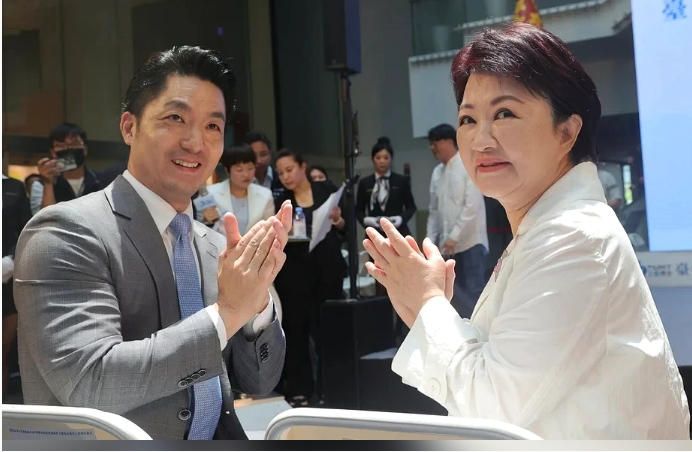
Taichung Mayor Lu Shiow-yen takes charge of Taipei Mayor Chiang Wan-an’s re-election campaign in Taipei, shaping the Kuomintang’s (KMT) strategy for the 2028 presidential election. |
|
|---|
|
Lu Backs Chiang as KMT Moves Early to Consolidate Party
With less than a month before the local elections on November 28, Taichung Mayor Lu Shiow-yen will serve as chair of Taipei Mayor Chiang Wan-an’s campaign headquarters. The fact that a sitting mayor of Taichung is crossing city boundaries to campaign for the mayor of the capital speaks for itself. This is not only a major event in the year-end local elections but is also widely viewed as a prelude to the 2028 presidential election. If Chiang secures re-election, he will not only consolidate the Kuomintang’s (KMT) governing advantage in the capital but also create more political possibilities for the next presidential election.
|
|
|---|
|
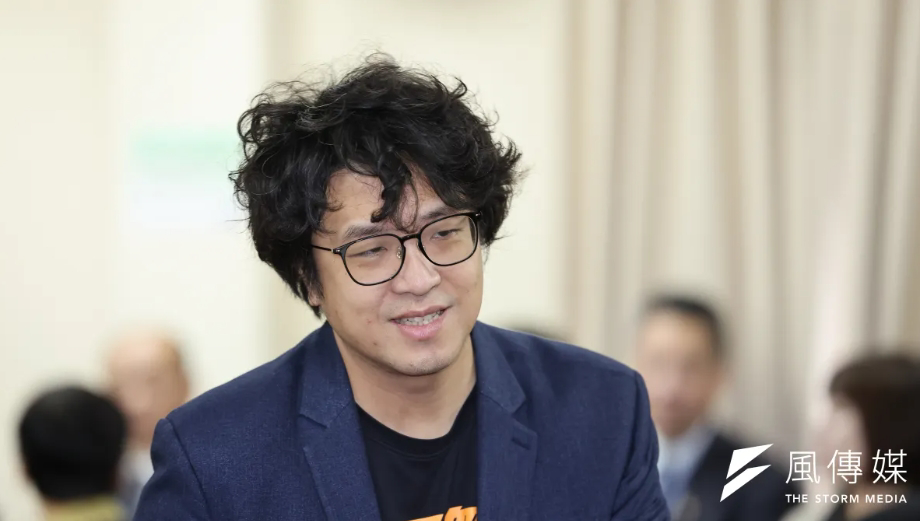
Democratic Progressive Party (DPP) Taipei mayoral candidate Shen Po-yang’s political image has undergone multiple transformations over controversial past remarks and positions. |
|
|---|
|
Three Political Transformations: Who is the Real Shen?
Looking back at Democratic Progressive Party (DPP) Taipei mayoral candidate Shen Po-yang’s public image over the years and compiling it into a single collection inevitably raises a question: Is this the “real Shen” we are seeing now, or a “Shen who has been manufactured”?
|
|
|---|
|
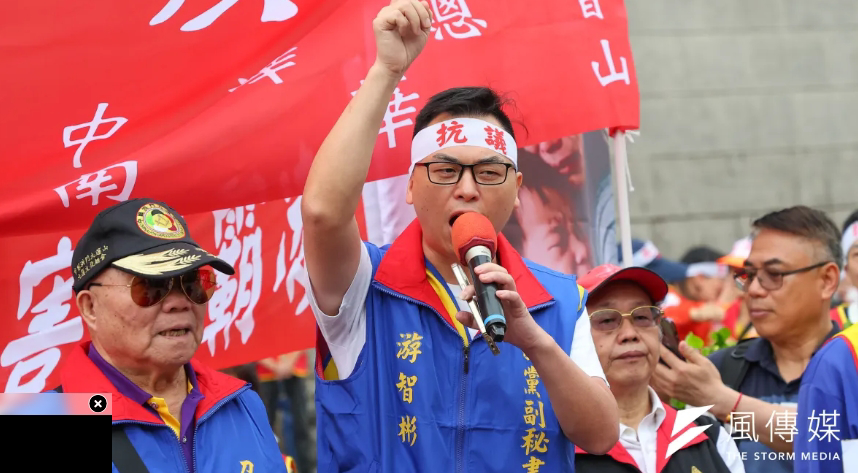
New government rules restrict eligibility of mainland Chinese spouses and Taiwanese citizens born in the mainland to run for political office, drawing criticism for excluding certain groups. |
|
|---|
|
Lai Administration Restricts Political Participation for Children of Mainland Chinese Spouses
In 2025, the National Immigration Agency (NIA), Ministry of the Interior, required approximately 12,000 spouses from mainland China to submit proof that they had relinquished their mainland household registration. More than a year has passed, and developments have gone beyond the original scope of the issue. Those affected are no longer limited to mainland spouses. Moreover, the administrative order has gradually evolved into a system that “punishes those who comply.” The latest cases are Lai Wen-you, the son of Deng Wan-hua, a village chief whose spouse is from the mainland, and Yu Chih-pin, a descendant of Taiwanese nationals who served in the military.
|
|
|---|
|
New U.S. Army operational guidance designates China as its primary adversary. U.S. Forces stationed along the First Island Chain are expected to engage from day one of a conflict. |
|
|---|
|
October 19:
A wave of foreign capital outflows triggered a simultaneous sell-off in Taipei’s stock and foreign exchange markets. The declines only began to ease after Taiwan’s four major government funds and state-owned financial institutions stepped into support the markets. In a rare move, the Central Bank also issued an intra-day statement, saying it would intervene in the market if necessary. |
|
|---|
|
October 19:
According to the Ministry of Economic Affairs, investments in the United States have surged over the past five years, driven by the semiconductor and server industries. Taiwan’s cumulative investment in the United States reached US$30.5 billion, accounting for 20.5 percent of its overseas investment portfolio. The United States has now surpassed the Association of Southeast Asian Nations (ASEAN) as an investment destination and is far ahead of mainland China. |
|
|---|
|
October 21:
Taipei Mayor Chiang Wan-an, who is seeking re-election, announced that Taichung Mayor Lu Shiow-yen will serve as chair of his campaign headquarters. Chiang also stated explicitly that, if re-elected, he intends to serve his full term. Both Chiang and Lu are widely regarded as leading Kuomintang (KMT) contenders for the 2028 presidential election. |
|
|---|
|
October 21:
The United States Army recently released updated operational guidance identifying the People’s Liberation Army (PLA) as its primary strategic focus. The guidance calls for the projection of military power into the First Island Chain and requires forward-deployed forces to be ready to engage in combat on the first day of any Taiwan Strait contingency.
|
|
|---|
|
October 21:
NVIDIA CEO Jensen Huang announced that the company is working with global partners to significantly expand production capacity in order to alleviate bottlenecks in artificial intelligence (AI) infrastructure. Taiwanese firms SPIL, King Yuan Electronis, and Unimicron have secured major agreements covering optical packaging, chip testing, and integrated circuit (IC) substrate manufacturing, effectively locking in substantial Taiwanese production capacity for NVIDIA’s supply chain. |
|
|---|
|
October 21:
Southeast Asian ride-hailing platform Grab’s proposed $600 million acquisition of foodpanda was rejected by the Fair Trade Commission. The regulator cited concerns that Uber’s shareholding in Grab would lead to anti-competitive effects if the trade deal were approved. Grab expressed disappointment with the decision. |
|
|---|
|
October 22:
An analysis by the Korea Trade-Investment Promotion Agency (KOTRA) found that six positions changed among the worlds’ top 10 exporters in the first half of the year, marking the most significant reshuffling since the 2009 global financial crisis. Benefiting from its role in the global AI semiconductor supply chain, Taiwan rose from 11th place last year to sixth place this year. |
|
|---|
|
October 22:
Lai Wen-you, the son of a mainland Chinese spouse in Taiwan, sought election as a village chief but was disqualified for failing to provide proof that he had renounced household registration in the mainland. Lai argued that he had never held household registration there and therefore had nothing to renounce, yet was nevertheless deprived of his right to run for office. This case has stirred controversy over whether restrictions on political participation should extend to the second generation of mainland spouses.
|
|
|---|
|
|
|
|---|
|
| |
|
| |
|
|