|
| | |
Beijing Imposes Sanctions on
Taiwan’s Diplomatic Ally Officials
|
|
|---|
|
|
|
|
Beijing is using “One China” legal warfare to sanction officials from Taiwan’s allies, raising the cost of supporting Taiwan and creating a chilling effect. |
|
|---|
|
Raising Cost of Supporting Taiwan: Beijing Aims to Create Chilling Effect
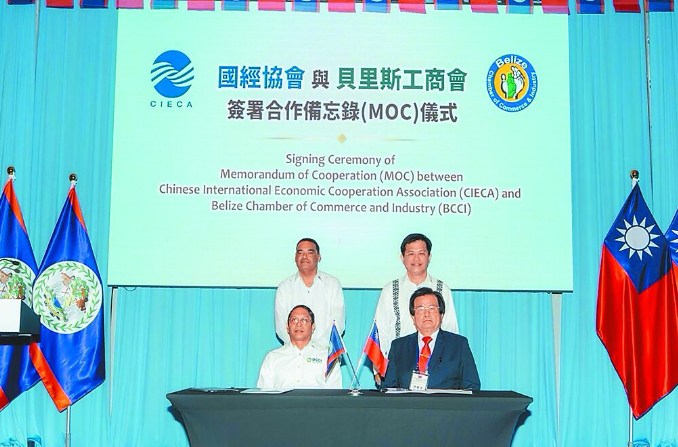
Beijing has conspicuously imposed sanctions on two officials from Belize and Paraguay, both diplomatic allies of Taiwan. Beyond continuing its legal warfare over the “One China” principle in the international arena, Beijing is, more importantly, attempting to shift responsibility for these countries’ diplomatic choices onto “individual politicians.” By doing so, it seeks to portray a small number of political figures as undermining their countries’ national interests, thereby creating internal divisions. For Beijing, the immediate objective may not necessarily be to persuade Taiwan’s diplomatic allies to sever ties with Taipei. As long as it can weaken pro-Taiwan voices among officials in these countries, achieving a short-term “salami-slicing” effect may be even more effective in creating a political chilling effect.
|
|
|---|
|
In a rare move, North Korea criticizes U.S. arms sales to Taiwan in alignment with Beijing. Taiwan becomes entangled in East Asia’s complex chessboard. |
|
|---|
|
In Alignment with China, North Korea Criticizes U.S. Arms Sales to Taiwan
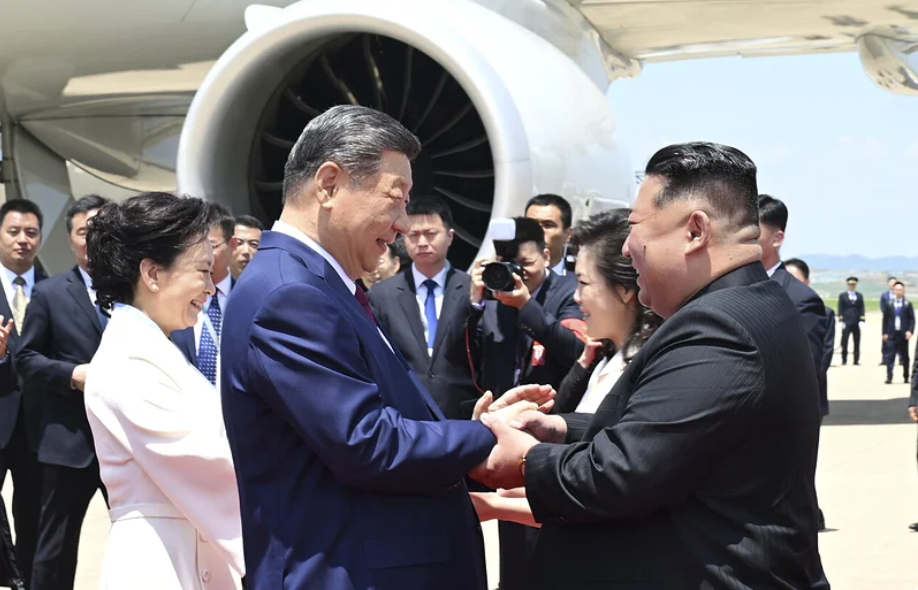
On October 2, the first two F-16V Block 70 fighter jets purchased by Taiwan from the United States arrived in Taiwan. Five days later, North Korea took the unusual step of criticizing U.S. arms sales to Taiwan through its state-run Korean Central News Agency (KCNA), citing an expert who accused Washington of exacerbating regional tensions. This statement clearly echoed Beijing's position. At a time when China and North Korea are supporting each other, Russia-North Korea relations are deepening, and President Donald Trump of the United States is hoping to meet North Korean leader Kim Jong Un again, Taiwan has also found itself drawn into an increasingly complex geopolitical landscape in East Asia.
|
|
|---|
|
The United States is adjusting its military strategy. Experts warn that if war breaks out in the Taiwan Strait, Taiwan must first withstand the conflict on its own. |
|
|---|
|
U.S. Marine Corps Shifts to Defensive Posture: Taiwan Must Resist PLA on its Own
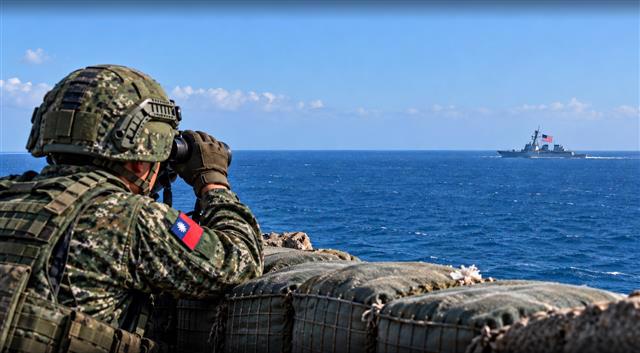
An article published in The National Interest reported that the U.S. military plans to deploy anti-ship and air defense missile systems on Yonaguni Island. According to Taiwanese experts, the move is part of the U.S. Marine Corps' transformation, shifting its focus from amphibious landing operations to defensive firepower aimed at slowing large-scale breakthroughs by China's People's Liberation Army (PLA) beyond the First Island Chain. This also means that, should war break out across the Taiwan Strait, Taiwan would have to withstand PLA attacks on its own for a prolonged period. In the initial stages of a conflict, American assistance would likely be limited to intelligence support and long-range strikes. The main U.S. forces would not approach the Taiwan Strait until the PLA had been substantially weakened.
|
|
|---|
|
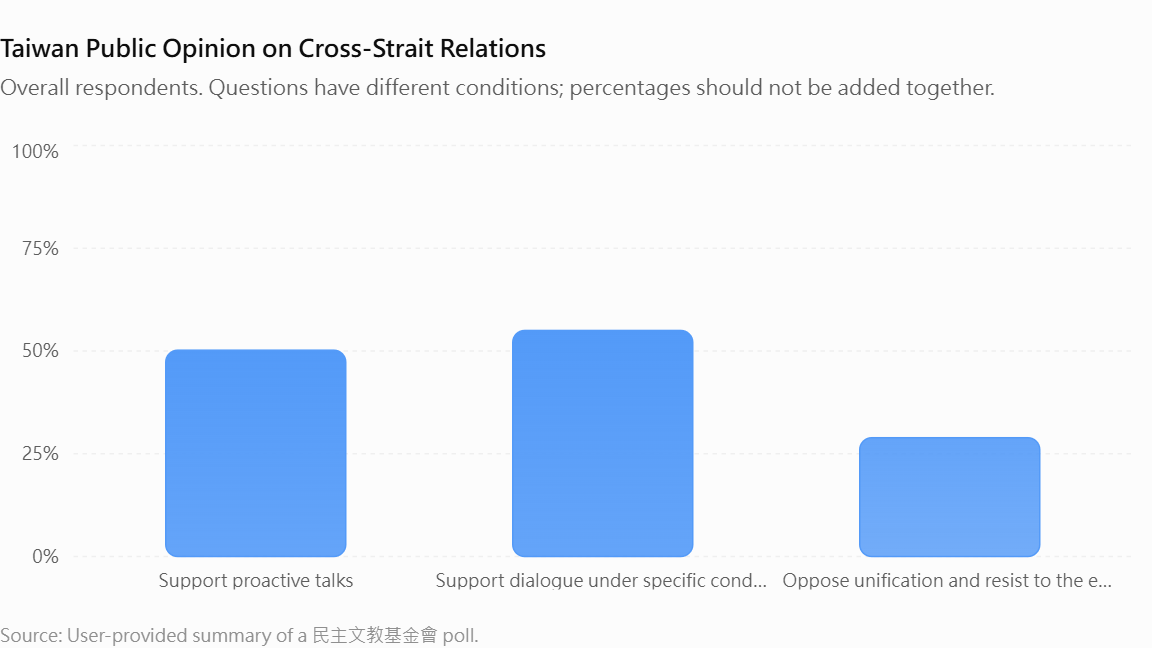
According to a poll, 50 percent support proactive cross-strait negotiations, while 60 percent of young people believe that Taiwan cannot rely solely upon the United States. |
|
|---|
|
October 10:
The United States International Trade Commission announced a Section 337 investigation into certain vertical power supply systems and related computing equipment. Taiwanese companies including Hon Hai (Foxconn), Delta Electronics, and Quanta are among the subjects of the investigation. |
|
|---|
|
October 11:
On the National Day of the Republic of China, mainland China’s safety administrations issued navigation warnings indicating that starting on October 12, at least five military operations will be conducted in surrounding waters, covering the Bohai Sea, Yellow Sea, East China Sea, and South China Sea. |
|
|---|
|
October 11:
The Japan Press Research Institute released a new poll showing that 76.7 percent of respondents feel a sense of crisis over a “Taiwan contingency”; however, as many as 83.1 percent oppose the Self-Defense Forces engaging in combat for this reason. |
|
|---|
|
October 12:
Mainland China announced sanctions against two officials from Paraguay and Belize, labeling them “anti-China politicians.” This marks the first time that Beijing has directly sanctioned sitting minister-level officials of Taiwan’s diplomatic allies, carrying a strong warning signal.
|
|
|---|
|
October 12:
According to a poll on cross-strait relations published by the Democracy Foundation, 50.2 percent support proactive negotiations to avoid Taiwan’s becoming a bargaining chip in great-power interests; 55 percent support opening dialogue under certain conditions; only 28.9 percent firmly oppose unification and insist on resistance. Among those in their 20s, as many as 60 percent believe that Taiwan cannot rely solely on the United States and should proactively negotiate. According to a scholar, young people’s attitudes towards cross-strait relations are beginning to shift. |
|
|---|
|
October 13:
Affected by international developments, Taiwan’s stock market plunged nearly 1,000 points. Capital outflows by foreign investors pressured the New Taiwan Dollar, pushing its exchange rate against the U.S. dollar below the NT$32 mark. Trading volume reached US$71.1 billion, surpassing US$70 billion for the first time and setting a record high. |
|
|---|
|
October 15:
While campaigning in Alaska, President Donald Trump of the United States stated that Taiwan has agreed to purchase 30 percent of the natural gas produced by the state’s pipeline project over the next 20 years and will additionally invest US$4.4 billion to ensure the project’s completion. The Ministry of Economic Affairs confirmed that the CPC Corporation has signed a letter of intent. |
|
|---|
|
October 15:
Chairman C. C. Wei of the Taiwan Semiconductor Manufacturing Company (TSMC) confirmed for the first time that a team has been dispatched to Texas to evaluate establishing wafer fab. The company is also in discussions with a client planning to build its own fab (referring to Terafab) about capacity cooperation, although no decision has yet been made regarding investment or operation models.
|
|
|---|
|
October 16:
A mainland Chinese exchange student was deported after the National Immigration Agency (NIA), Ministry of the Interior, revoked his entry permit for posting on TikTok a misaligned photo appearing to pinch President Lai Ching te. The NIA’s action has been questioned as potentially harming freedom of expression.
|
|
|---|
|
|
|
|---|
|
| |
|
| |
|
|