|
| | |
Beijing Links Opposition to Taiwan Independence with U.S.-China Strategic Cooperation, Adding Another Lever for Cross-Strait Unification |
|
|---|
|
|
|
|
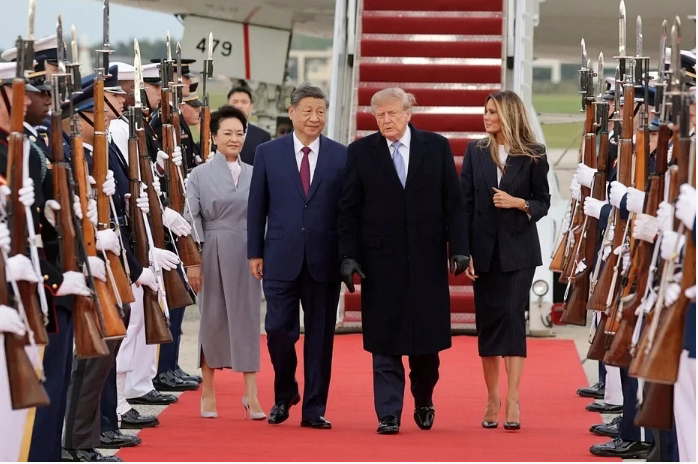
Chinese President Xi Jinping softened his tone on Taiwan, seizing the dilemma facing President Donald Trump to demand the United States oppose independence. |
|
|---|
|
Pressing the Advantage: Xi Spots Trump’s Weak Point
Chinese President Xi Jinping told President Donald Trump at the White House that he hoped the United States would uphold the correct position of opposing “Taiwan independence” and handle the Taiwan issue prudently. Compared with his aggressive warning in Beijing in May, Mr. Xi’s language was less forceful, but his objective was more explicit. Trump is under pressure both at home and abroad, including the midterm elections just over a month away and the Iran war, for which a ceasefire remains nowhere in sight. Yet if he were to make further concessions to Beijing and accept Mr. Xi’s demands, he would also have difficulty answering to the U.S. Congress, leaving him caught in a dilemma.
|
|
|---|
|
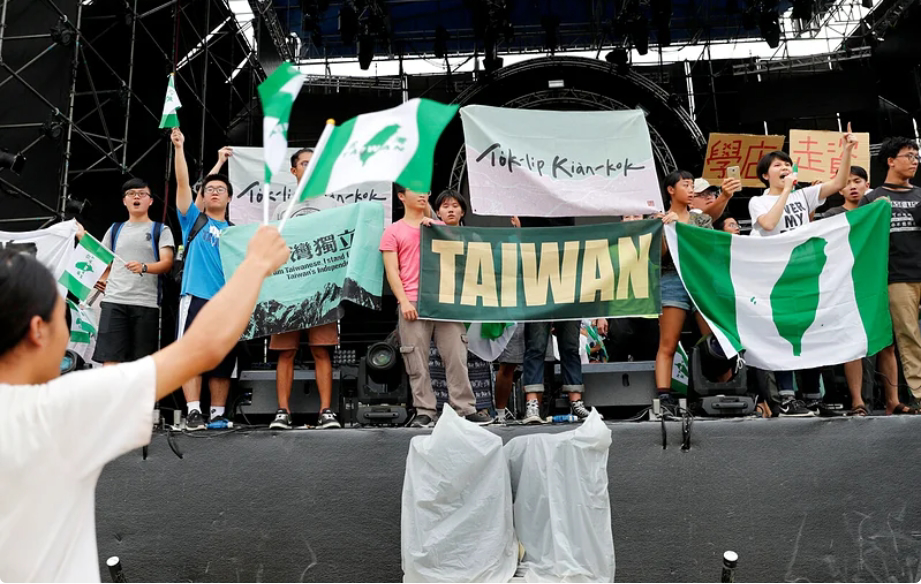
According to a survey on cross-strait relations, pro-independence rose to 32 percent. How can Taiwan survive under U.S.-China rivalry? |
|
|---|
|
What Does the Sharp Rise in Pro-Independence Support in the Annual Cross-Strait Survey Reflect?
On the eve of the second meeting between President Donald Trump of the United States and Chinese President Xi Jinping, the United Daily News released its annual survey on cross-strait relations. The share of respondents advocating independence had risen sharply by 7 percentage points from last year to 32 percent. This is a warning sign for whether cross-strait relations can move toward peace, and it poses a test for how the United States and China handle the Taiwan, as well as how Taiwan responds to changes in the situation.
|
|
|---|
|
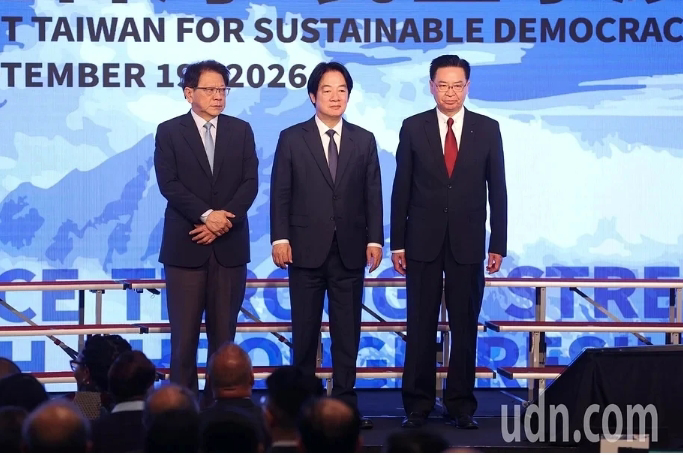
The administration of President Lai Ching-te established the World Disaster Management Alliance, but critics say the initiative is “fake diplomacy, real domestic propaganda.” |
|
|---|
|
Disaster Alliance Formed: Lai Administration Misses the Point Amid Trump-Xi Summit
President Donald Trump of the United States and Chinese President Xi Jinping will hold their second summit of the year on September 24. Amid Mr. Trump's longstanding advocacy of a "grand bargain," considerable attention is being paid to whether Taiwan will become a bargaining chip at the negotiating table. Yet at this moment, the administration of President Lai Ching-te has conspicuously announced the establishment of the World Alliance for Disaster Management (WADM), claiming that it aims to make Taiwan a hub for multinational disaster prevention cooperation. This is nothing more than an attempt to send Washington and Beijing multiple messages that Taiwan "will not give up international participation," with a strong undertone of rivalry.
|
|
|---|
|
U.S.-Japan-South Korea foreign ministers issued a joint statement reiterating importance of cross-strait peace and support for Taiwan’s international participation. |
|
|---|
|
September 18:
The Ministry of Economic Affairs decided to freeze electricity rates until the end of the year. However, due to the global surge in oil prices, the Taiwan Power Company faces renewed losses and will seek an additional budget allocation of NT$71.1 billion (about US$2.2 billion). |
|
|---|
|
September 20:
A United Daily News annual survey on cross-strait relations shows 64 percent of respondents favor not leaning towards either the United States or mainland China. Views are split on whether the United States will continue military aid and arms sales; 44 percent are confident, while 47 percent are not. Some 62 percent support expanding cross-strait people-to-people exchanges. A majority (53 percent) wants Taiwan to maintain the status quo forever; 32 percent favor independence; and 12 percent support unification. |
|
|---|
|
September 21:
Minister of Labor Hung Sun-han attended the Human Resources Development Ministerial Meeting of the Asia-Pacific Economic Cooperation (APEC) without issue. Mainland China followed usual protocol; Hung entered with an invitation letter rather than applying for a “Mainland Travel Permit for Taiwan Residents.” Taiwan was referred to as “Chinese Taipei.” |
|
|---|
|
September 21:
Microsoft Taiwan announced that its local data centers will expand from two to four, and forecast that the shortage of computing power will persist for two to three years.
|
|
|---|
|
September 22:
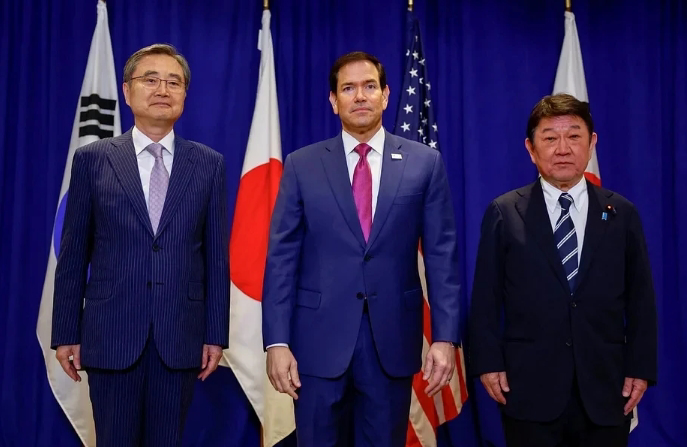
The foreign ministers of the United States, Japan, and South Korea issued a joint statement reiterating the importance of peace and stability in the Taiwan Strait, opposing unilateral changes to the status quo, and supporting Taiwan’s meaningful participation in international organizations. |
|
|---|
|
September 22:
The Ministry of Economic Affairs (MOEA) reported August export orders totaling $102.9 billion, surpassing the $100 billion mark in a single month for the first time. The MOEA projects that annual export orders could reach $1.1 trillion. |
|
|---|
|
September 24:
The Nuclear Safety Commission completed its review of the “Restart Plan” for the Third Nuclear Power Plant, clearing the first hurdle for nuclear power reactivation. Taipower must next submit implementation reports and self-safety inspection results for further review. The earliest possible restart is 2028. |
|
|---|
|
September 24:
According to the Xinhua News Agency, Chinese President Xi Jinping told President Donald Trump of the United States that he hopes Washington will firmly oppose Taiwan independence and handle the Taiwan issue prudently. When asked about arms sales to Taiwan, Secretary of State Marco Rubio stated that the United States must consider global demand, not just Taiwan.
|
|
|---|
|
|
|
|---|
|
| |
|
| |
|
|