NVIDIA lays out a five-layer strategy for artificial intelligence (AI), expanding from graphics processing units (GPUs) into computing infrastructure, with MediaTek as a key partner. |
|
|---|
|
Taiwan Eyes Chance to Join Global Race in System Integration
At the GPU Technology Conference (GTC) this year, Nvidia CEO Jensen Huang proposed the “five-layer cake” theory of artificial intelligence (AI), consisting, from the bottom up, of energy, chips, infrastructure, models, and applications. At the time, it appeared more like an industry framework. Looking back at Nvidia’s recent investments and partnerships, however, these five layers are gradually becoming the actual scope of its strategic expansion. What Huang wants to control is no longer limited to graphics processing units (GPUs).
|
|
|---|
|
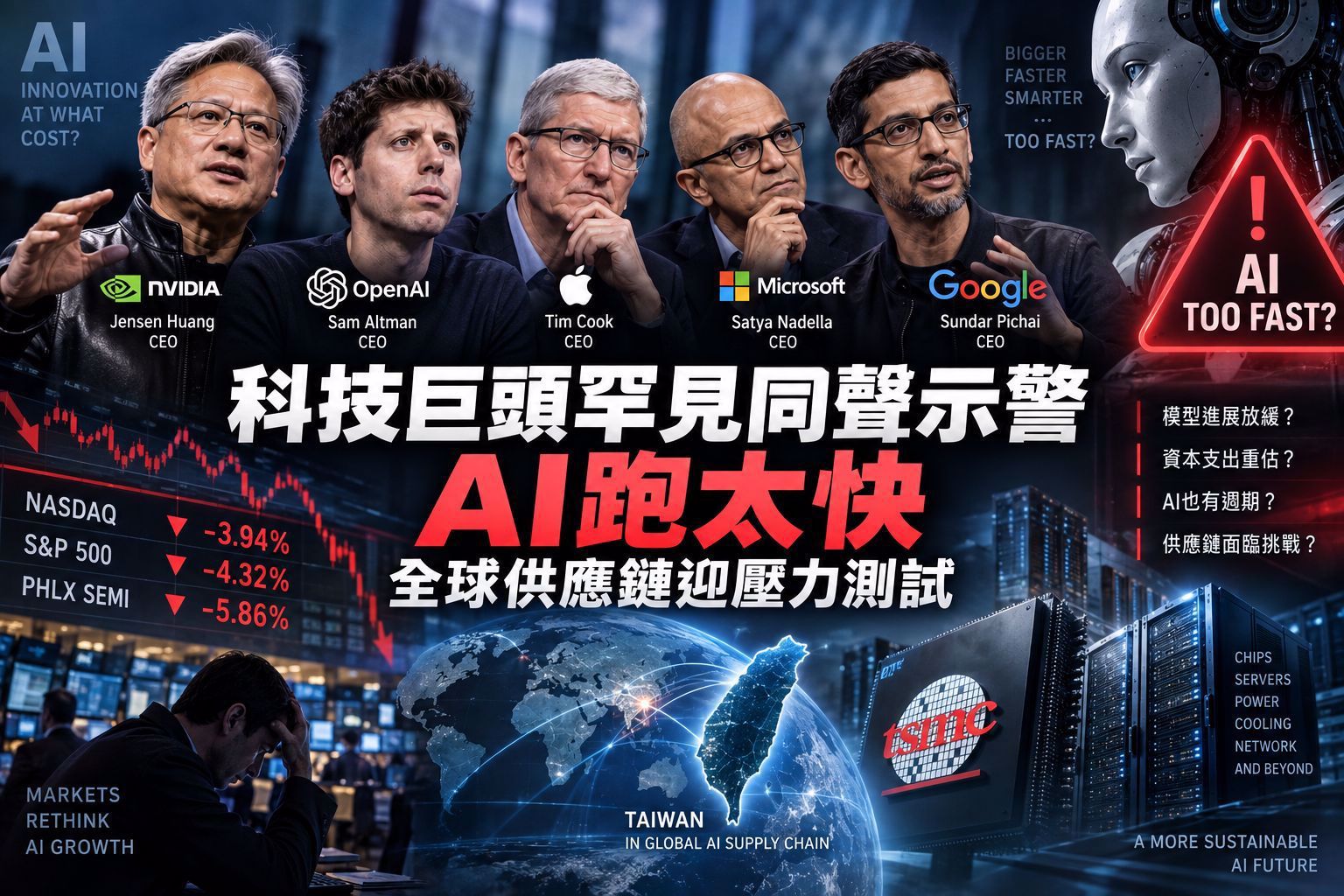
Technology giants issue a rare joint warning that AI is advancing too fast: Global supply chains are facing a stress test. |
|
|---|
|
AI Giants Hit Brakes: Taiwan's Supply Chain Faces Stress Test
Over the past two days, several of the people at the forefront of the race have, unusually, begun discussing the same question: Is artificial intelligence (AI) moving too fast?
|
|
|---|
|
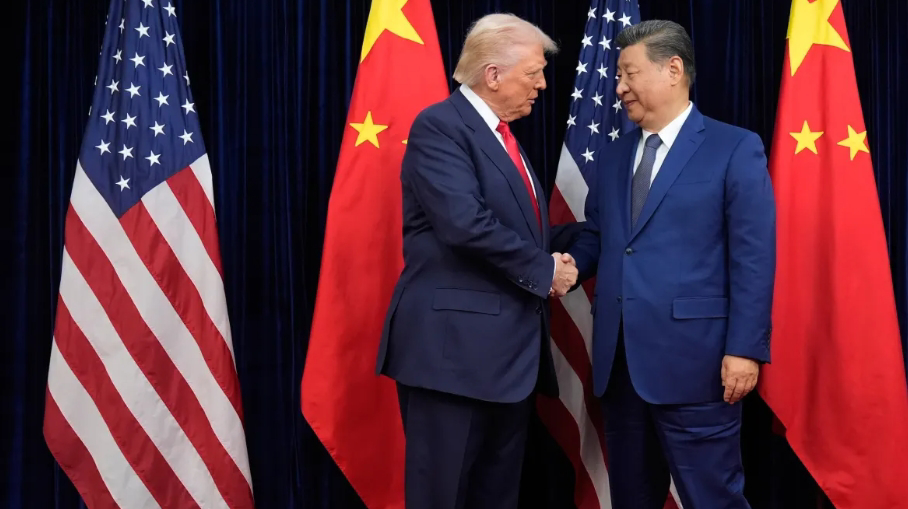
Ahead of the Trump-Xi summit, resurfacing "abandon Taiwan" talk and U.S. reassessment of Taiwan Strait costs are fueling strategic anxiety. |
|
|---|
|
Calls to "Abandon Taiwan" Resurface Ahead of Trump-Xi Meeting
The summit between President Donald Trump of the United States and Chinese President Xi Jinping is about to take place, and international media discussions of the Taiwan Strait have also increased significantly. Recently, some in Washington have advocated strengthening deterrence along the First Island Chain. The press has published detailed analyses of whether Taiwan should be abandoned, while others have proposed moving the center of U.S. military operations in Asia back to the Second Island Chain to reduce the risk of the U.S. military becoming directly involved in a conflict in the Taiwan Strait or East Asia. Even former Secretary of State Hillary Clinton, who advocated the “Pivot to Asia” during her tenure, publicly warned in an interview that U.S. military capabilities are continuing to be depleted by the war with Iran and multiple crises on different fronts. If this situation continues, then the United States will eventually be unable to assist its allies, including Taiwan.
|
|
|---|
|
According to Japanese media, mainland China is urging the United States not to approve new arms sales to Taiwan; otherwise, Mr. Xi may cancel his visit to Washington. |
|
|---|
|
September 12:
Japanese media Kyodo News reported that Beijing demanded Washington not approve new arms sales to Taiwan before the upcoming U.S.-China summit. Otherwise, Chinese President Xi Jinping would consider canceling his visit to the United States. |
|
|---|
|
September 13:
After 12 years, Okinawa Prefecture, Japan, elected a conservative governor, Koja Genta. Koja holds an open stance on allowing civilian airports and ports to be used for defense purposes. The Japanese government is expected to gain more room to prepare for a potential “Taiwan contingency.” |
|
|---|
|
September 13:
Mainland China expanded the scope of its entry-exit management. The Mainland Affairs Council (MAC) stated that the travel advisory for mainland China (orange alert) will not be upgraded for now, nor is there consideration to lift the ban on group tours. Until uncertainties regarding travel risks to the mainland decrease, related measures will remain unchanged. |
|
|---|
|
September 15:
To prepare for the Taipei-Shanghai Twin-City Forum, a Shanghai delegation arrived in Taiwan for site inspections. However, the MAC barred Deputy Director Li Xiaodong of the Shanghai Taiwan Affairs Office, approving only section head Xu Hao’s visit. This casts a shadow over the forum scheduled for the end of the year.
|
|
|---|
|
September 15:
In a radio interview, Minister of Foreign Affairs Lin Chia-lung discussed the upcoming U.S.-China summit. He said that Communist China wants to “manage” President Donald Trump of the United States and shape a narrative of joint U.S -China control over Taiwan. In reality, U.S.-Taiwan communication is good. “Taiwan and the United States are going to manage China,” Lin claimed. |
|
|---|
|
September 15:
The artificial intelligence (AI) boom has boosted demand for advanced substrates. Taoyuan City announced plans to establish a 40-hectare “substrate zone” in the Aerotropolis industrial area, expandable to 100 hectares in the future. The Executive Yuan will help resolve water supply needs to support the advanced substrate industry’s entry into the Aerotropolis. |
|
|---|
|
September 16:
The Stockholm-based International Institute for Democracy and Electoral Assistance released its 2026 Global Democracy Report. Taiwan’s performance in judicial independence fell from high to mid-level, while its effectiveness of parliamentary oversight ranked among the few countries showing progress. |
|
|---|
|
September 17:
Despite conditions for economic growth and inflation favoring a rate hike, the Central Bank decided to freeze interest rates for the 10th consecutive time. Governor Yang Chin-long stated that international oil prices are expected to be lower next year than this year, and with moderate consumer demand, there is still time to observe developments.
|
|
|---|
|
|