Foreign media advocate a “Plaza Accord” for the renminbi. China opposes, but the benefit may outweigh the drawbacks. |
|
|---|
|
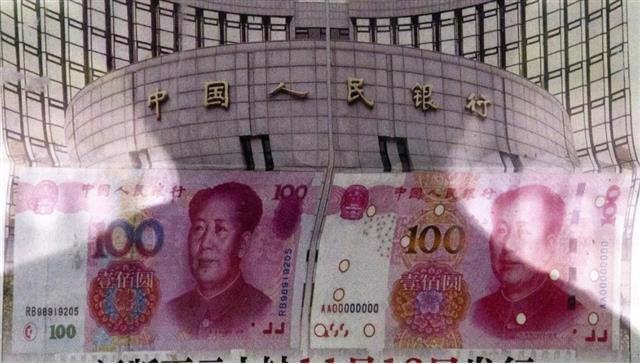
"China-Style Plaza Accord" More Benefits than Drawbacks
Recently, the idea of introducing a “Chinese version of the Plaza Accord” has garnered considerable attention, but it could potentially bring more benefits than drawbacks to China.
|
|
|---|
|
U.S. arms sales are delayed in delivery, yet Washington criticizes Taiwan’s 5 percent defense budget as insufficient. |
|
|---|
|
Taiwan's 5% GDP Defense Budget Still Not Enough: How Big is America's Bill
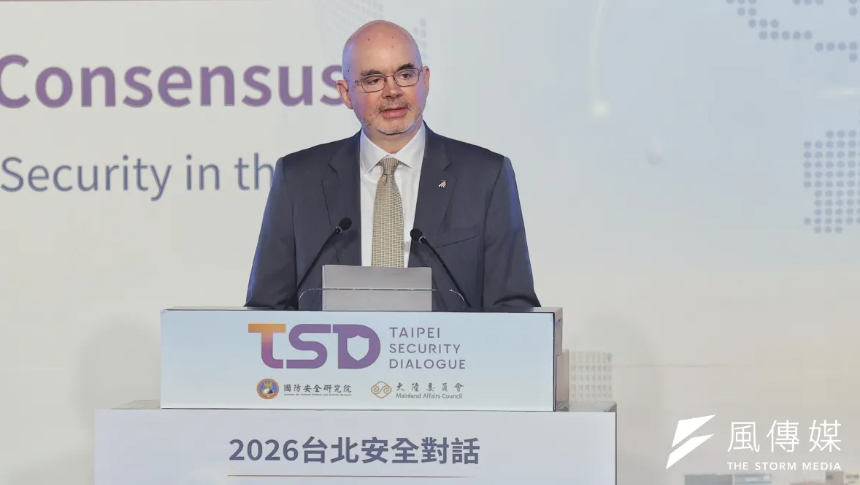
At the “2026 Taipei Security Dialogue,” Director Raymond Greene of the American Institute in Taiwan (AIT), who delivered opening remarks, encouraged Taiwan to follow Israel’s example by “regarding the reserves as an important force that can be rapidly mobilized,” but Taiwan’s commitment to raise defense spending to 5 percent of gross domestic product (GDP) by 2030 is “still not enough!” Because “when conflict occurs, the ability to recover is equally important, and this requires investment in the defense industrial base.”
|
|
|---|
|
Year 2028 may become a critical turning point for the Taiwan Strait, with three internal and external challenges facing Taiwan. |
|
|---|
|
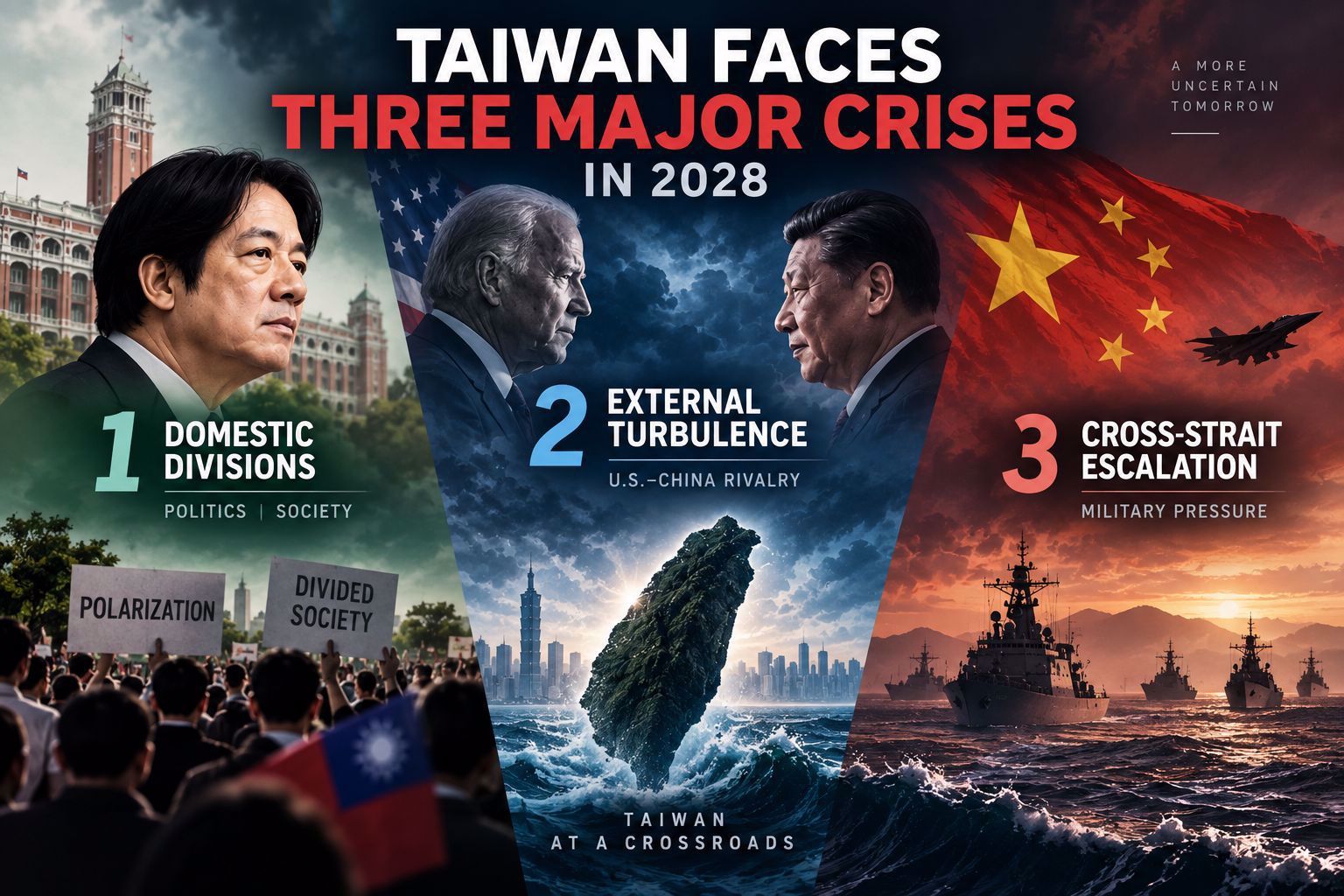
Taiwan to Face Three Challenges in 2028
In 2028, Taiwan will face a threefold crisis of “internal divisions, external turbulence, and the approaching showdown across the Taiwan Strait.” The threefold crisis stems from three interconnected and mutually confrontational political processes involving President Lai Ching-te, Chinese President Xi Jinping, and the people of Taiwan. Variables in U.S.-China relations may make these three crises even more dangerous, and the people of Taiwan need to awaken and save themselves.
|
|
|---|
|
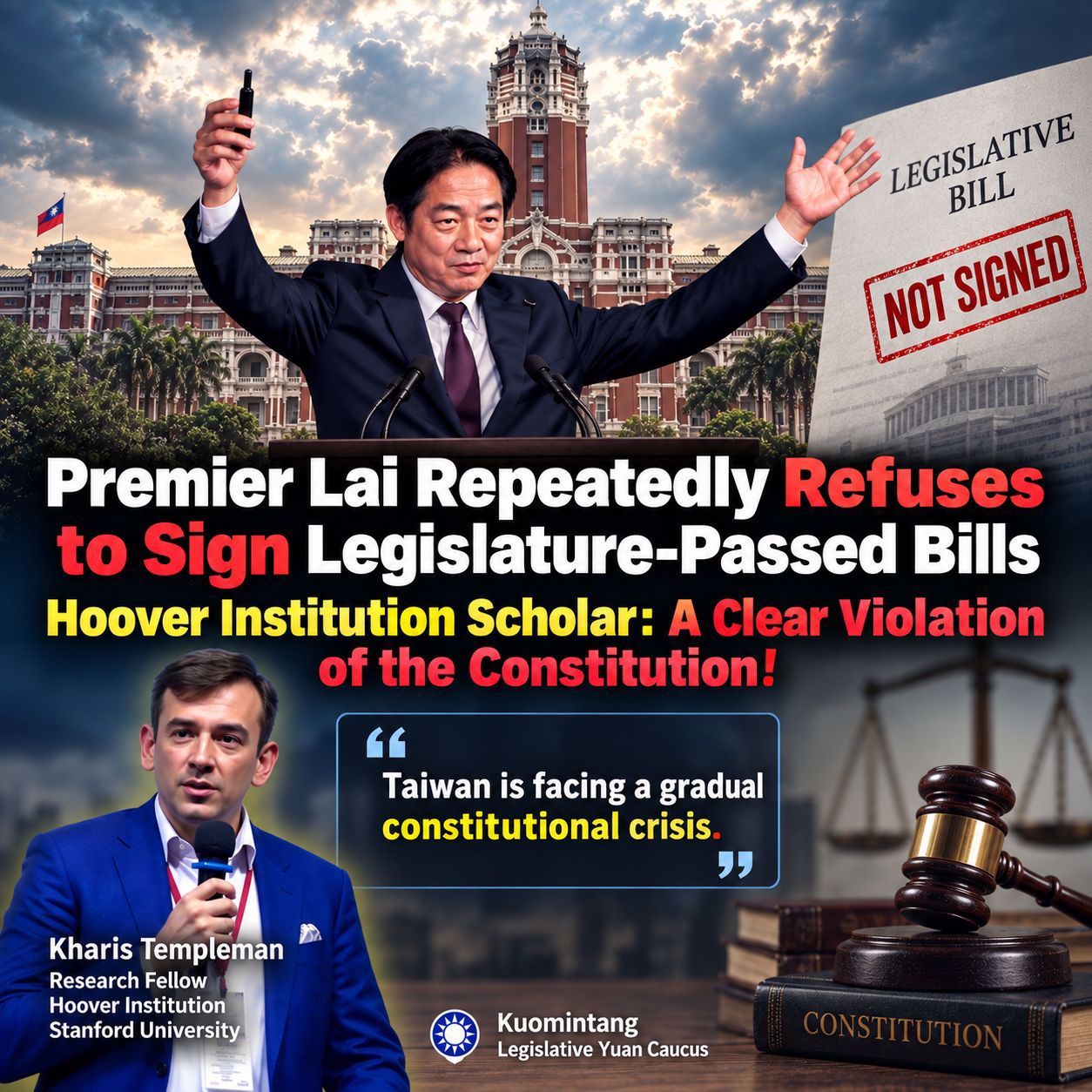
Stanford University scholar warns of Taiwan’s constitutional crisis, criticizing Premier Cho Jung-tai’s refusal to co-sign passed legislation as unconstitutional. |
|
|---|
|
September 5:
The National Chung-Shan Institute of Science and Technology (NCIST), responsible for weapons development, was reported hacked for the first time. Initially, the NCIST claimed it was a test but later admitted it was breached by a foreign IP. The Taipei Investigation Office of the Investigation Bureau, Ministry of Justice, filed a case for investigation. |
|
|---|
|
September 7:
Ahead of the U.S.-China summit, Eastern Theater Commander Yang Zhibin of the People’s Liberation Army (PLA) held the first bilateral meeting with Commander Samuel Paparo of the U.S. Pacific Command. Mainland Chinese official media Global Times commented that this represents the resumption of face-to-face communication at the theater level between the two militaries in the most sensitive direction, sending signals to Taiwan that the Taiwan Strait must not become a trigger for strategic miscalculation between the United States and China. |
|
|---|
|
September 8:
The Tourism Administration, Ministry of Transportation and Communications, issued a notice to travel agencies stating that travelers to mainland China would be fined if they failed to register in advance. This sparked a strong backlash from the industry, which vowed to sue if fined. The Tourism Administration quickly sought to defuse tensions, prioritizing guidance over penalties and temporarily suspending fines. |
|
|---|
|
September 8:
A cross-party group of Japanese lawmakers, “Parlimaentary Association for Thinking about Peace and Stability in the Taiwan Strait,” arrived in Taiwan. The delegation leader, Senator Kitamura Haruo from the Conservative Party, stated that the group would push for legislation akin to a Japanese version of the Taiwan Relations Act and Taiwan Travel Act.
|
|
|---|
|
September 9:
Director Raymond Greene of the American Institute in Taiwan attended the 2026 Taipei Security Dialogue, stating that the pledge by the administration of President Lai Ching-te to raise defense spending to 5 percent of Taiwan’s gross domestic product (GDP) by 2030 is insufficient, and that Taiwan must also invest in its defense industrial base. |
|
|---|
|
September 9:
Kharis Templeman, a researcher at Hoover Institution, Stanford University, commented that Taiwan is facing a slow-moving constitutional crisis, with no strong arbiter between the executive and legislative branches. He said that Premier Cho Jung-tai’s refusal to counter-sign bills passed by the Legislative Yuan is a blatant constitutional violation. |
|
|---|
|
September 9:
President Donald Trump of the United States mentioned Taiwan for two consecutive days. On social media, he threatened to sue the left-leaning think tank Center for American Progress and criticized its funders, naming the Taipei Economic and Cultural Representative Office in Washington. Later, at a campaign rally, he proposed imposing heavy tariffs on Taiwanese chips, potentially as high as 200 percent. |
|
|---|
|
September 10:
Legislator May Chin (Kao Chin Su-mei) became implicated in a corruption case linked to a mainland Chinese espionage investigation. Prosecutors discovered that her former legislative office director Chang Chun-chie, who had absconded after being released on bail, accepted funding from the mainland to develop organizations in Taiwan. Authorities moved swiftly, detaining two assistants from Chin’s office.
|
|
|---|
|
|