|
| | |
Is President Lai Safeguarding or Consuming Taiwan? |
|
|---|
|
|
|
|
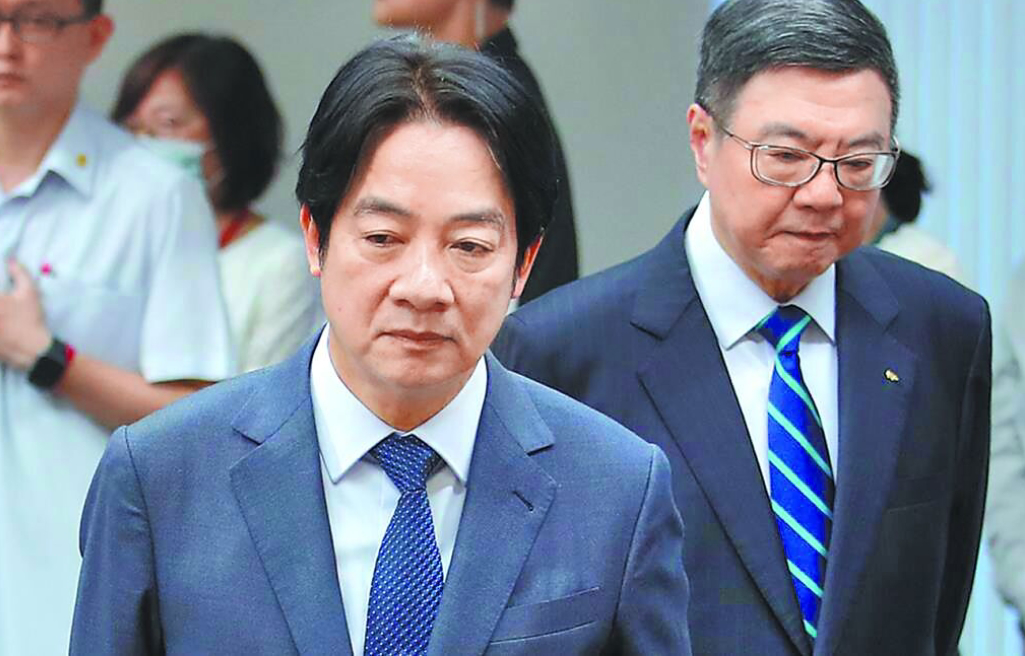
“Resist China to protect Taiwan” has become a talisman. Despite governance missteps, the administration of President Lai Ching-te shows no fear of losing votes. |
|
|---|
|
Why Does Lai Administration Not Have to Pay for Poor Governance?
From The Economist article titled “Taking Taiwan’s democracy hostage,” which claims that the opposition is the source of the erosion of Taiwan’s democracy, to the recent torrential rains and flooding in southern Taiwan, when the premier said he was unable to travel south to inspect the disaster areas because of budget cuts, it is time to stop looking in the wrong places for answers to the question of who has brought Taiwan’s politics to such a trough.
|
|
|---|
|
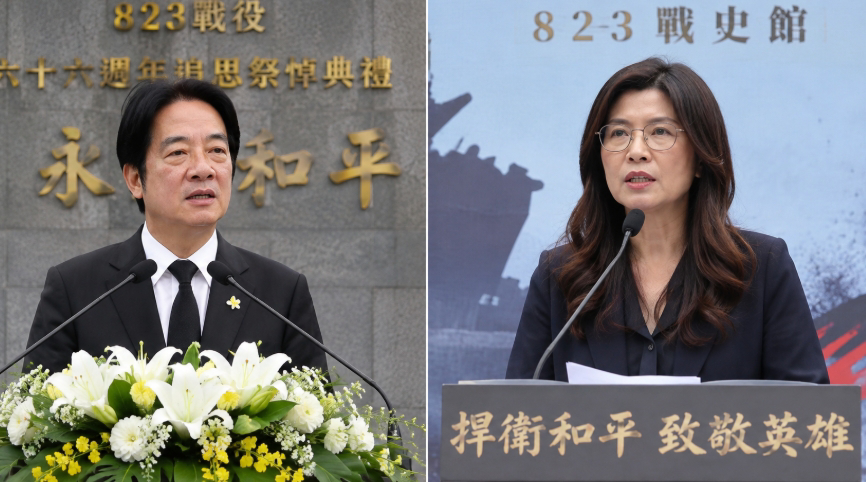
On the 68th anniversary of the August 23 Artillery Battle, President Lai stresses preparedness to safeguard peace, while Chairwoman Cheng Li-wun of the Kuomintang (KMT) advocates dialogue to avoid war. |
|
|---|
|
From War Preparedness to Confrontation: President Lai's Peace Trap
On the 68th anniversary of the August 23 Artillery Battle, President Lai Ching-te and Chairwoman Cheng Li-wun of the opposition Kuomintang (KMT) both traveled to Kinmen to commemorate the historic conflict, yet they presented sharply different narratives.
|
|
|---|
|
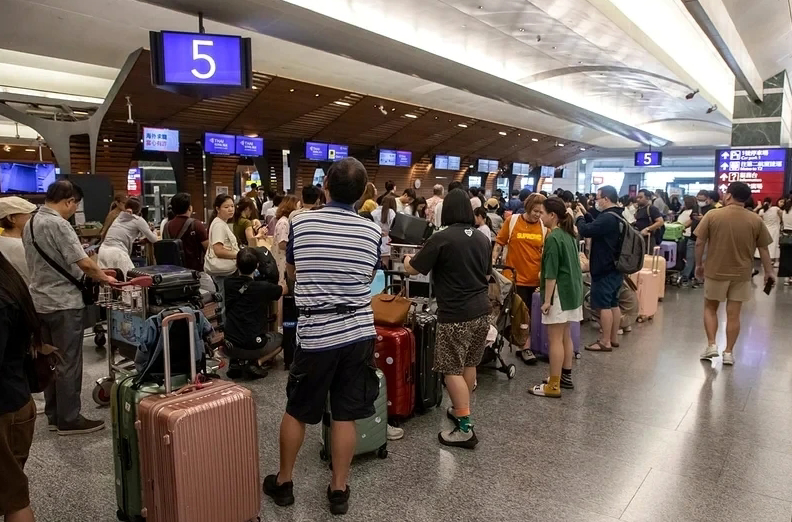
The Lai administration restricts cross-strait exchanges under the banner of national security, placing ideology above livelihood and industry. |
|
|---|
|
Under Banner of Resisting China, What is Taiwan Losing?
Since taking office, the administration of President Lai Ching-te has imposed restrictions on cross-strait exchanges on virtually every front—from issuing travel advisories for mainland China and restricting mainland tourists from visiting Taiwan, to limiting cross-strait student exchanges and travel to the mainland by civil servants. More recently, it blocked access to the “Taiwan Youth e-Home” website established by the Taiwan Affairs Office (TAO) of the mainland’s State Council and even mobilized four government agencies to investigate a mainland-made heavy motorcycle that was never intended to enter Taiwan’s consumer market.
|
|
|---|
|
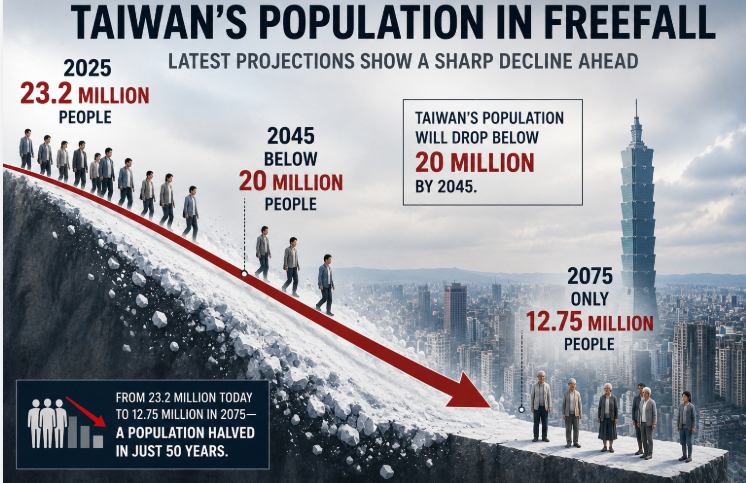
Taiwan’s population decline accelerates. The population is projected to fall below 20 million by 2045 and by 2075 may be halved to just 12.7 million. |
|
|---|
|
August 20:
SEMI Taiwan's Semiconductor Materials Alliance was established. One of its co-chairs, GlobalWafers Chairwoman Doris Hsu, stated that Taiwan will leverage the advantage of being the first to implement next-generation processes, striving to make Taiwan the global standard-setter for new materials. |
|
|---|
|
August 23:
President Lai Ching-te attended the August 23 Artillery Battle commemoration, declaring that authoritarian China has never ceased its expansionist ambitions. He warned, “Though the world may seem at peace, forgetting war invites danger” and urged opposition parties to jointly support the national defense budget. |
|
|---|
|
August 23:
Chairwoman Cheng Li-wun of the Kuomintang (KMT) also attended the August 23 commemoration, calling on President Lai to stop distorting the Constitution of the Republic of China with his “Two State Theory.” She insisted that cross-strait dialogue should be restarted on the constitutional foundation by acknowledging the “1992 Consensus.” |
|
|---|
|
August 26:
During the Straits Forum, Beijing announced plans to purchase Taiwanese agricultural and fishery products. Mainland China’s General Administration of Customs added a new batch of pomelos for import, concentrated in Hualien County. The Mainland Affairs Council criticized the move as propaganda for united front efforts.
|
|
|---|
|
August 27:
The Legislative Yuan passed the Unmanned Aerial Vehicle Development Act on third reading, allocating NT$240 billion (about US$7.6 billion) over six years in the annual budget, with provisions for additional funding if necessary. The version includes three unmanned systems requested by the Executive Yuan, such as coastal surveillance drones. |
|
|---|
|
August 27:
The National Development Council (NDC) released economic monitoring indicators for July, which continues to show a red light signaling robust economic activity—the eighth consecutive red. Both leading and coincident indicators kept rising. The NDC stated that Taiwan’s domestic growth momentum remains solid. |
|
|---|
|
August 27:
The Ministry of National Defense announced that the special defense budget procurement of ALTIUS drones from the United States, totaling NT$26.9 billion (about US$850 million), has officially taken effect. Deliveries are expected to begin in the fourth quarter of this year. |
|
|---|
|
August 28:
Taiwan’s population decline is accelerating at an alarming pace. The NDC’s latest projections show that by 2045, the population will fall below 20 million from 23.2 million today. By 2075, it will be halved to 12.7 million.
|
|
|---|
|
|
|
|---|
|
| |
|
| |
|
|