Communist China’s missile test in the South Pacific sends strategic signals to countries in the region. |
|
|---|
|
Rehearsal of Taiwan Strait Scenario in Distant Waters: Beijing Rewrites Security Order in South Pacific
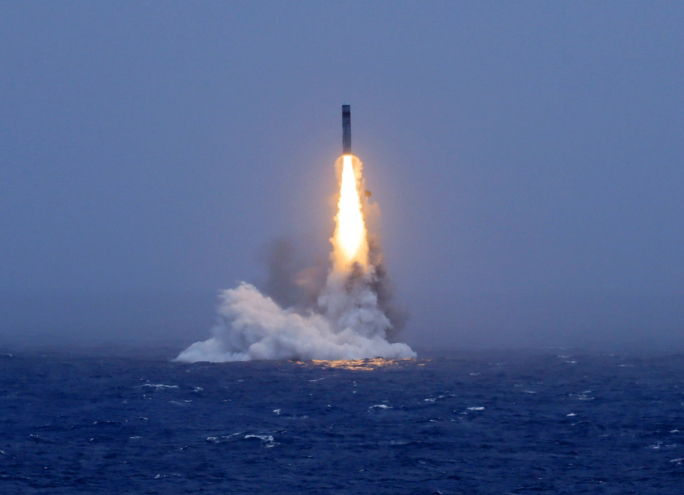
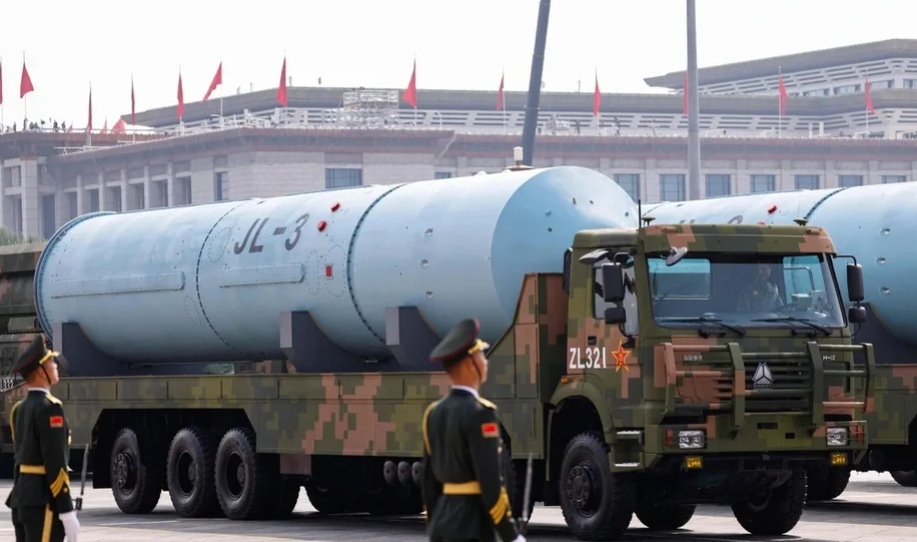
At noon on July 6, a strategic nuclear submarine of the People's Liberation Army (PLA) Navy launched a JL-2 strategic missile carrying a simulated training warhead into the South Pacific from international waters in the Pacific Ocean. By extending the target area into the South Pacific, the central message of the test was not that a new missile had reached maturity, but that China is pushing its existing sea-based nuclear deterrent platforms farther into distant waters to gauge regional countries' reactions to its activities. The military necessity may not have been particularly high, but its political signaling was unmistakable.
|
|
|---|
|
Although Beijing’s submarine-launched missile test breaks through the Chain, President Donald Trump of the United States has not publicly responded. |
|
|---|
|
Chinese Missile Breaks Through Island Chain: Why is Trump Silent?
As tensions in East Asia continue to rise, mainland China launched a JL submarine-launched strategic missile into the Pacific Ocean, breaking beyond the containment line of the First Island Chain. The launch took place after American Independence Day on July 4 and before the anniversary of the Marco Polo Bridge Incident on July 7. Its intention to target the United States and Japan was evident, while also serving as an indirect warning of the consequences should the two countries intervene in a Taiwan Strait conflict. Yet what has most disappointed America's allies is that U.S. President Donald Trump has once again remained silent.
|
|
|---|
|
The American Institute in Taiwan (AIT) and Taiwan Affairs Office of mainland China’s State Council issued successive statements, shifting the competition over Taiwan towards a battle for public opinion. |
|
|---|
|
TAO and AIT Compete for Taiwan's Public Opinion
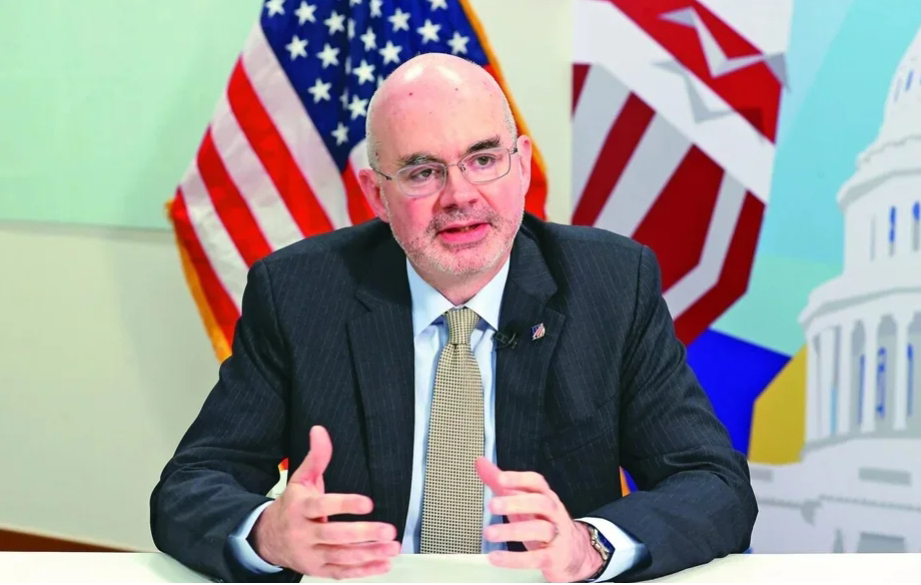
Comparing the recent remarks by Director Raymond Greene of the American Institute in Taiwan (AIT) and the spokesperson for the Taiwan Affairs Office (TAO) of mainland China’s State Council, one common trend stands out: both have placed greater emphasis on Taiwanese public opinion. This marks a significant departure from the past.
|
|
|---|
|
With the artificial intelligence (AI) boom boosting the economy, the Asian Development Bank raised Taiwan’s growth forecast to 9.5 percent. |
|
|---|
|
July 4:
Another food safety crisis has emerged: Central Union Oil Corporation’s salad oil was found to contain excessive levels of benzo[a]pyrene, a Group 1 carcinogen. A total of 2,600 metric tons entered the market, affecting the military and school lunch programs. Because the company delayed reporting, the Food and Drug Administration, Ministry of Health and Welfare, imposed the highest fine in history, NT$165 million (about US$5.1 million). Prosecutors launched an investigation. |
|
|---|
|
July 6:
Outstanding balances of Central Bank certificates of deposit fell from NT$7.4 trillion (about US$231.3 billion) at the end of last year to NT$6.3 trillion (about US$196.8 billion) by the end of June. This was seen as releasing over NT$1 trillion (about US$31.2 billion) in liquidity to boost Taiwan stocks. Governor Yang Chin-long of the Central Bank explained that tax collections by the Ministry of Finance and the Central Bank’s sale of U.S. dollars simultaneously absorbed more than NT$1 trillion, so overall liquidity levels did not change significantly. |
|
|---|
|
July 6:
A People’s Liberation Army (PLA) nuclear submarine test-fired a submarine-launched intercontinental ballistic missile into the Pacific high seas. Because of its “second-strike nuclear capability” implications, the launch drew international concern. The Ministry of National Defense assessed it as a “JL-2” missile. President Lai Ching-te criticized Beijing for attempting to use military power to create tension and unease among neighboring countries, further expanding authoritarian influence. |
|
|---|
|
July 8:
In recent years, the National Chung-Shan Institute of Science and Technology completed two major indigenous defense projects: the “Strong Bow” missile and “Chien Hsiang II” UAV. However, reports suggest that the Executive Yuan and military have struggled to align their positions, so neither project was included in special or supplementary budgets, and it will be difficult to allocate funds in the budget next year. Opposition lawmakers worry that “defense self-reliance” risks becoming an empty slogan. |
|
|---|
|
July 8:
Director Raymond Greene of the American Institute in Taiwan (AIT) recently stated that nothing deters conflict more effectively than turning Taiwan into a drone “hive.” This unusually provoked harsh criticism from the Taiwan Affairs Office of mainland China’s State Council, which accused Greene of acting like a “supreme overlord,” claiming his words contradict President Donald Trump’s serious statements and sought to push U.S.-China and cross-strait relations in a dangerous direction. AIT responded that U.S. policy towards Taiwan has not changed. |
|
|---|
|
July 9:
To align with international financial markets, the Taiwan Stock Exchange announced three new measures: Odd-lot trading opening time will be moved up to 9 AM, effective December 7. Intraday odd-lot matching intervals will be shortened from five seconds to one second, although day training remains prohibited. Most notably, for “thousand-dollar stocks” (shares priced above NT$1,000), the tick size will be uniformly changed to NT$1. The latter two measures will take effect in July next year. |
|
|---|
|
July 9:
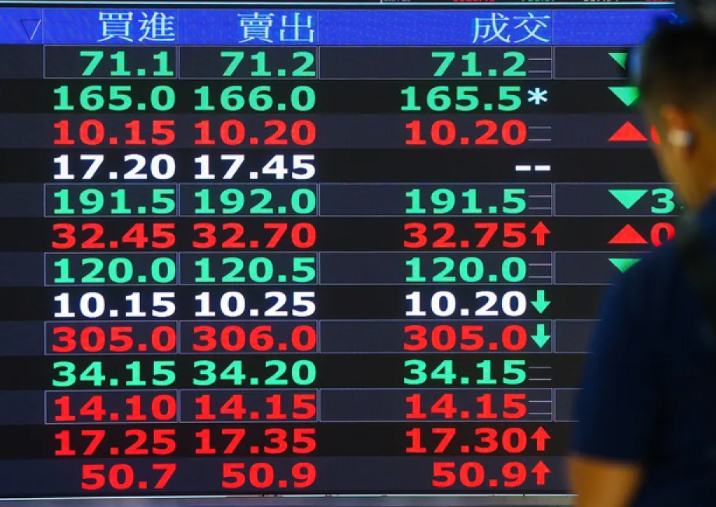
The Asian Development Bank released a revised Asian Development Outlook, sharply raising Taiwan’s 2026 economic growth forecast to 9.5 percent, up 1.9 percentage point from April, driven by the artificial intelligence (AI) boom. This places Taiwan at the top among advanced Asian economies. Taiwan Ratings also raised its forecast to 8.2 percent. |
|
|---|
|
July 9:
Yaita Akio, a Japanese-born political commentator who resides in Taiwan, was recently assaulted by a Hong Kong man. The Mainland Affairs Council (MAC) immediately labeled the incident the first case of “cross-border suppression” against Taiwan since China’s Law on the Promotion of National Unity and Progress took effect. Because prosecutors are still investigating, critics accused the MAC of attempting to direct judicial proceedings. |
|
|---|
|
|