|
| | |
AIT: Status Quo Can Serve as Basis
for Cross-Strait Dialogue
|
|
|---|
|
|
|
|
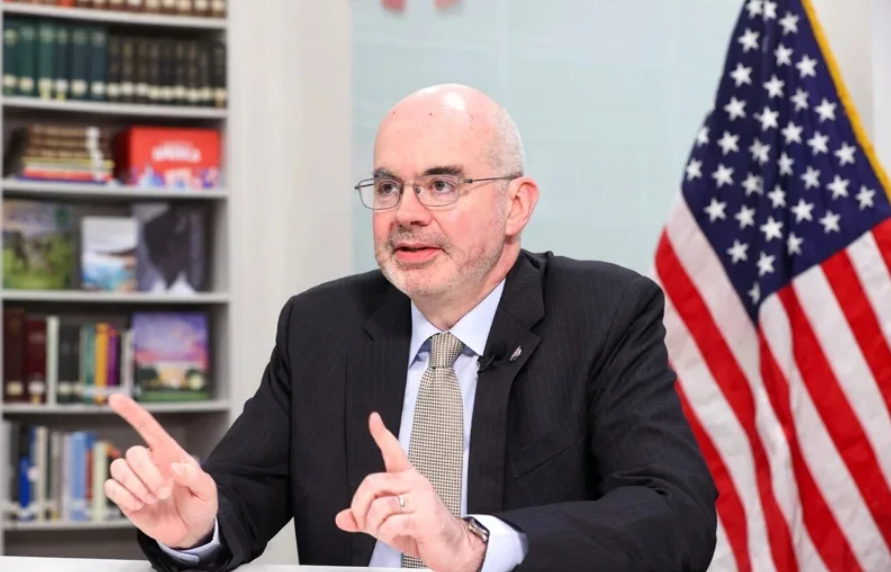
Director Raymond Greene of the American Institute in Taiwan (AIT) urges reconciliation between ruling and opposition parties to maintain Taiwan’s status quo, but how to define it has stirred controversy. |
|
|---|
|
How to Define Status Quo?President Lai's Differs from Past
In an exclusive interview with United Daily News, Director Raymond Greene of the American Institute in Taiwan (AIT) stated that 70 percent support in Taiwan’s public opinion for maintaining the status quo could serve as an excellent foundation for dialogue between Taiwan’s democratically elected leaders and Beijing. Chairwoman Cheng Li-wun of the Kuomintang (KMT) responded that only through cross-strait exchanges and dialogue can the status quo be maintained. Su Chi, former secretary-general of the National Security Council, said that the Democratic Progressive Party (DPP) has already undermined its own concept of “maintaining the status quo” through the claim of “mutual non-subordination.” He further questioned whether the status quo referred to by Greene is the status quo of 2016 or that of 2026.
|
|
|---|
|
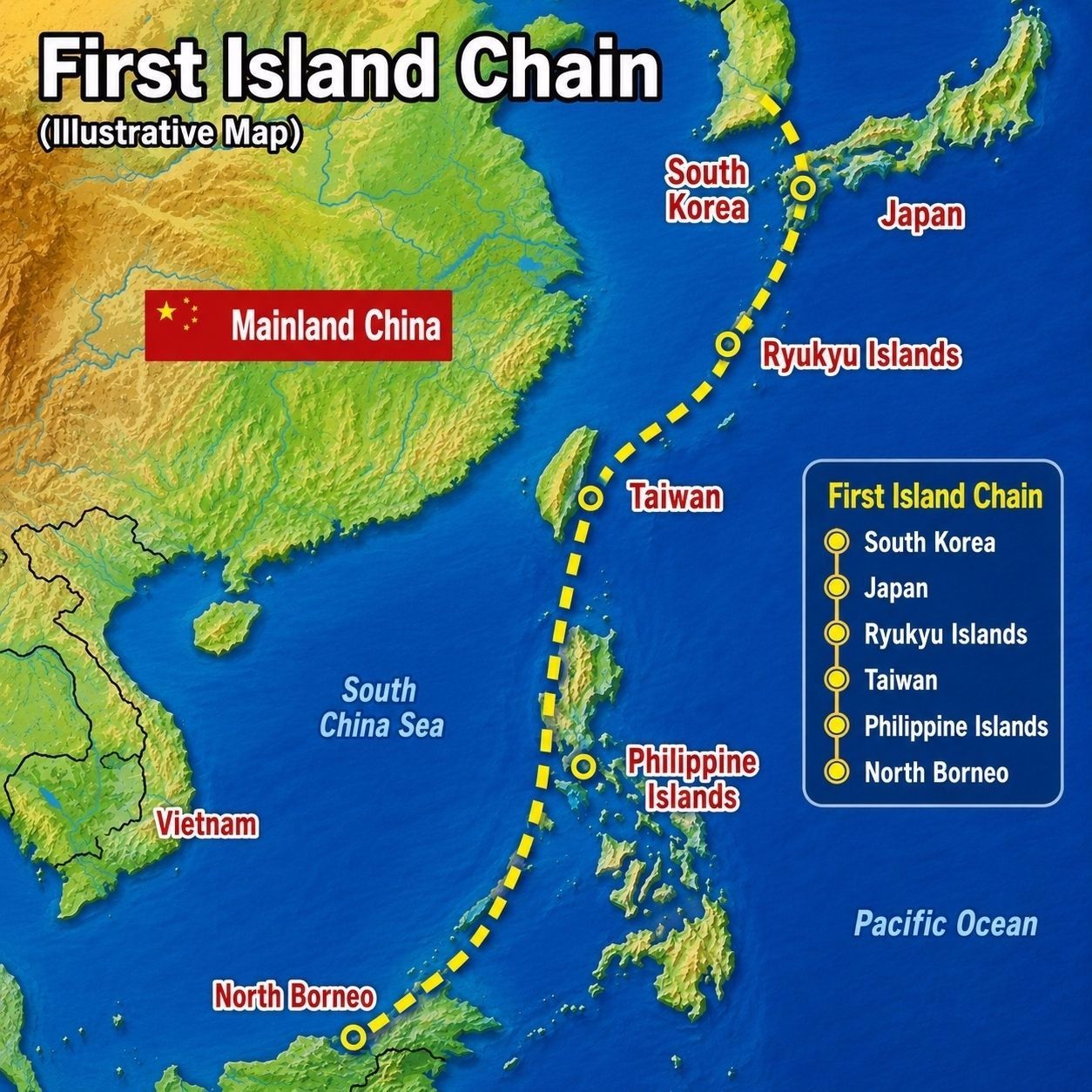
Beijing advances “near-shore” control in Taiwan’s eastern waters, weakening the first island chain defense line. |
|
|---|
|
Beijing Constructing “Near-Shore Governance” to Counter First Island Chain
A core shift in the “U.S. National Security Strategy” released by the Trump administration at the end of 2025 is its explicit statement that the United States is no longer willing to bear the role of a one-sided protector. Instead, it openly demands that allies and partners along the first island chain significantly increase their own responsibilities. This has likely been interpreted by Beijing as an American acceptance of the loss of the strategic foundation necessary to comprehensively contain China through the first island chain as a geopolitical pivot. America’s voluntary display of weakness has evidently encouraged China’s growing desire to push forward and break through.
|
|
|---|
|
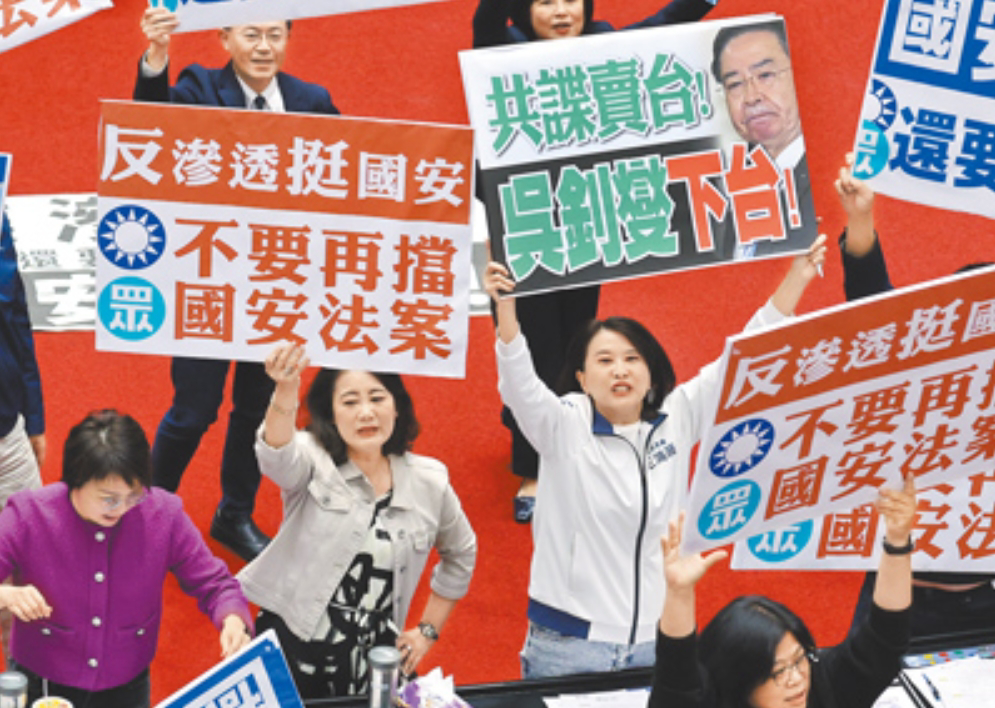
Revised ruling in espionage case ignites double-standard debate. Prosecuting the Kuomintang (KMT) but not the ruling Democratic Progressive Party (DPP) undermines judicial credibility. |
|
|---|
|
Espionage Case Involving Senior Official Aide Overturned, Criticized for Double Standards
On June 25, the Taiwan High Court issued its second-instance ruling in the espionage case involving former Democratic Progressive Party (DPP) staff members accused of spying for mainland China. All defendants who had received heavy sentences in the first trial were given lighter judgments on appeal. Among them, Ho Jen-chieh, an assistant to current then-Minister of Foreign Affairs Joseph Wu, saw Ho’s original sentence of eight years and two months overturned and was found not guilty. In contrast, Taitung County Executive Yao Ching-ling was investigated at the request of the Mainland Affairs Council merely for promoting agricultural products to the mainland through a prerecorded video. Likewise, local figures outside the DPP who travel to the mainland for exchanges or accept hospitality are often subjected to investigation by prosecutors and law enforcement authorities. It is therefore unsurprising that critics have accused the DPP administration of targeting the Kuomintang (KMT) while sparing the DPP and applying double standards in the judicial system.
|
|
|---|
|
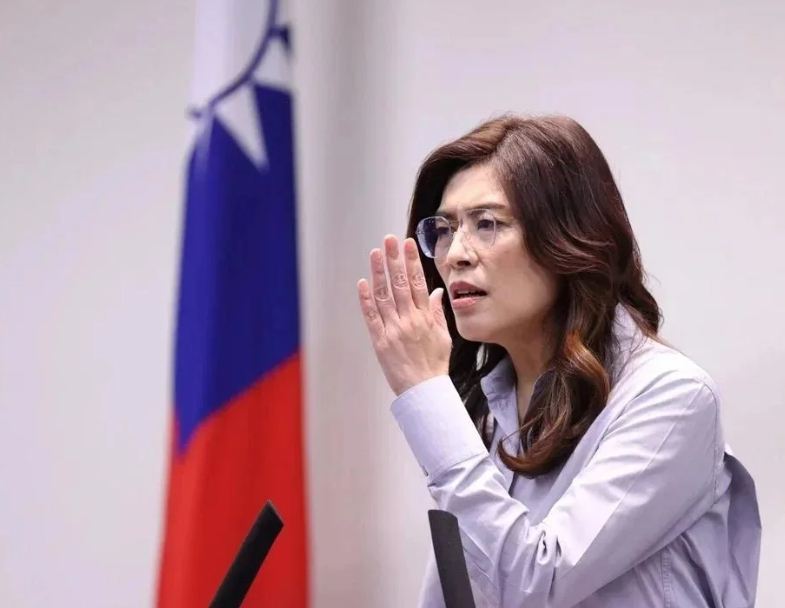
KMT Chairwoman Cheng Li-wun opposes Taiwan independence, but if mainland China invades, the KMT will fight back. |
|
|---|
|
June 20:
In an interview with The Economist, Chairwoman Cheng Li-wun of the Kuomintang (KMT) stated that the party pursues peace but will not abandon self-defense. The party opposes Taiwan declaring de jure independence, aligning with Chinese President Xi Jinping’s position. However, if Taiwan does not declare formal independence, any mainland military invasion would be met with armed resistance. |
|
|---|
|
June 21:
Mainland China’s Ministry of Natural Resources launched a marine environmental survey in waters east of Taiwan. Official media described these waters as part of China’s “near seas,” symbolizing that the “near-seas governance model” has expanded from maritime law enforcement to resource management. The Mainland Affairs Council criticized Beijing for using sudden incidents to steadily press its encroachment on Taiwan. |
|
|---|
|
June 22:
Mayor Chiang Wan-an of Taipei, seeking re-election, promoted driverless buses, aiming to make Taipei a global demonstration hub for autonomous vehicles and urging the central government to approve licenses. The Ministry of Transportation and Communications responded that current technology and traffic conditions are not yet ready to “exit the sandbox” and will be reviewed in line with international standards.
|
|
|---|
|
June 23:
In an interview, Director Raymond Greene of the American Institute in Taiwan (AIT) said that Taiwan’s political parties hold views on democracy and security that are closer than commonly assumed. He noted that 70 percent of public opinion supports maintaining the status quo, which provides an excellent basis for dialogue with Beijing. |
|
|---|
|
June 24:
Lithuania’s ruling coalition reshuffled: Prime Minister Inga Ruginienė of the Social Democratic Party resigned, and party chair Mindaugas Sinkevičius will assume the premiership. According to Associated Press, the new government pledged to establish more stable relations with Beijing. In February, Sinkevičius had said future China policy would follow a pragmatic course, noting that Taiwan’s promised multi-billion investments and chip production had yet to materialize. |
|
|---|
|
June 24:
The China Credit Information Service released its “Top 5000 Taiwan Enterprises” report, showing that despite record-breaking revenues and profits, 772 companies posted losses in 2025, the highest in a decade. While a few key firms performed well, most enterprises face mounting pressure to undergo transformation. |
|
|---|
|
June 25:
In the high-profile Office of the President espionage case, the appellate court drastically reduced all sentences. Ho Jen-chieh, secretary to then-Minister of Foreign Affairs Joseph Wu, was sentenced to eight years and two months in the first trial but acquitted on appeal, sparking public uproar. |
|
|---|
|
June 26:
Speaker Han Kuo-yu of the Legislative Yuan led a cross-partisan delegation to the United States for exchanges with Congress. Afterward, Democratic senators issued a statement urging the administration of President Donald Trump not to further delay the $14 billion arms sales package to Taiwan. Meanwhile, Assistant Secretary of State for Asia-Pacific Affairs Michael DeSombre testified before the House Foreign Affairs Committee, stating that arms sales to Taiwan are not contingent on negotiations with China. |
|
|---|
|
|
|
|---|
|
| |
|
| |
|
|