President Lai Ching-te’s suggestion to drink bubble tea with Chinese President Xi Jinping counts as “exchange,” while Taichung County Executive Rao Ching-ling’s efforts to sell fruit to mainland Chinese consumers gets investigated, an apparent double-standard. |
|
|---|
|
DPP Double Standard on Cross-Strait Relations
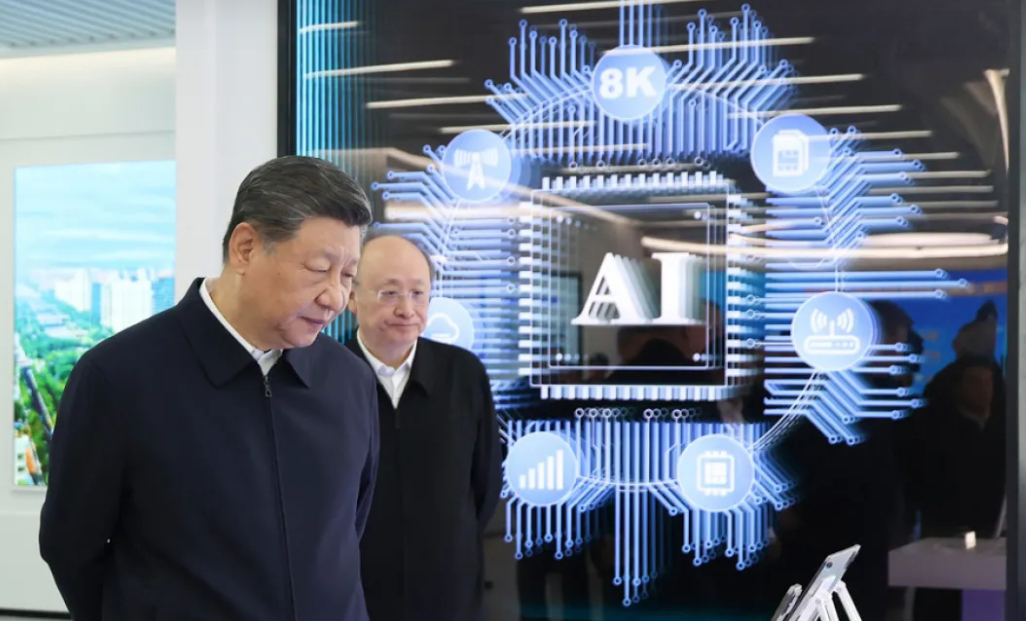
Taitung County Executive Rao Ching-ling participated in the Straits Forum through a pre-recorded video. The Lai administration, changing its previous approach of having anonymous officials leak messages through the media, formally revealed its position. The Ministry of the Interior (MOI) and the Mainland Affairs Council (MAC) stated that they will investigate whether Ms. Rao was involved in “cooperative conduct” in violation of the Act Governing Relations Between the People of the Taiwan Area and the Mainland Area. However, when President Lai Ching-te previously expressed a desire to drink bubble tea with Chinese President Xi Jinping, the ruling Democratic Progressive Party (DPP) described it as “exchange.” Now, Ms. Rao’s efforts to promote Taiwanese fruit is regarded as “United Front work.” Whether an act is “love Taiwan” or “sell out Taiwan” is apparently for the DPP to decide, once again demonstrating the attitude of “the rules apply to others, not to us.”
|
|
|---|
|
A mainland Chinese scholar propose the concept of “unification without unification,” drawing attention. |
|
|---|
|
"Unification without Unification" Taking Shape
Japan and the Philippines have unilaterally initiated negotiations on delimiting their Exclusive Economic Zones (EEZs), and with Taiwan doing nothing, mainland China has taken the opportunity to launch its coast guard and maritime law enforcement operations in the waters east of Taiwan. The practical effect of this move is a further extension of the mainland’s actual jurisdiction and governance. Mainland Chinese media have described it as the launch of a “near-sea governance model,” and in the future, the term “Taiwan Strait” may be heard less and less frequently. Such statements may sound exaggerated to Taiwanese society, but from the perspective of objective reality, they are not difficult to imagine.
|
|
|---|
|
Taiwan becomes the largest trade deficit partner of the United States. Behind Taiwan’s economic prosperity lurks pressure by U.S. President Donald Trump. |
|
|---|
|
U.S.-Taiwan Trade Deficit Actually Benefits American Competitiveness
According to statistics released by the U.S. Department of Commerce for the first four months of this year, Taiwan exported $91.5 billion to the United States and imported $20 billion from the United States, resulting in a trade surplus of $71.5 billion with the United States. For the first time, Taiwan surpassed mainland China, Mexico, and Vietnam to become the largest source of the U.S. trade deficit.
|
|
|---|
|
The American Chamber of Commerce in Taiwan raised concerns over energy security and Taiwan’s lack of a long-term power supply blueprint. |
|
|---|
|
June 12:
Chairwoman Cheng Li-wun of the Kuomintang (KMT) visited the United States to discuss arms sales to Taiwan with pro-Taiwan members of Congress. Reportedly, Cheng softened her stance, saying that in matters of commercial purchases and defense autonomy, she hopes to directly communicate with the United States in the future for deliberation. Speaker Han Kuo-yu of the Legislative Yuan will also depart for the Untied States on June 21, meeting Department of State officials and members of Congress, and visiting the Taiwan Semiconductor Manufacturing Company (TSMC) facility in Arizona. |
|
|---|
|
June 12:
The Office of the President announced nominees for the Control Yuan. Mayor Chiang Wan-an of Taipei questioned the Control Yuan’s passive handling of controversial cases in recent years, stating that the issue is not the nominees but the institution itself. He advocated abolishing the Control Yuan, urging opposition parties to jointly block all nominees to freeze its operations, then seek cross-party consensus to amend the Constitution and abolish the body. |
|
|---|
|
June 14:
The National Security Bureau announced the establishment of a “Chinese Citizen Contact Window” to broadly collect intelligence on China. Based on the National Intelligence Work Act and practices in countries like the United States and United Kingdom, this window allows mainland Chinese to proactively provide information.
|
|
|---|
|
June 16:
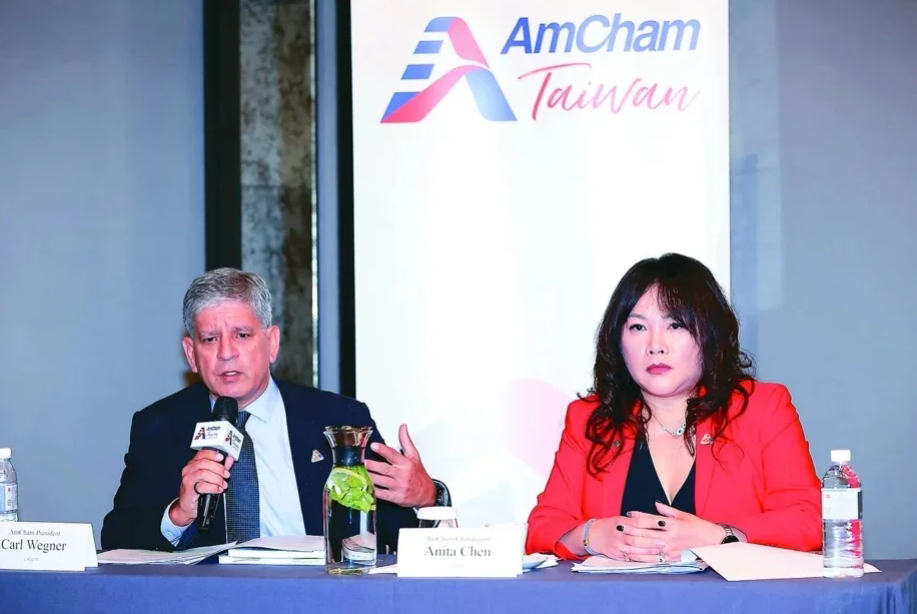
The American Chamber of Commerce in Taiwan released its 2026 white paper, again raising concerns about energy issues, which have escalated to a national security level. It urged the government to present a more transparent and long-term stable energy roadmap. The Ministry of Economic Affairs (MOEA) projected electricity demand to grow 2.5 percent annually over the next decade, which academics criticized as too conservative. |
|
|---|
|
June 16:
The Taiwan Power Company’s accumulated losses exceeded NT$360 billion (about US$12 billion). The MOEA coordinated with eight state-owned banks to arranged NT$300 billion (about US$9.4 billion) in special financing, supported by deposits transferred from Chunghwa Post. |
|
|---|
|
June 16:
The National Taiwan University Center for China Studies released a 10-year tracking poll on cross-strait political negotiations. Support for negotiations remains a majority but has dropped from 78 percent in 2018 to 62 percent this year. Regarding desired outcomes, 44 percent favor maintaining the status quo, while 43 percent want Beijing to recognize Taiwan as a country, and 3.2 percent support unification. Director Tsai Chi-ting interpreted this as differing expectations: Taiwanese desire recognition of a Taiwan-centric identity, while Beijing seeks adherence to the “One China” principle. |
|
|---|
|
June 18:
Taitung County Executive Rao Ching-ling promoted local agricultural products via a pre-recorded video at the Straits Forum, leading to administrative investigation by the Mainland Affairs Council (MAC). The MAC also named five agricultural groups that signed agreements at the forum, asking the Ministry of Agriculture to investigate. Farmer groups strongly protested, criticizing this as a return of “White Terror.” |
|
|---|
|
June 18:
The Executive Yuan approved a draft Special Act on Procurement of Autonomous Defense Unmanned Vehicles, planning a budget of NT$210 billion (about US$6.6 billion) through 2031 to annually acquire 210,000 coastal surveillance drones, attack drones, and small suicide unmanned boats. |
|
|---|
|
|