|
| | |
Bypassing Taiwan, Japan, Philippines
Launch EEZ Boundary Negotiations |
|
|---|
|
|
|
|
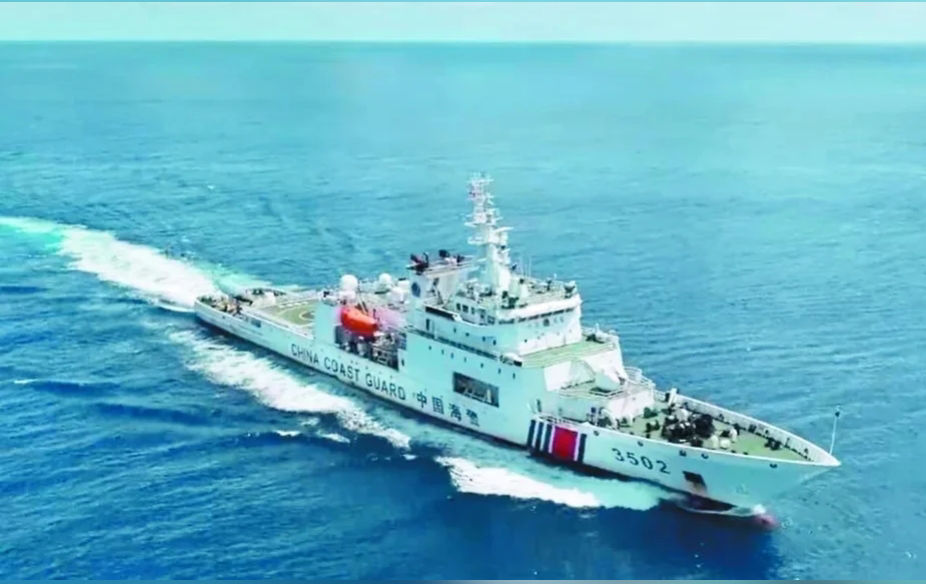
Japan-Philippines exclusive economic zone (EEZ) negotiations have bypassed Taiwan, making cracks emerge as mainland China’s Coast Guard advances into the first island chain. |
|
|---|
|
Beijing Seizes Opportunity: First Island Chain Effectively Fractured
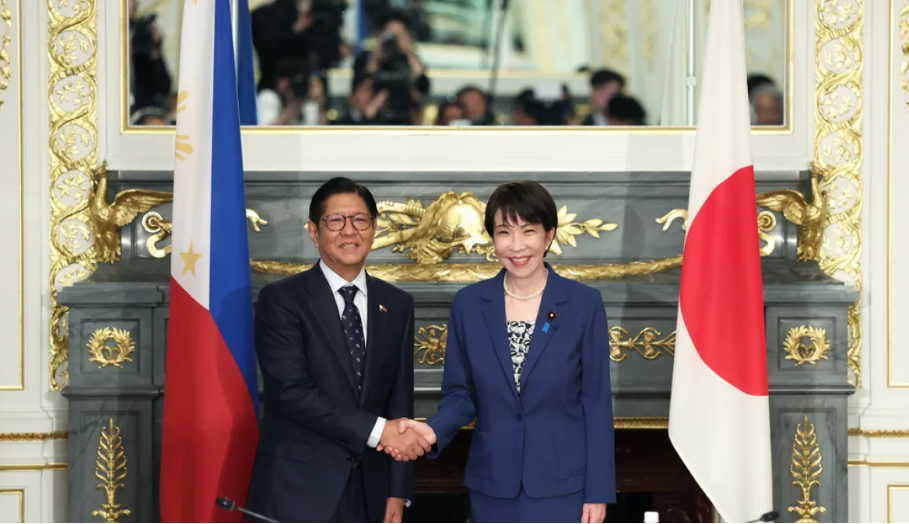
Japan and the Philippines have launched negotiations on delimiting their Exclusive Economic Zones (EEZs) and continental shelf maritime boundaries. The area under discussion lies in the waters off Taiwan’s eastern coast. The administration of President Lai Ching-te not only failed to protest but even echoed the move by stating that it was “consistent with our country's long-standing position” and expressing its “affirmation.” The government later revised its stance, saying that the Japan–Philippines negotiations “should not undermine Taiwan’s interests,” or that “consultation with Taiwan should occur if Taiwan’s interests are affected.”
|
|
|---|
|
Japan-Philippine boundary talks may compress Taiwan’s maritime claims. A scholar urges the government to take a firm stance. |
|
|---|
|
Lai Administrations' Response Leaves Taiwan More Isolated
Japan and the Philippines recently issued a joint statement announcing their decision to initiate negotiations on overlapping Exclusive Economic Zones (EEZs) and continental shelf maritime boundaries. In response, the Ministry of Foreign Affairs (MOFA) stated: “The peaceful resolution of maritime issues through dialogue and in accordance with international law by Japan and the Philippines is consistent with our longstanding position. MOFA welcomes this development and looks forward to the three parties jointly making concrete contributions to regional peace and stability as well as the protection of the marine environment.” This issue has already attracted considerable attention from Taiwan’s academic and policy communities, because its consequences will undoubtedly affect Taiwan’s claims to maritime space and the protection of its maritime rights, and its subsequent impact should not be underestimated.
|
|
|---|
|
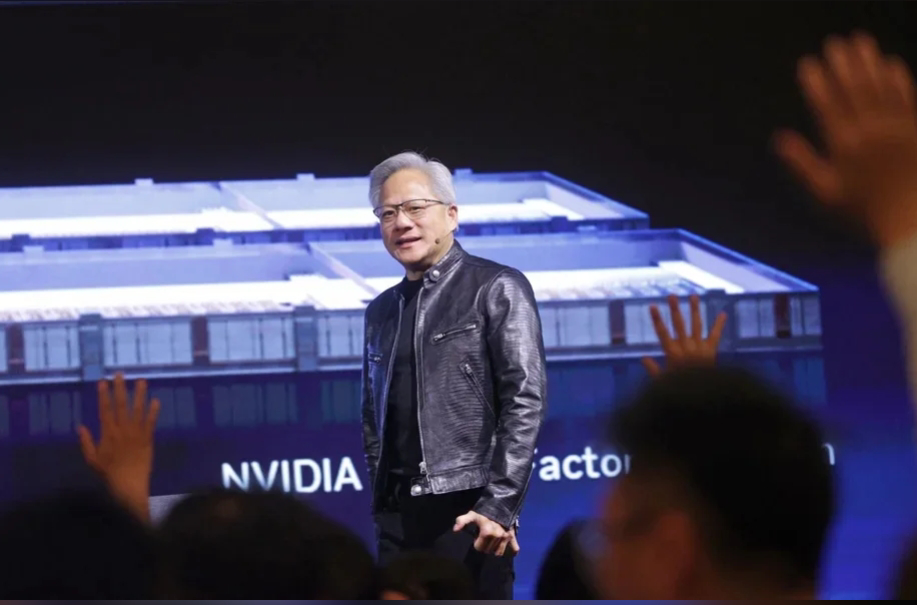
NVIDIA CEO Jensen Huang’s “Maybe” punctures President Lai Ching-te’s guarantee of no power shortages. |
|
|---|
|
President Lai's Inviting Jensen Huang to Tour Power Plant Exposes Reality of Electricity Shortage
NVIDIA CEO Jensen Huang stayed in Taiwan for more than 10 days, creating a wave of “Jensanity.” In addition to attracting attention by visiting various night markets and sampling local food, the topic that generated the most discussion was his undisguised concern about Taiwan’s energy issues. In particular, when he was asked about the government’s guarantee that Taiwan would not face electricity shortages before 2034, his spontaneous response of “Maybe” struck directly at the Democratic Progressive Party’s (DPP) most vulnerable point on the power shortage issue.
|
|
|---|
|
American plans to impose an additional 10 percent tariff on Taiwanese goods is related to a controversy about forced labor. |
|
|---|
|
May 30:
South Africa’s Mail & Guardian reported that Taiwan and Eswatini signed a $300 million financing agreement to build a strategic petroleum reserve facility in Eswatini. The report claimed that profits would go to the King and the royal family, with officials also receiving proportional benefits. The Ministry of Foreign Affairs refuted the allegation, stressing no illicit transfer of interests. |
|
|---|
|
May 30:
Driven by the artificial intelligence (AI) boom, Taiwan’s export momentum surged. The Directorate-General of Budget, Accounting and Statistics, Executive Yuan, released its latest forecast, raising the economic growth rate this year to 9.6 percent, the highest since 2011. Total exports are projected to approach $900 billion, with an annual growth rate of 39.7 percent, the highest in five decades. |
|
|---|
|
June 1:
United Daily News conducted a poll marking President Lai Ching-te’s two-year anniversary in office. Dissatisfaction with President Lai’s performance stood at 49.8 percent, while satisfaction was 41 percent. On cross-strait relations, 48.9 percent expressed dissatisfaction and 36.9 percent satisfaction. Regarding Taiwan’s future, 63 percent favor permanently maintaining the status quo
( a record high), 21 percent support independence
(a record low), and 10 percent support unification. |
|
|---|
|
June 1:
Japan and the Philippines launched negotiations on maritime boundaries concerning their exclusive economic zones (EEZs) and continental shelves, covering areas off Taiwan’s eastern coast. Beijing reacted strongly, with mainland China’s Coast Guard declaring enforcement patrols east of Taiwan as a countermeasure. The Ministry of Foreign Affairs initially welcomed the Japan-Philippines move but later clarified that the negotiations should not harm Taiwan’s interests, and if they do, consultations with Taiwan are necessary. |
|
|---|
|
June 2:
An Air Force T-34 trainer aircraft crashed during a training mission, killing two pilots instantly. The Armed Forces stated that the exercise was simulating engine failure, with no prior malfunction reported before the accident. Training flights with the same aircraft type have been suspended, and inspections are being strengthened. |
|
|---|
|
June 4:
The Ministry of Environment collected Taiwan’s first-ever carbon fee, totaling NT$4.9 billion (about US$157 million), with the semiconductor industry contributing 44 percent. Preliminary estimates suggest that by 2025, carbon reduction will be about 9 percent compared to the baseline year, falling short of the 10 percent target. Environmental groups are urging an increase in the carbon fee rate. |
|
|---|
|
June 4:
Mainland China’s Straits Forum is scheduled to open in Xiamen, Fujian Province, on June 13. The Mainland Affairs Council announced a ban on participation by central and local government officials, marking the first time in recent years that local governments have been explicitly prohibited from attending. |
|
|---|
|
June 4:
The United States plans to impose an additiona 10 percent tariff on Taiwanese goods, citing forced labor concerns. The U.S. Trade Representative’s office stated that Taiwan has not banned imports of products made with forced labor. The Executive Yuan responded that it will establish an inter-ministerial review mechanism, using the Trade Act as the legal basis, to restrict imports of goods produced with forced labor. |
|
|---|
|
|
|
|---|
|
| |
|
| |
|
|