A scholar argues that President Lai Ching-te’s hardline stance against mainland China explains cross-strait tensions and why his overseas visits have been obstructed. |
|
|---|
|
View of China as Enemy Provoked Hostile Obstruction
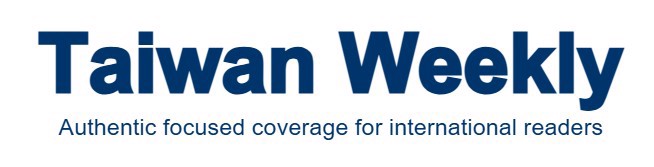
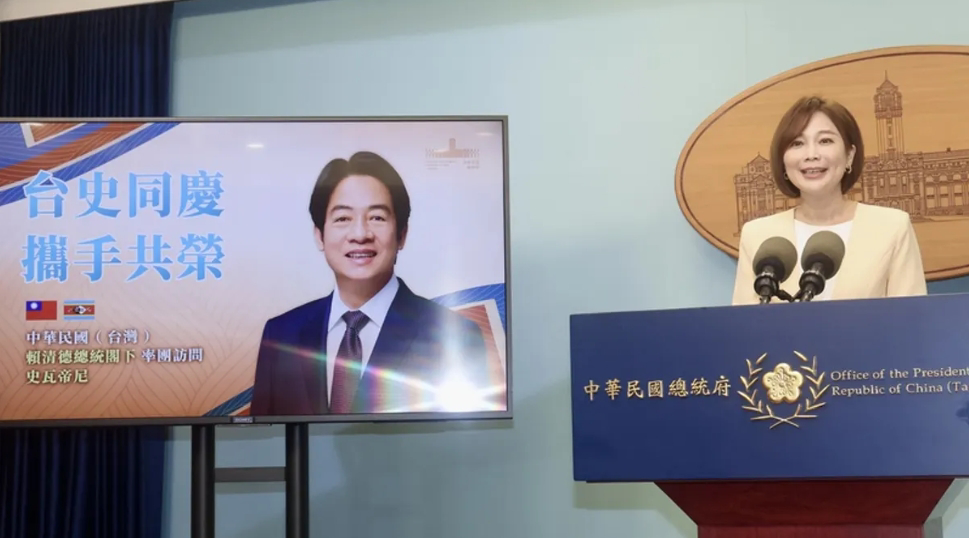
President Lai Ching-te’s visit to African diplomatic ally Eswatini has been postponed after overflight permits for the presidential aircraft were canceled by three countries including Mauritius. The interference was, of course, orchestrated by the Communist China, but the originator is President Lai himself.
|
|
|---|
|
According to a poll, a majority of Taiwanese believe that the status quo cannot be maintained and support Taiwan’s proactive negotiation to find a way forward. |
|
|---|
|
60% Support Taiwan's Taking Initiative on Cross-Strait Negotiations
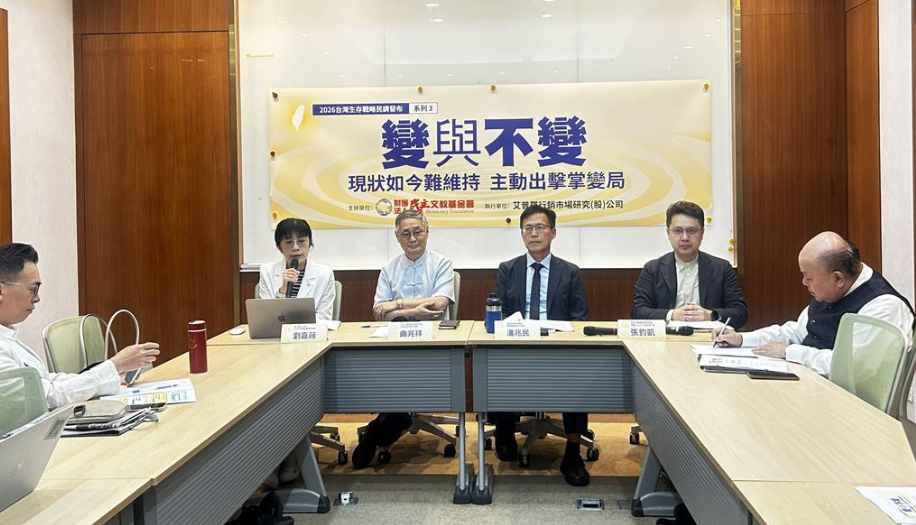
Amid a complex international environment and intensifying U.S.-China relations, what path should Taiwan take? On April 23, the Democracy Foundation held a press conference releasing the results of the latest public opinion poll on cross-strait relations. The poll shows that as many as 55.2 percent of respondents believe that Taiwan can no longer maintain the status quo; furthermore, 61 percent believe that rather than waiting for China to determine Taiwan’s fate, Taiwan should proactively engage in negotiations and propose “the most secure institutional arrangements.”
|
|
|---|
|
Premier Cho Jung-tai’s “private” trip to Japan to watch a baseball game has created a diplomatic stir, raising doubts about Taiwan-Japan mutual trust. |
|
|---|
|
Taiwan-Japan Relations Face Trust Crisis
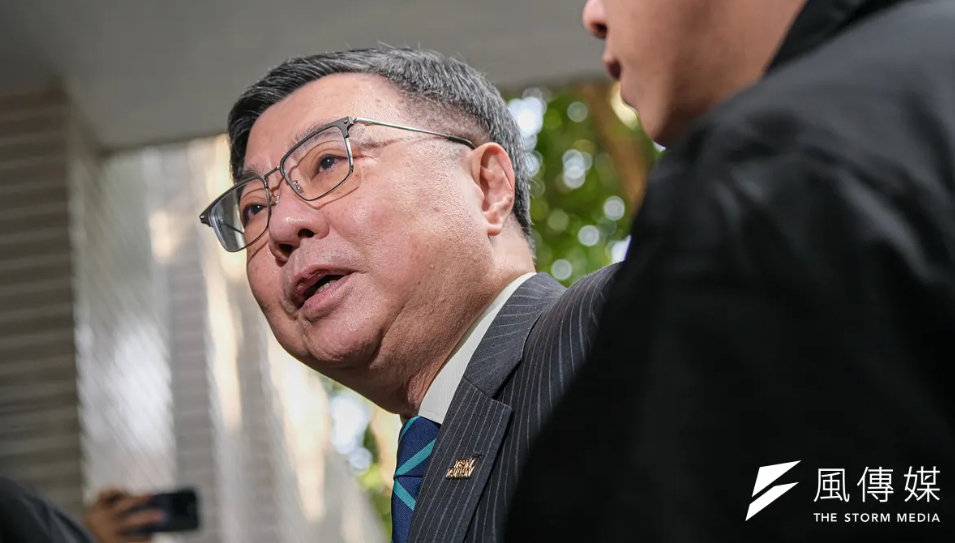
According to a March 17 report by Nikkei Asia, Premier Cho Jung-tai traveled to Japan in March this year to watch a World Baseball Classic (WBC) game. Given the sensitivity of bilateral interactions, Japan had explicitly requested that the visit be handled “with a low profile,” even suggesting the removal of accompanying spokespersons and photographers to avoid unnecessary political associations. However, the development of events completely deviated from this original intent. Taiwanese media quickly disclosed the trip, and the Central News Agency released a report almost immediately, turning what was meant to be an “invisible, low-profile” visit into a “public spotlight.” More intriguingly, Japanese officials privately stated that they “felt betrayed” and expressed concern that this incident could affect future Taiwan-Japan cooperation on sensitive issues.
|
|
|---|
|
President Lai’s impeachment motion is set for a vote on May 19. While the ruling and opposition parties reached consensus, the high threshold makes passage unlikely. |
|
|---|
|
April 20:
The General Chamber of Commerce, together with seven major trade associations, urged the government to respond to mainland China’s 10 measures towards Taiwan, stating that if they benefit the people, then they should be accommodated. In response to the Democratic Progressive Party (DPP) administration’s call for industries not to stand in opposition to the government, Chamber Chairman Hsu Shu-po said that the government should not suppress industry voices by labeling them. |
|
|---|
|
April 21:
The Ministry of National Defense released the public version of the NT$1.25 trillion (about US$39.7 billion) special military procurement act, listing seven categories of purchases. In addition to deals for M109A7 self-propelled howitzers and HIMARS multiple rocket launchers announced by the United States, Taiwan will also procure nearly 300,000 drones and vessels of various types. However, joint U.S.-Taiwan development and procurement cooperation projects remain classified. |
|
|---|
|
April 21:
President Lai Ching-te was originally scheduled to visit African diplomatic ally Eswatini on April 22. On the eve of departure, the Office of the President announced that the planned flight route through Seychelles, Mauritius, and Madagascar was abruptly denied flight clearance under pressure from Beijing. Considering flight safety, the trip was postponed. This marks the first time a head of state of the Republic of China publicly canceled a visit due to Beijing's obstruction. |
|
|---|
|
April 22:
The government relaxed import regulations on sprouting U.S. potatoes, sparking food safety concerns. At the Legislative Yuan, Premier Cho Jung-tai pledged “container-wide inspections, checking every single potato.” The Food and Drug Administration, Ministry of Health and Welfare, responded quietly, stating that the current minimum 2-percent sampling rate would remain. |
|
|---|
|
April 23:
The Democracy Foundation released a poll showing that if cross-strait relations cannot maintain the status quo, nearly 70 percent of respondents fear losing their current way of life and rights, while only 8.9 percent worry about changes to the national title or name. Over 60 percent believe freedom and property are more important, while 15.1 percent prioritize the national title. Scholars noted that public concern over lifestyle and property protection far outweighs political symbols. If the DPP continues to focus resources and rhetoric solely on “resist China to safeguard Taiwan,” it may risk losing power in the future. |
|
|---|
|
April 23:
The Financial Supervisory Commission announced that effectively immediately, the cap on investments in a single company’s stock by Taiwan equity funds and actively managed exchange traded funds (ETFs) would be raised from 10 percent to 25 percent of net asset value. The Taiwan Semiconductor Manufacturing Company (TSMC) is the sole beneficiary, the measure effectively tailor-made for the company. The market estimates nearly NT$200 billion (about US$6.3 billion) in additional funds could flow into TSMC. |
|
|---|
|
April 23:
Concerns arose after mainland China’s Gaode Map app was found to display countdown seconds for some traffic lights in Taiwan, raising cybersecurity issues. The Ministry of Digital Affairs declared that Gaode Map is legally classified as a product harmful to national security and prohibited for government use. In May, cybersecurity risk assessments will be published, and if deemed a major national security threat, the app will be completely banned. |
|
|---|
|
April 24:
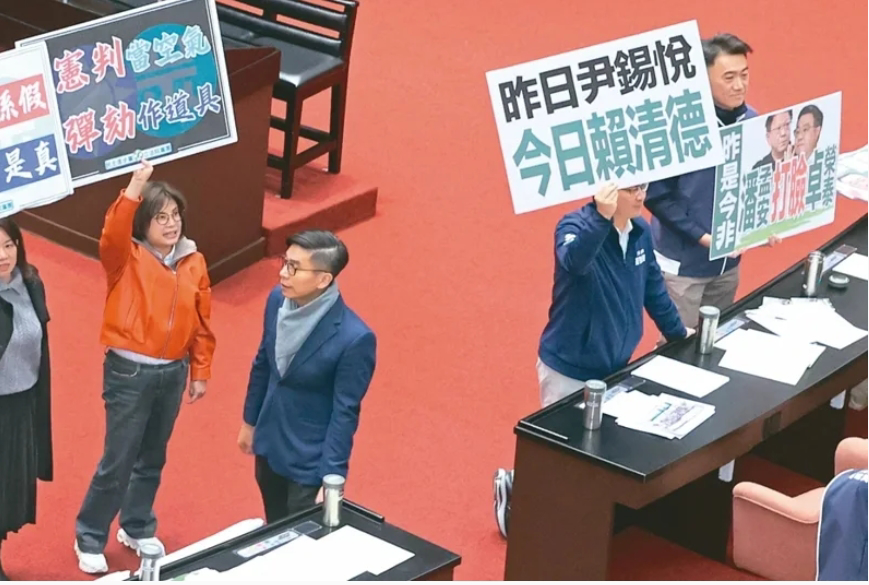
Legislative caucuses across party lines reached consensus to hold a roll-call vote on President Lai’s impeachment motion on 10 AM on May 19, one day before his second anniversary in office. The impeachment requires approval by two-thirds of all legislators, followed by a Constitutional Court ruling on removal. The threshold is extremely high. |
|
|---|
|
|