|
| | |
President Lai Shifts Stance: DPP’s
“Nuclear-Free Homeland” Policy Takes Sharp Turn
|
|
|---|
|
|
|
|
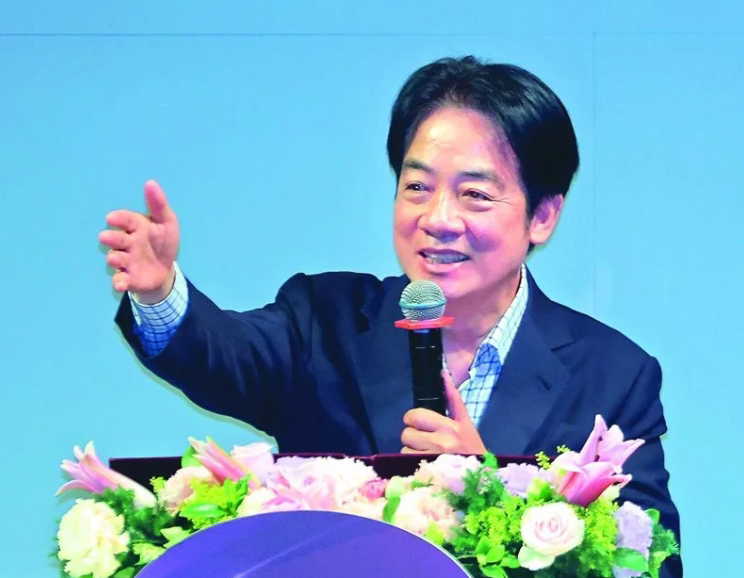
President Lai Ching-te pushes for restarting nuclear power, triggering an uproar within the ruling Democratic Progressive Party and anti-nuclear groups. |
|
|---|
|
President Lai's Double Betrayal: From Anti to Pro-Nuclear
President Lai Ching-te suddenly announced preparations to restart Nuclear Power Plants Nos. 2 and 3, triggering an uproar within the ruling Democratic Progressive Party (DPP). Civic groups friendly to the DPP administration, long tasked with defending policy, were pushed to the brink and threatened to expand street protests. Supporters are dissatisfied with the president’s all-encompassing justifications, questioning why there was no communication with public opinion, likening it to a sneak attack and a betrayal. In fact, the Lai administration had already signed “tied procurement” clauses in the U.S.–Taiwan Agreement on Reciprocal Trade (ART), pledging “not to purchase any nuclear reactors, fuel rods, or enriched uranium from countries that raise national security concerns.” Without a plan to “return to nuclear power,” why would Taiwan—having reduced nuclear energy to zero—make such a commitment?
|
|
|---|
|
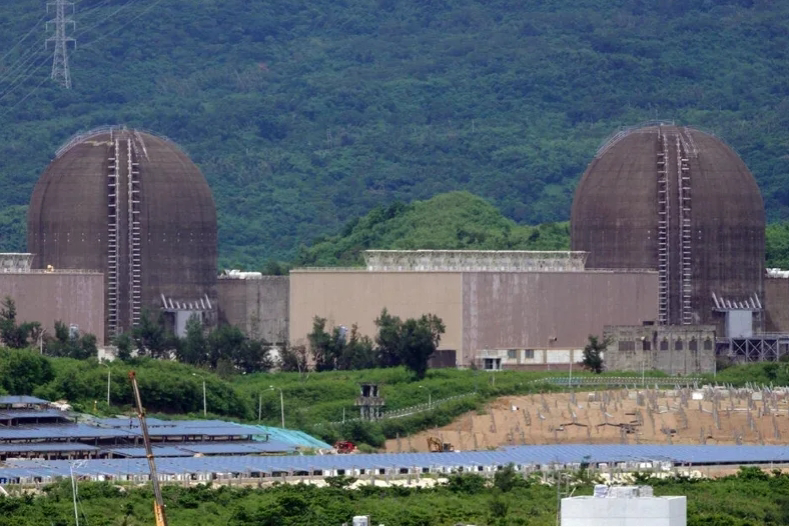
President Lai’s energy policy shift hints at a reshuffling of American and European interests. |
|
|---|
|
Energy Policy Shift: European Firms Exit, U.S. Firms Rise
President Lai Ching-te recently announced that Nuclear Power Plants No. 2 and No. 3 are ready for potential restart. This decision not only concerns Taiwan’s national energy structure and power supply stability, but also involves competition among foreign business interests in Taiwan’s energy market. Energy policy resembles a massive iceberg: what surfaces are conflicting energy pathways, while beneath lies extensive domestic and international commercial competition. As the Democratic Progressive Party (DPP) shifts its energy trajectory—even overturning its long-held anti-nuclear stance—the result will be a reshuffling of the political–business landscape.
|
|
|---|
|
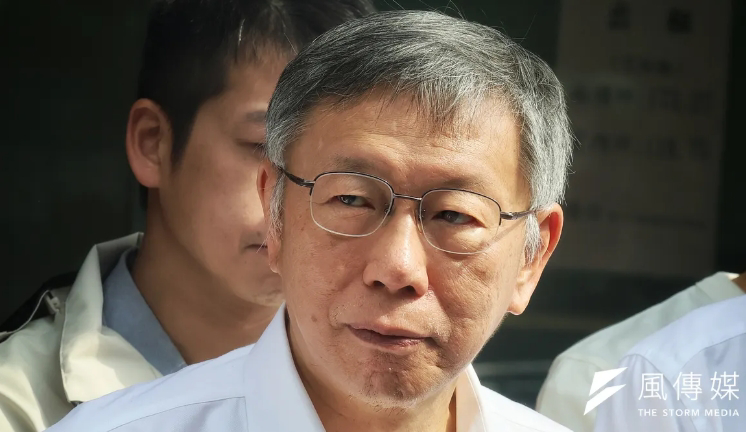
Ko Wen-je, former chairman of the Taiwan People’s Party, was sentenced to 17 years in prison. The opposition angrily denounced the ruling as judicial suppression and have vowed cooperation to make a comeback. |
|
|---|
|
Ko Heavily Sentenced for Corruption: TPP Faces Risk of Collapse
Ko Wen-je, former chairman of the Taiwan People’s Party (TPP), was implicated in four corruption lawsuits including the Living Mall case. On March 26, the Taipei District Court sentenced him heavily to 17 years. The former Taipei mayor angrily criticized this as a political purge in which the judiciary has become a political tool. The TPP also called for a march to Ketagalan Boulevard on March 29 to demand justice and judicial fairness, with support from the Kuomintang (KMT). Whether such a “battle against the judiciary” can resonate with the public and carve out a political path for opposition cooperation has drawn significant attention.
|
|
|---|
|
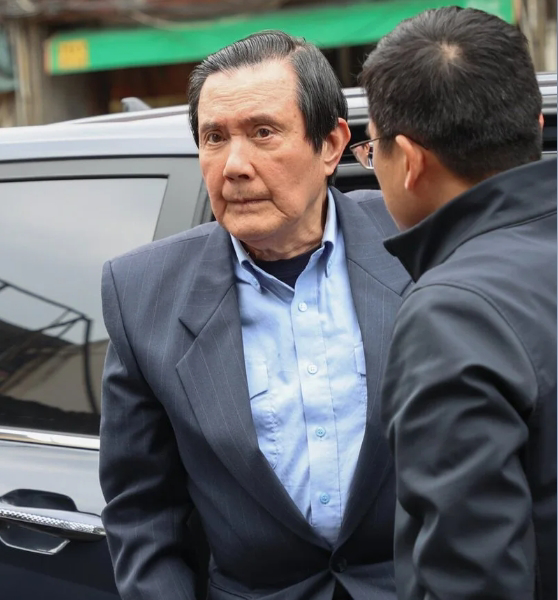
The turmoil involving Ma Ying-jeou Foundation personnel continues to attract attention. According to some, the cause is because the former president “forgot everything.” |
|
|---|
|
March 20:
President Donald Trump of the United States met with Prime Minister Takaichi Sanae at the White House, promising to speak favorably for Japan during his upcoming visit to China. The outcome document released by the White House reaffirmed that peace and stability in the Taiwan Strait are indispensable to regional security and global prosperity, opposing any attempt to unilaterally change the status quo through force or coercion. China was not explicitly named. |
|
|---|
|
March 21:
President Lai Ching-te announced that after the Legislative Yuan passed amendments to the Nuclear Reactor Facilities Regulation Act, the government has confirmed that Nuclear Power Plants Nos. 2 and 3 meet the conditions for restart. By the end of the month, the operation plan will be formally submitted to the Nuclear Safety Commission for review, and contracts will be signed with partner companies to conduct safety inspections. This move is seen as a major reversal of the Democratic Progressive Party’s (DPP) “nuclear-free homeland” policy, attracting strong backlash from anti-nuclear groups. |
|
|---|
|
March 24:
The personnel controversy at the Ma Ying-jeou Foundation escalated. Former President Ma personally addressed the issue, stating that former aides Hsiao Hsu-tsen and Wang Kuang-tsu resigned due to “problems with fiscal discipline” and will be referred to judicial authorities for investigation. Hsiao responded that he never handled finances and that everything was done according to Ma’s instructions, adding that the misunderstanding arose because Ma “forgot everything.” |
|
|---|
|
March 24:
Grab, the leading ride-hailing and delivery company in Southeast Asia, announced it will acquire foodpanda’s delivery operations in Taiwan for $600 million. Taiwan will become Grab’s first market outside Southeast Asia. |
|
|---|
|
March 24:
Toyota floated the idea of positioning Taiwan as an “extension of Japan.” New Chairman Azuma Takanori of Kuozui Motors (jointly funded by Toyota, Hino, and Hotai) stated that Toyota currently has three major production regions in Japan and hopes to develop Kuozui Motors into a “fourth production region,” exporting to more overseas markets. |
|
|---|
|
March 26:
Ko Wen-je, former chairman of the Taiwan People’s Party (TPP), was convicted by the Taipei District Court on charges of accepting bribes related to the Living Mall development project and misappropriating political donations during his tenure as Taipei mayor. He was sentenced to 17 years in prison and stripped of civil rights for six years. Ko declared that this was a wrongful conviction and vowed not to yield. The heavy sentence in the first trial jeopardizes his eligibility to run in the next presidential election. |
|
|---|
|
March 26:
The Foreign Affairs and National Defense Committee and Finance Committee of the Legislative Yuan continued reviewing the draft of the special military procurement act. However, ruling and opposition parties failed to reach consensus on key provisions such as procurement item names and total budget. The bill was reserved for further negotiation, likely delaying submission to the full chamber until late April. |
|
|---|
|
March 27:
Deputy Chief Trade Negotiator Yen Hui-hsin of the Office of Trade Negotiations, Executive Yuan, passed away due to illness. Reports surfaced that she had suffered workplace bullying before her death, with public criticism directed at Chief Trade Negotiator Yang Jen-ni. The controversy has intensified, and Premier Cho Jung-tai ordered an investigation. |
|
|---|
|
|
|
|---|
|
| |
|
| |
|
|