|
| | |
Premier's First Visit to Japan Since Diplomatic Break:
Self-Funded Baseball Game Trip Sparks Controversy |
|
|---|
|
|
|
|
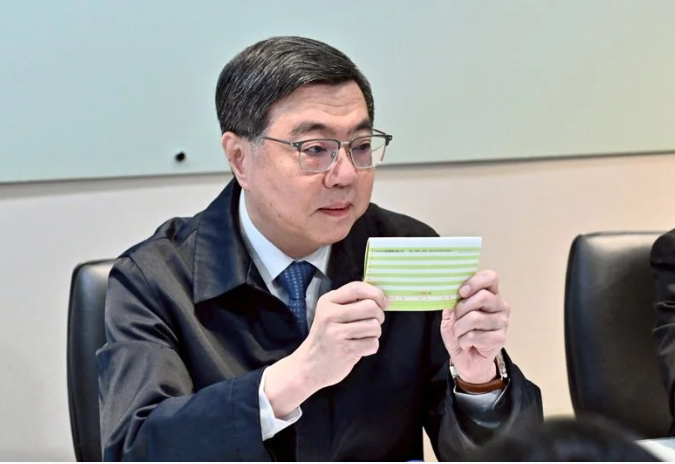
Premier Cho Jung-tai’s trip to Tokyo to watch a baseball game raised questions over whether his “private itinerary” used public funds. |
|
|---|
|
Clumsy Execution: "Baseball Diplomacy" Draws More Disputes Than Applause
Chinese Taipei stopped in the WBC preliminary round. However, the controversy over Premier Cho Jung-tai’s brief appearance in Tokyo to watch the game in person has continued to burn for more than 48 hours, with an apparent determination not to let the matter rest until they see his “self-paid receipts.” A perfectly good ballgame turned into a joke when Premier Cho watched it, and it also turned into political mudslinging.
|
|
|---|
|
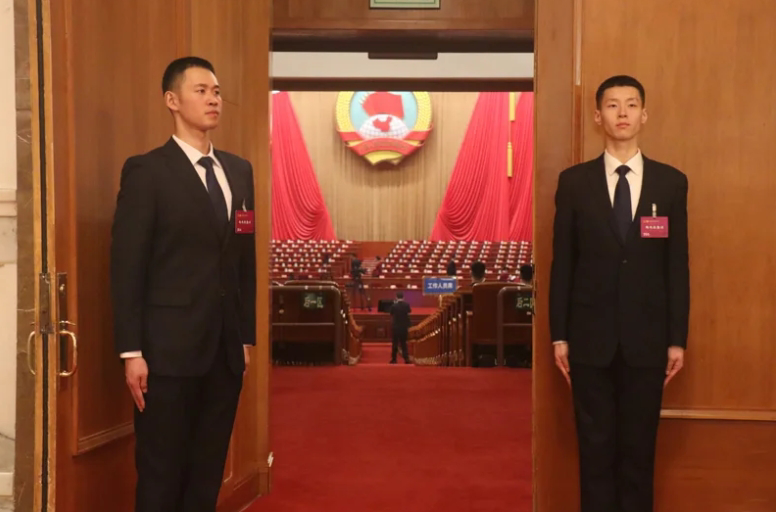
Mainland China’s Two Sessions maintain dual-track strategy towards Taiwan. Persistent cross-strait stalemate presents challenges for cross-strait peace. |
|
|---|
|
Cross-Strait Relations through Lens of China's Two Sessions
Mainland China’s Two Sessions government work report and the “15th Five-Year Plan draft” have been released. As widely expected, the long-term tone and existing policies regarding Taiwan remain unchanged. As the global situation grows turbulent and the international order erodes, the Taiwan Strait has become a high-risk geopolitical region. All sides are striving to maintain a “stalemated peace” and avoid crossing red lines. The mainland’s steady Taiwan policy may not be the best outcome, but it is not a bad one either.
|
|
|---|
|
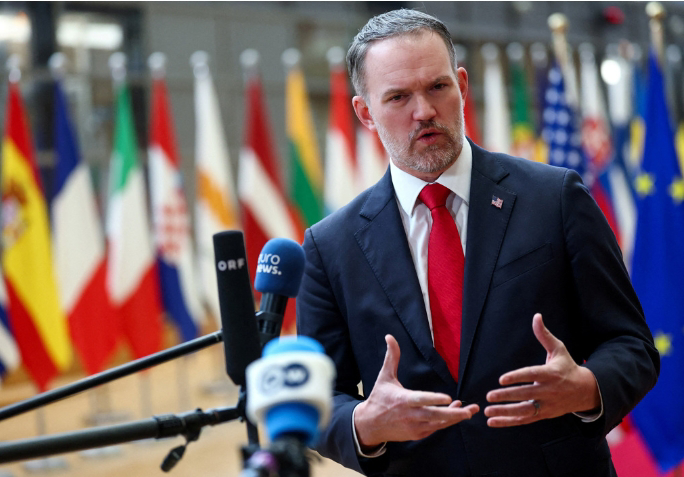
The United States restarted Section 301 investigation towards Taiwan. Taiwan’s large trade surplus may again become a source of pressure. |
|
|---|
|
Taiwan Helped U.S. Develop AI, Yet Placed on Section 301 List
Taiwan has been off the United States Special 301 list since 2009, and it has been 17 years since it last appeared on it. Most people no longer know what “301” is. From 1989 to 2008, Taiwan was on the list almost every year, appearing on various lists such as the Priority Watch List, the Watch List, and other observation lists. Taiwan therefore has extensive experience with it.
|
|
|---|
|
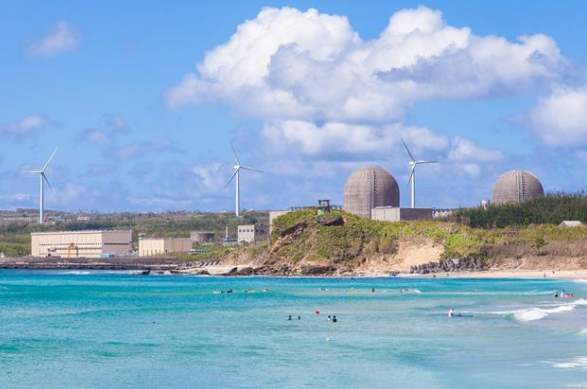
The Ministry of Economic Affairs is evaluating the possibility of restarting Nuclear Power Plants No. 2 and No. 3. The Taiwan Power Company is initiating safety inspections. |
|
|---|
|
March 7:
The World Baseball Classic preliminaries were held in Tokyo, Japan. Premier Cho Jung-tai flew in on a chartered plane and made a whirlwind appearance at the stadium, marking the first time a sitting premier visited Japan since the Republic of China and Japan severed diplomatic ties in 1972. The Executive Yuan stated that it was a private trip and offered no further comment. Japanese authorities noted that Cho did not meet with government officials during his visit. |
|
|---|
|
March 8:
The Ministry of Economic Affairs recently approved the Taiwan Power Company’s assessment report on the current status of nuclear power plants, confirming that Nuclear Plant No. 2 and No. 3 are feasible for restart. Nuclear Plant No. 3 has already begun its self-safety inspection, while Nuclear Plant No. 2 must first remove reactor fuel rods and is expected to begin its inspection by mid-next year. Taipower stated that it has started negotiations with the original manufacturer General Electric. |
|
|---|
|
March 11:
Regarding the controversy over mainland Chinese spouse Legislator Lee Chen-hsiu’s eligibility as a lawmaker, cross-party negotiations in the Legislative Yuan reached no consensus. Speaker Han Kuo-yu announced that until facts are clarified and judicial rulings are made, Lee’s status and exercise of legislative authority should be respected. The executive branch still insists her qualifications remain unclear. |
|
|---|
|
March 12:
Mainland China’s “Two Sessions” concluded, passing the outline of the 15th five-year plan. On Taiwan, the tone continued from recent years, but the stance towards pro-independence forces was escalated from “resolute opposition” to “resolute crackdown.” During deliberations with the “Taiwan delegation” at the National People’s Congress, Chairman Wang Huning of the Chinese People’s Political Consultative Conference (CPPCC) emphasized the need to further seize strategic initiative in achieving complete national reunification. |
|
|---|
|
March 12:
The former Kuomintang (KMT) central party headquarters building was ruled by the Executive Yuan’s Ill-gotten Party Assets Settlement Committee (CIPAS) as improper party assets, ordering recovery of over NT$1.1 billion (about US$34.5 million). The KMT filed suit. The Supreme Administrative Court ruled that CIPAS’s administrative disposition was unlawful, siding with the KMT. The case is now finalized. |
|
|---|
|
March 12:
The United States announced a Section 301 investigation into trade partners. The Executive Yuan stated that Taiwan had been notified before the announcement. Going forward, the goal is to ensure that the relative advantages and best treatment already secured in negotiations are not compromised. |
|
|---|
|
March 13:
Three U.S. arms sales price offers to Taiwan will expire on March 15. Cross-party negotiations in the Legislative Yuan agreed that if the United States formally issues price offers for continued purchases of TOW and Javelin missiles, M109A7 self-propelled howitzers, and HIMARS multiple rocket systems, the Executive Yuan will be authorized to sign contracts with the United States in advance. |
|
|---|
|
March 13:
The Legislative Yuan held a roll-call confirmation vote on nominees to the Central Election Commission (CEC). Nominee for chairman Yu Ying-lung and members Su Tzu-chiao, Lee Li-chung, and Su Chia-hung were successfully approved. However, nominee for deputy chairman recommended by the Democratic Progressive Party (DPP), Hu Po-yen, and members Huang Wen-ling and Chen Tsung-yi were blocked by the opposition. |
|
|---|
|
|
|
|---|
|
| |
|
| |
|
|