|
| | |
Trump-Xi Meeting and U.S. Arms Sales to Taiwan |
|
|---|
|
|
|
|
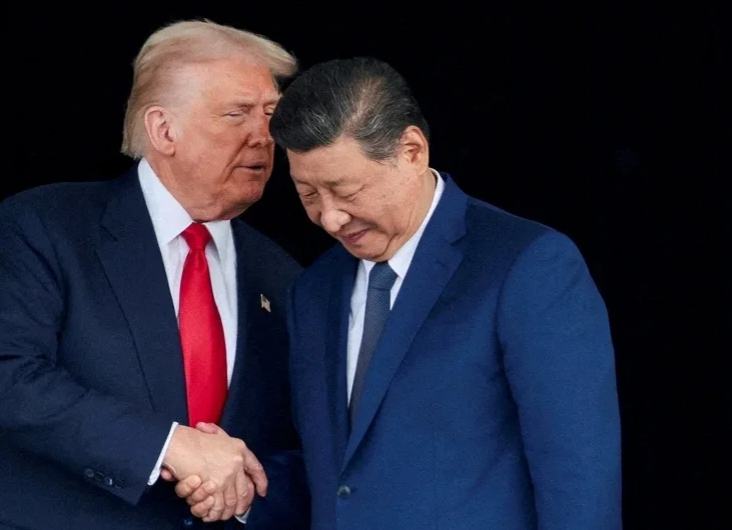
U.S.-China negotiations are heating up. Experts worry that arms sales to Taiwan may become a bargaining chip. |
|
|---|
|
Trump-Xi Phone Call: Is U.S. Beginning to Deviate from "Six Assurances" to Taiwan?
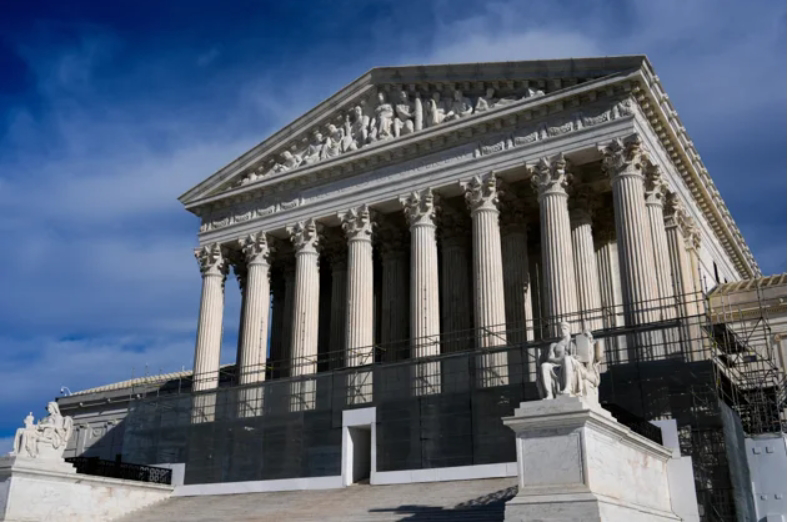
Two international developments in succession introduce significant variables affecting future U.S.–Taiwan relations. First, on the evening of February 16, President Donald Trump of the United States stated aboard Air Force One that he was discussing future arms sales to Taiwan with Chinese President Xi Jinping and revealed that a decision would be made soon. Shortly thereafter, on February 20, the U.S. Supreme Court ruled that the “reciprocal” tariffs imposed by President Trump on nearly all countries under the International Emergency Economic Powers Act were invalid.
|
|
|---|
|
Taiwan’s defense budget has been tied to the U.S.-Taiwan agreement on reciprocal tariffs, raising concerns that arms sales could be used by U.S. President Donald Trump as leverage in U.S.-China talks. |
|
|---|
|
U.S.-Taiwan Trade Agreement Tied to Taiwan's Defense Budget Raises Concerns Over Losing Autonomy
The administration of President Lai Ching-te included Taiwan’s defense spending exceeding 3 percent of gross domestic product (GDP) into the text of the U.S.–Taiwan Agreement on Reciprocal Trade (ART). Unexpectedly, U.S. President Donald Trump then confirmed that he was discussing future arms sales to Taiwan with Chinese President Xi Jinping. Meanwhile, the U.S. Supreme Court’s ruling that Trump’s reciprocal tariffs are unconstitutional has cast uncertainty over how the United States will implement reciprocal trade agreements signed with various countries. The only certainty is that the Lai administration touted its negotiations as both proactive and prudent over a cup of bubble tea—yet that very cup was immediately placed on the negotiating table as an extra dish for the United States and China. By allowing Beijing to interfere in Taiwan’s defense budget, does President Lai not feel that Taiwan’s determination for self-defense has been slighted? And how is the legislature to calmly review an astronomical special defense budget?
|
|
|---|
|
Premier Cho Jung-tai’s blocking questioning from a legislator who is a mainland Chinese spouse has been criticized as governing by ideology. |
|
|---|
|
Premier Bullies Mainland Spouse Legislator, Undermining Parliament
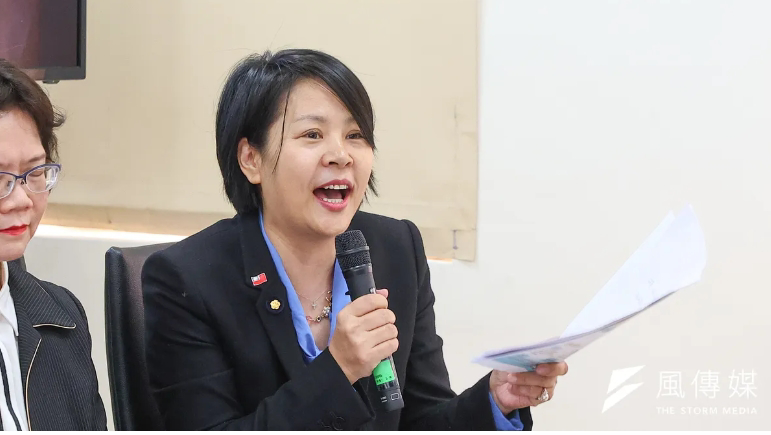
Taiwan People’s Party (TPP) legislator-at-large Li Chen-hsiu has faced repeated obstacles from the Ministry of the Interior (MOI) and the Mainland Affairs Council (MAC) since taking office because of her status as a mainland Chinese spouse. Recently, while answering questions in the Legislative Yuan, Premier Cho Jung-tai referred to her merely as “Ms. Li,” ordered all executive agencies not to provide her with information, and even implied that he would not accept her questioning. This not only deprives mainland spouses of their right to political participation, but also shows contempt for legislative authority.
|
|
|---|
|
The U.S. Supreme Court struck down Mr. Trump’s tariffs. While Europe is already considering restarting negotiations, Taiwan chooses to stick with the status quo. |
|
|---|
|
February 23:
President Lai Ching-te held a Lunar New Year tea gathering with the heads of the five branches of government. He accepted the invitation by Speaker Han Kuo-yu of the Legislative Yuan and expressed willingness to deliver a national policy report before the parliament. However, the ruling and opposition parties could not reach a consensus on the format of questioning, so negotiations broke down and will have to be resumed at a later date. |
|
|---|
|
February 25:
Party caucuses of the Legislative Yuan reached consensus to send the draft Special Act on Defense Procurement for discussion on march 6. The Kuomintang (KMT) also submitted its own version, advocating arms purchases but strictly reviewing commercial procurement. Media reports say that the KMT version incorporates the US$11.1 billion arms sales package announced by the United States last year, requiring contract clauses on delivery schedules and liability for breach. If the United States later formally proposes new arms sales, the KMT plans to submit corresponding versions. |
|
|---|
|
February 25:
The Taiwan Semiconductor Manufacturing Company’s (TSMC) stock price broke through the NT$2,000 mark. Since TSMC had been placed on the Taiwan Stock Exchange’s watch list on February 24, observers wondered if continued gains might escalate it to a warning stock or trigger segmented trading. But the next day, TSMC was removed from the list, with the exchange stating that under current rules, TSMC does not meet the criteria for warning stock designation. |
|
|---|
|
February 25:
Starting in march, Taipei will be the first local government in Taiwan to implement a “Reduced Working Hours for Parenting” program. Parents with children under 12 can flexibly reduce their daily work hours by one hour without a pay cut. The Taipei City Government will subsidize 80 percent of the wages for the reduced hours. |
|
|---|
|
February 26:
Taiwan People’s Party (TPP) Legislator Li Chen-hsiu, a mainland Chinese spouse, is facing scrutiny by the Lai administration over her eligibility to serve. Premier Cho Jung-tai issued a ban, refusing to provide her with any government information or accept her interpellation until her qualifications are confirmed. Critics say Cho’s move disrespects legislative authority. TPP founding chairman Ko Wen-je countered that if the government openly declares that mainland spouses are foreigners who, even with Taiwan identification cards, lack political rights, then the party will let Li step down. |
|
|---|
|
February 26:
The U.S. Supreme Court ruled that President Donald Trump’s reciprocal tariff policy was unlawful. The Executive Yuan stated that the ruling does not involve “Section 232” of the Trade Expansion Act, so Taiwan’s negotiated tariff concessions and most-favored-nation treatment remain unchanged. President Lai stated that Taiwan will continue negotiations with the United States and hopes Washington will honor its commitments. |
|
|---|
|
February 26:
Under strong momentum from booming AI server demand, Aspeed stock surged past NT$10,000 (about US$318), becoming the first stock to join the “10,000 Club.” Its main product, server management chips, holds an almost monopolistic position globally. Taiwan’s stock market has hit record highs for consecutive days, with daily trading value often exceeding NT$1 trillion (about US$31.8 billion). Chairman Chen Chun-hung of the Taiwan Securities Association predicted a long-term outlook of 50,000 points. |
|
|---|
|
February 27:
Hong Kong media reported that Minister of the Interior Liu Shih-fang’s nephew Yen Wen-chun serves as an executive at a mainland Chinese company and provided political donations to Liu. The Taiwan Affairs Office (TAO) of the mainland’s State Council said that it is investigating the matter according to law and regulations, stressing that it will never allow “diehard Taiwan independence separatists” or their relatives to profit from investment or business in the mainland. |
|
|---|
|
|
|
|---|
|
| |
|
| |
|
|