|
| | |
Subtext Behind Trump-Xi Phone Call |
|
|---|
|
|
|
|
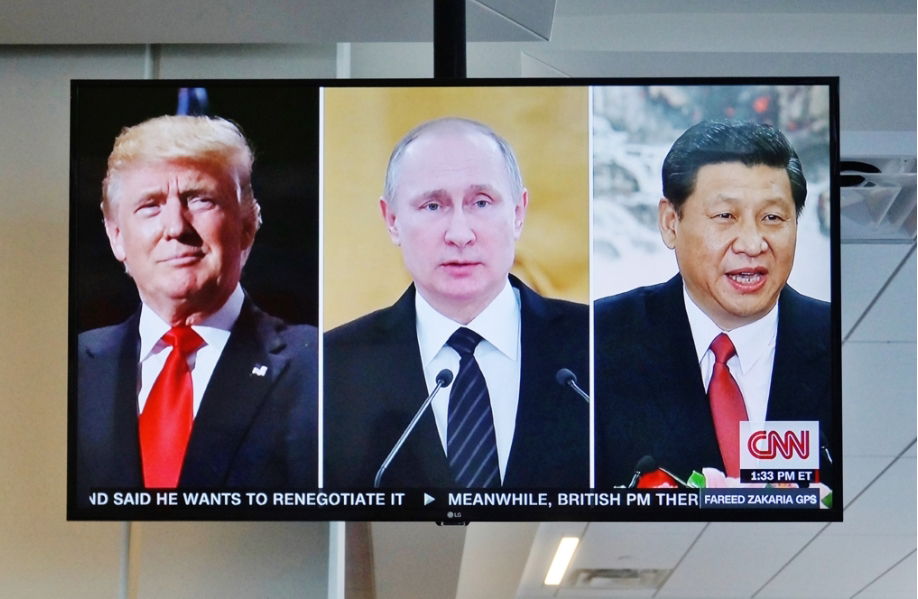
Chinese President Xi Jinping’s calls with Russian and American leaders signal that the United States and China are moving towards co-managing the world. |
|
|---|
|
Xi Calls U.S. and Russia: Beyond Joint Management of Taiwan Strait
After a video conference with Russian President Vladimir Putin on February 4, Chinese President Xi Jinping had an unannounced phone call with President Donald Trump of the United States. This unusual situation was clearly strategic communication that bypassed diplomatic protocol: Major power leaders spoke directly to make things clear and avoid misjudgment. This is extremely rare in great-power competition and usually only occurs when something has happened and there is an urgent need to deal with it.
|
|
|---|
|
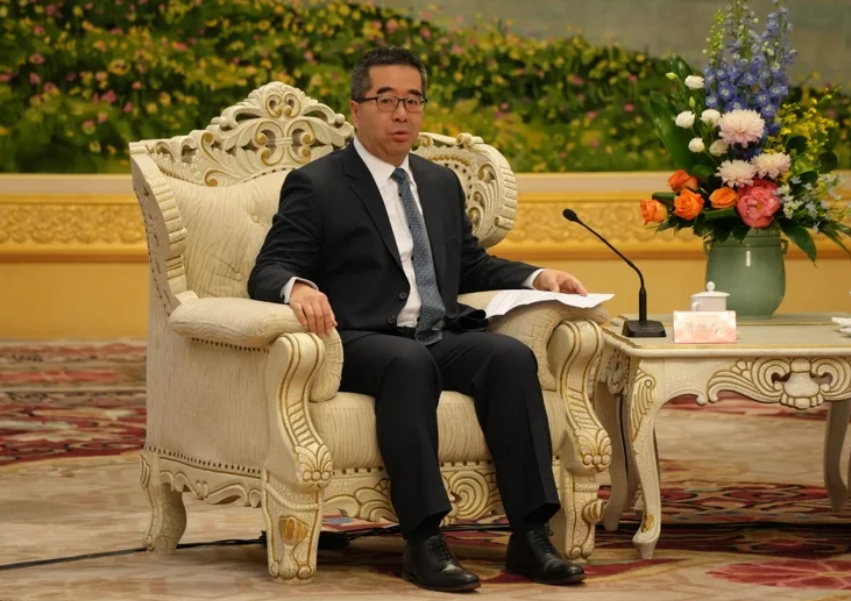
Vice Chairman Hsiao Hsu-chen of the Kuomintang (KMT) reiterated “One China, respective interpretations” in Beijing, retaining room to articulate the 1992 Consensus. |
|
|---|
|
KMT-CPP Forum Resumed: Space Remains to Articulate 1992 Consensus
Amid continued cross-strait tensions, cross-strait exchanges, after a nine-year hiatus, resumed with the Kuomintang (KMT) and Chinese Communist Party (CCP) think tank forum. What merits attention is whether there has been any change in Taiwan’s discursive space regarding cross-strait exchanges. KMT Vice Chairman Hsiao Hsu-tsen directly stated the formulation of “One China, respective interpretations” to Wang Huning, chairman of the Chinese People’s Political Consultative Conference (CPPCC), in Beijing, highlighting that the “1992 Consensus” still has room for Taiwan for liberal interpretation.
|
|
|---|
|
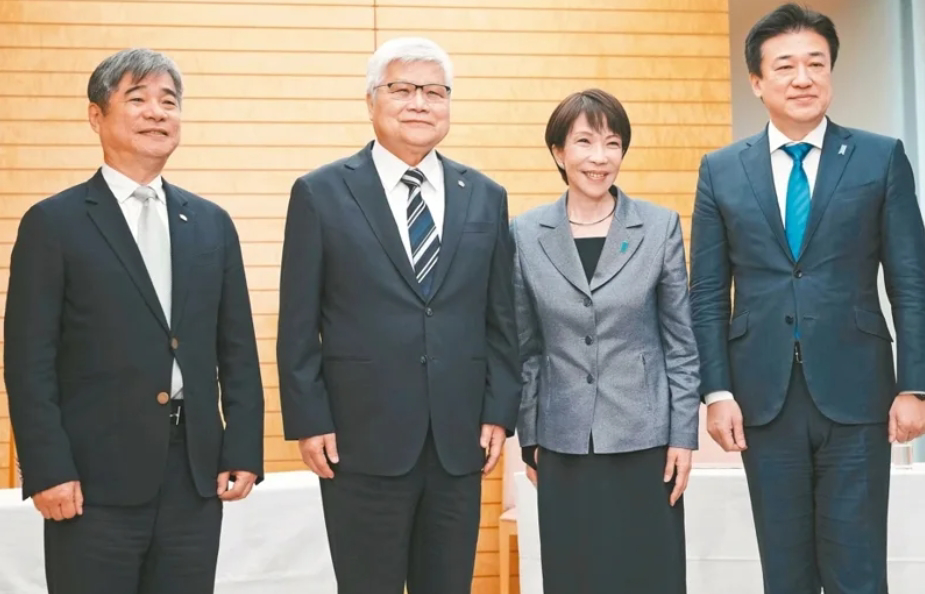
The Kumamoto plant of the Taiwan Semiconductor Manufacturing Company (TSMC) upgrade to 3nm demonstrate how the company is cleverly leveraging geo-political pressure to achieve breakthrough. |
|
|---|
|
Kumamoto Plant Eyes 3nm: TSMC Turns Geopolitical Pressure into Impetus
Morris Chang, founder of the Taiwan Semiconductor Manufacturing Company (TSMC) once said that the company has become a strategic battleground for geopoliticians. Holding a near-monopolistic position in advanced foundry processes, TSMC has become a global benchmark and a target courted by major powers such as the United States, Japan, and Europe. Yet, bearing the “Taiwan” label, TSMC must both ensure that its most advanced processes do not relocate abroad while also satisfying the insatiable demands of foreign governments. Pushed onto the world stage from the outset, TSMC has now learned, through flexibility and precise judgment, to turn geopolitical pressure into a driving force—maintaining its status as the “sacred mountain protecting the nation,” navigating among nations, and ensuring the company’s continued growth.
|
|
|---|
|
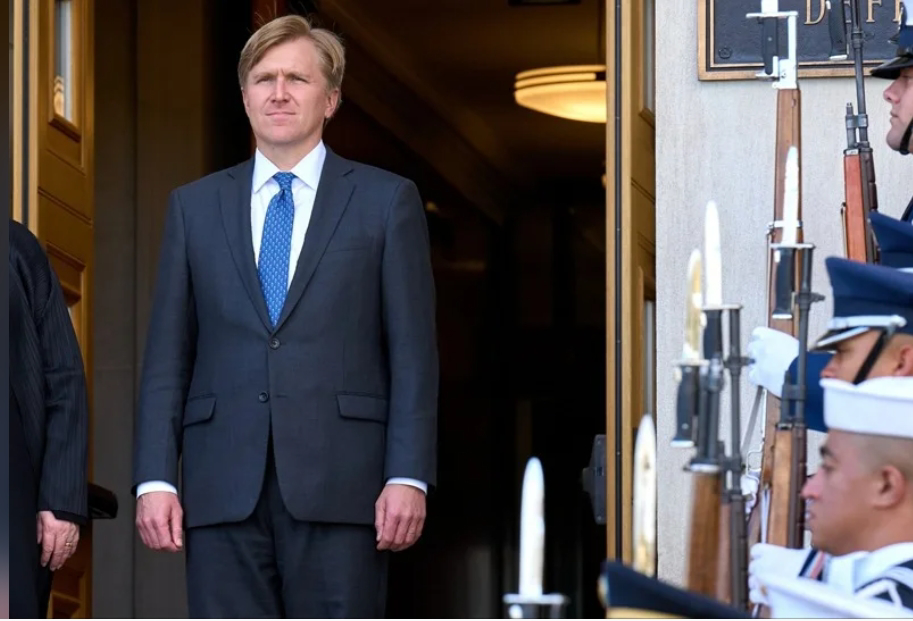
U.S. Undersecretary of Defense for Policy Elbridge Colby visited Japan and South Korea to explain President Donald Trump’s Indo-Pacific strategy, which comprises "deterrence by denial" along the first island chain, but did not mention the Taiwan Strait. |
|
|---|
|
January 30:
The Legislative Yuan adjourned, with opposition parties continuing to block the 2026 central government budget and the Special Act on Strengthening National Defense. The budget bill was not only left unreviewed during the session but also failed to be referred to committee, marking the first such case in constitutional history. Based on the schedule, the earliest possible passage of the budget would be in April or May after the new session begins. |
|
|---|
|
February 2:
The Taiwan People’s Party (TPP) fulfilled its campaign pledge: at-large legislators resigned after serving two years, and replacements were sworn in. Among them, Li Chen-hsiu faced dismissal by the Ministry of the Interior due to her status as a mainland Chinese spouse. Minister Chiu Chui-cheng of the Mainland Affairs Council admitted that he had informed the Ministry of the Interior that giving up mainland Chinese nationality is difficult, and no one has successfully completed that process to date. |
|
|---|
|
February 2:
According to the latest My Formosa poll, President Lai Ching-te’s trust rating saw a “golden crossover”: 46.9 percent of respondents expressed trust, up 4.3 percentage points from last month, while 43.3 percent expressed distrust. This returned to the level before the recall vote last year. Overall satisfaction with President Lai’s governance reached 46 percent, up 5.4 points from last month, while 48 percent expressed dissatisfaction. |
|
|---|
|
February 3:
U.S. Under Secretary of Defense for Policy Elbridge Colby visited Japan and South Korea, publicly outlining President Donald Trump’s Indo-Pacific policy centered on “strong denial defense” along the first island chain. He emphasized deploying resilient military postures in Japan and Korea, maintaining communication with Beijing but without naïve expectations of outcomes. The issue of the Taiwan Strait was not mentioned. |
|
|---|
|
February 4:
After nine years, the Kuomintang (KMT) and Chinese Communist Party (CPP) think tank forum was held in Beijing. KMT Vice Chairman Hsiao Hsu-chen stated that the two sides of the Taiwan Strait should cooperate to “make money from the world,” rather than let foreign countries profit at Taiwan’s expense. In his meeting with Wang Huning, chairman of the mainland’s National Committee of the Chinese People’s Political Consultative Conference (CPPCC), Hsiao mentioned “respective interpretations of One China.” Shortly afterward, the mainland’s Ministry of Culture and Tourism announced it would resume allowing Shanghai residents to travel to Kinmen and Matsu. |
|
|---|
|
February 4:
Chinese President Xi Jinping and U.S. President Donald Trump held a phone call, touching on Taiwan. According to official mainland Chinese media, Xi urged Trump to handle arms sales to Taiwan cautiously. Trump said he valued China’s concerns and would maintain stable U.S.-China relations during his term. President Lai stated that U.S.-China-Taiwan relations uphold four constants: the fact that Taiwan is not part of China remains unchanged; U.S. commitments under the Taiwan Relations Act and Six Assurances remain unchanged; U.S. alliances to safeguard Indo-Pacific peace and stability remain unchanged; and U.S.-Taiwan relations remain rock-solid. |
|
|---|
|
February 5:
Chairman C.C. Wei of the Taiwan Semiconductor Manufacturing Company (TSMC) met Prime Minister Sanae Takaichi of Japan. At the under-construction Kumamoto No. 2 plant, TSMC will establish Japan’s first advanced 3-nanometer semiconductor mass production base. The plant was originally planned with a $12.2 billion investment to produce 6-12 nm chips. TSMC will discuss the new plan with Japan’s Ministry of Economy, Trade, and Industry (METI), with equipment investment expected to reach $17 million. |
|
|---|
|
February 5:
Last year, the Legislative Yuan amended the law to raise the income replacement rate for retired police and firefighters. However, the Executive Yuan has not allocated funds accordingly. More than 2,000 retired officers filed a class-action lawsuit, which opposition parties called the “largest citizen lawsuit against the government in history,” criticizing President Lai for trampling on the rule of law and ignoring retiree’s rights. |
|
|---|
|
|
|
|---|
|
|
In observance of the Chinese New Year holidays,
Taiwan Weekly will suspend publication for two weeks and resume on March 2, 2026. We appreciate your understanding and continued support. |
|
|---|
|
|
| |
|
|