U.S.-Taiwan tariff negotiations favor the United States, raising risks of semiconductor outflow and undermining the claim of “win-win.” |
|
|---|
|
Silicon Shield Thins: Where is the U.S.-Taiwan "Win-Win"?
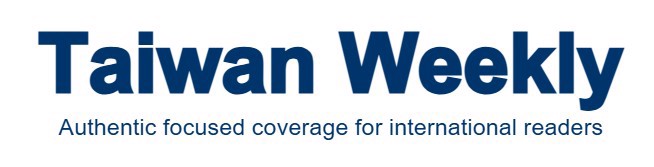
After eight months of negotiations, the outcome of the U.S.-Taiwan tariff negotiations has finally been revealed. On the surface, Taiwan secured the same 15 percent non-cumulative tariff treatment as Japan and South Korea, and obtained most-favored-nation tariff arrangements for certain automobiles, aviation components, and wooden furniture under Section 232. In exchange, however, Taiwan’s government must assist domestic companies in investing up to US$250 billion in the United States and provide credit guarantees to support financial institutions in extending loans to Taiwanese firms investing in the United States, also amounting to as much as US$250 billion.
|
|
|---|
|
The details of the NT$1.25 trillion (about US$39.6 billion) arms purchase remain unclear; even legislators cannot see the list, fueling controversy over a “black-box” process. |
|
|---|
|
Content of NT$1.25 Trillion Arms Purchase? Black-Box Process Makes Public Wary
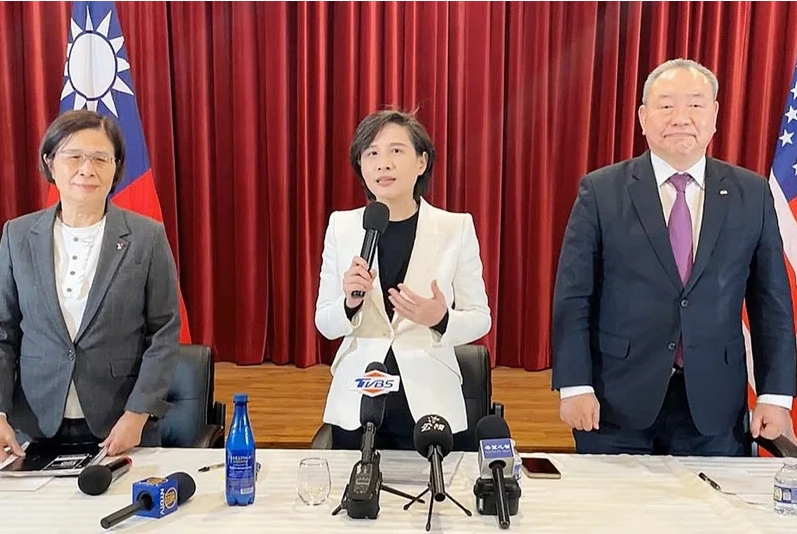
Chairman Huang Kuo-chang of the Taiwan People’s Party (TPP) recently visited the United States. After returning to Taiwan, he commented on the Executive Yuan’s proposed NT$1.25 trillion (about US$39.5 billion) special budget for arms procurement, stating that the public still does not know what items will be purchased. It was not until the U.S. Department of State issued an official statement that the Taiwanese public learned of five items, totaling approximately NT$300 billion (about US$9.4 billion). “This is the kind of ‘democratic process’ that we cannot accept,” he said. This statement immediately drew strong rebuttals from the Executive Yuan and the Ministry of National Defense (MND).
|
|
|---|
|
Interior decorator and shoe merchant cross over into arms sales; Successful bidders for defense procurement projects concentrate in southern Taiwan, sparking debate over political-business ties. |
|
|---|
|
"Newcomer" Arms Dealers Carve Up Military Procurement Pie
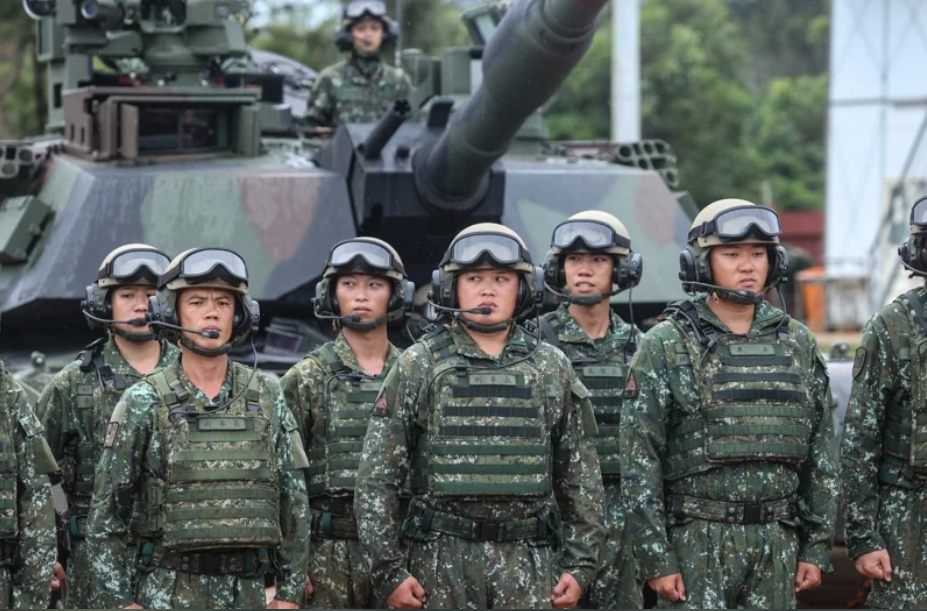
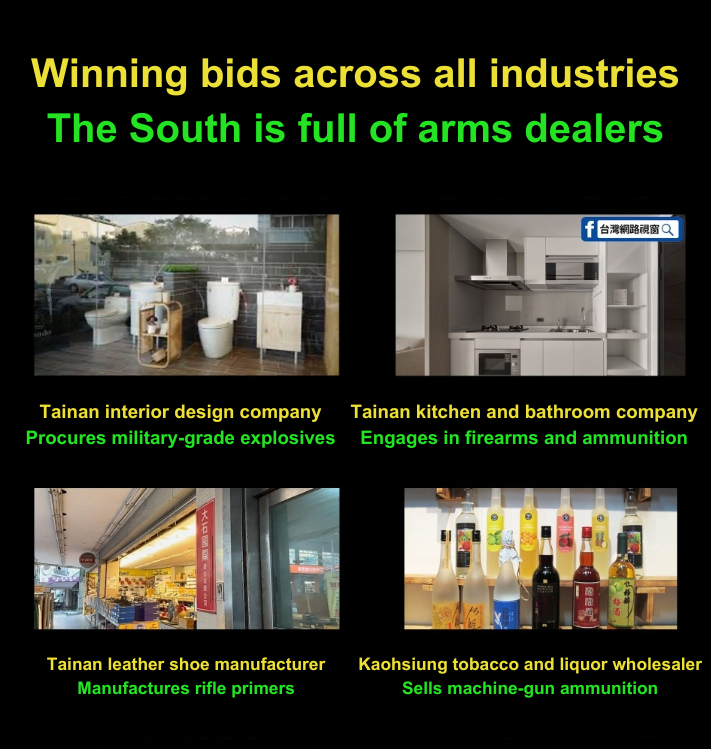
The Democratic Progressive Party (DPP) has been fully promoting the defense industry and has been in power for nearly ten years. From recent changes in arms-related business—such as interior decoration companies selling explosives, shoe manufacturers selling primers, and tea companies engaging in cybersecurity, all of them “newcomers” to the field—it is evident that the power structure of arms dealers is undergoing a reshuffle. As the saying goes, “when the world is in chaos, opportunities abound.” With cross-strait military tensions intensifying, the arms business environment is highly favorable.
|
|
|---|
|
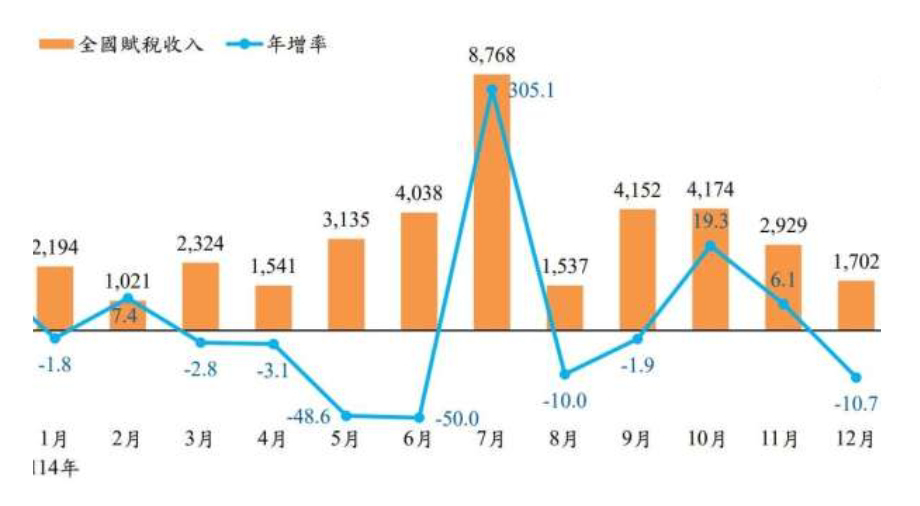
Tax revenue in 2025 is NT$3.75 trillion (about US$118.9 billion), falling short by NT$50.5 billion (about US$1.6 billion). Revenue growth lagged economic expansion, sounding a fiscal warning. |
|
|---|
|
January 11:
The fourth military branch promoted during former President Tsai Ing-wen’s era was declared a failure. Media reports revealed that earlier this year, the Army quietly dissolved the previously independent “Information, Communications, and Electronic Force Command,” re-integrating it into each army corps command as newly established cyber-electronic warfare groups. |
|
|---|
|
January 12:
The Taiwan Stock Exchange index surpassed 30,000 points after the new year. The National Stabilization Fund Management Committee decided to withdraw from the market, ending its 279-day intervention—the longest protection record in history. |
|
|---|
|
January 12:
Regarding the F-16 fighter jet crash on January 6, the Air Force confirmed that the aircraft had previously reported issues with its navigation system, which will be a key focus of the investigation. The Air Force also announced that the F-16 fleet has completed special inspections and resumed training missions. |
|
|---|
|
January 13:
For the first time in five years, Taiwan recorded an annual tax revenue shortfall. The Ministry of Finance announced that 2025 tax revenue reached NT$3.7 trillion (about US$118.8 billion), a decrease of NT$10.4 billion (about US$330 million) from the previous year, and NT$50.5 billion (about US$1.6 billion) below budget. The achievement rate was 98.7 percent, signaling that tax revenue growth is lagging behind economic growth—a fiscal warning sign. |
|
|---|
|
January 15:
The Taiwan Semiconductor Manufacturing Company (TSMC) held its earnings conference. In response to foreign media reports claiming TSMC had promised to build at least five additional wafer fabs in the United States in exchange for reduced reciprocal tariffs on Taiwan, Chairman C. C. Wei did not directly confirm. However, he stated that TSMC supports expansion plans and will provide more flexibility, hinting at possible future developments. |
|
|---|
|
January 15:
After returning from a U.S. visit, the Taiwan People’s Party (TPP) questioned the special military procurement budget of US$40 billion, noting that only five U.S. arms purchases amounted to about NT$350 billion (about US$11.1 billion). Deputy Minister of National Defense Hsu Szu-chien responded in the Legislative Yuan that procurement is divided into U.S. purchases, commercial purchases, and domestic manufacturing. Of these, more than NT$300 billion (about US$9.4 billion) will be produced domestically, with the remainder procured above. |
|
|---|
|
January 15:
Another controversy emerged in the Ministry of National Defense’s procurement cases. Following earlier scandals involving an interior decorator selling explosives and a shoe vendor supplying primers, the opposition revealed that a tobacco, alcohol, and hardware wholesaler won a NT$45.5 million (about US$1.4 million) ammunition contract from the Armaments Bureau. The company had only last year abruptly changed its business scope to include firearms and ammunition imports and exports. |
|
|---|
|
January 16:
Taiwan and the United States concluded trade negotiations. Tariffs on Taiwan were reduced to 15 percent without stacking; semiconductor and related products under Section 232 of the 1962 Trade Expansion Act received most favorable treatment. Taiwanese semiconductor firms pledge an additional US$500 billion investment in their U.S. operations. Secretary of Commerce Howard Lutnick stated that the goal under President Donald Trump’s administration is to shift 40 percent of Taiwan’s supply chain and production capacity to the United States. |
|
|---|
|
|