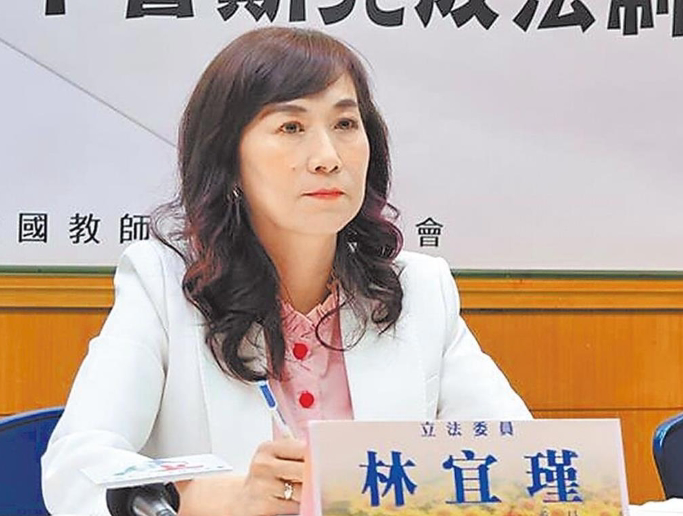
Democratic Progressive Party (DPP) Legislator Lin I-chin, a close ally of President Lai Ching-te, hastily withdrew her proposal on “de jure Taiwan independence.” The DPP’s attempt to stir the issue backfired and hurt itself. |
|
|---|
|
DPP Legislators Attempt to Amend Cross-Strait Act to Advance De Jure Independence
Democratic Progressive Party (DPP) Legislator Lin I-chin’s proposal to amend the Act Governing Relations between the People of the Taiwan Area and the Mainland Area—framed as an attempt at “de jure Taiwan independence”—ultimately collapsed. The proposal sought to rename the existing law as the “Act Governing Relations between the People of Taiwan and the People of the People’s Republic of China,” and to delete language in the original provisions referencing “prior to national unification” and other text reflecting the constitutional framework of the Republic of China, in an effort to reinforce, through legislation, the political narrative of “two states across the Taiwan Strait.” Yet this farce dragged on and ended hastily; meanwhile, DPP legislators who took part in this political drama found themselves contradicted by Legislator Lin’s own feigned performance, effectively “slapping themselves in the face.”
|
|
|---|
|
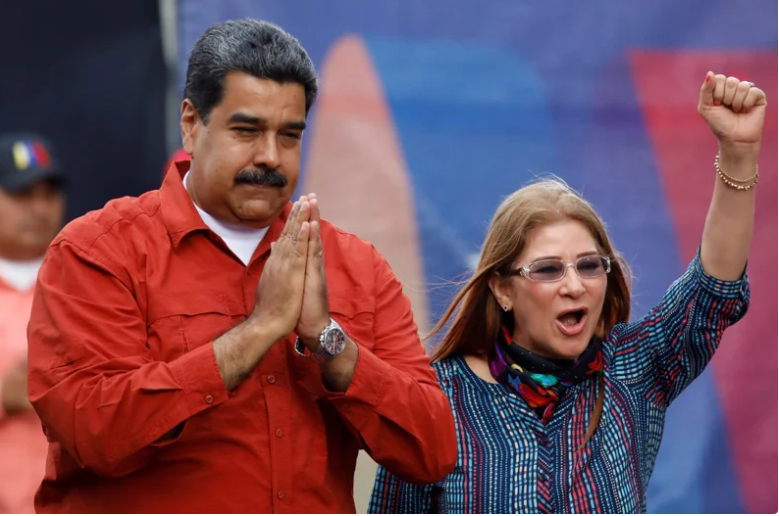
With Venezuela as a cautionary example, the DPP’s provocative legal amendments may bring trouble upon itself. |
|
|---|
|
Does U.S. Military Intervention in Venezuela Provide Model for China's Invasion of Taiwan?
The United States sending troops directly into Venezuelan territory to seize that country’s president and his wife has shocked governments around the world, and the impact on cross-strait dynamics is no less profound. Some commentators have even claimed that the U.S. military has provided the PLA with a precedent to follow. In reality, what the administration of President Lai Ching-te should be concerned about is whether the proposed amendments to the “Act Governing Relations Between the People of the Taiwan Area and Mainland Area” by DPP legislators could become the next “invitation.”
|
|
|---|
|
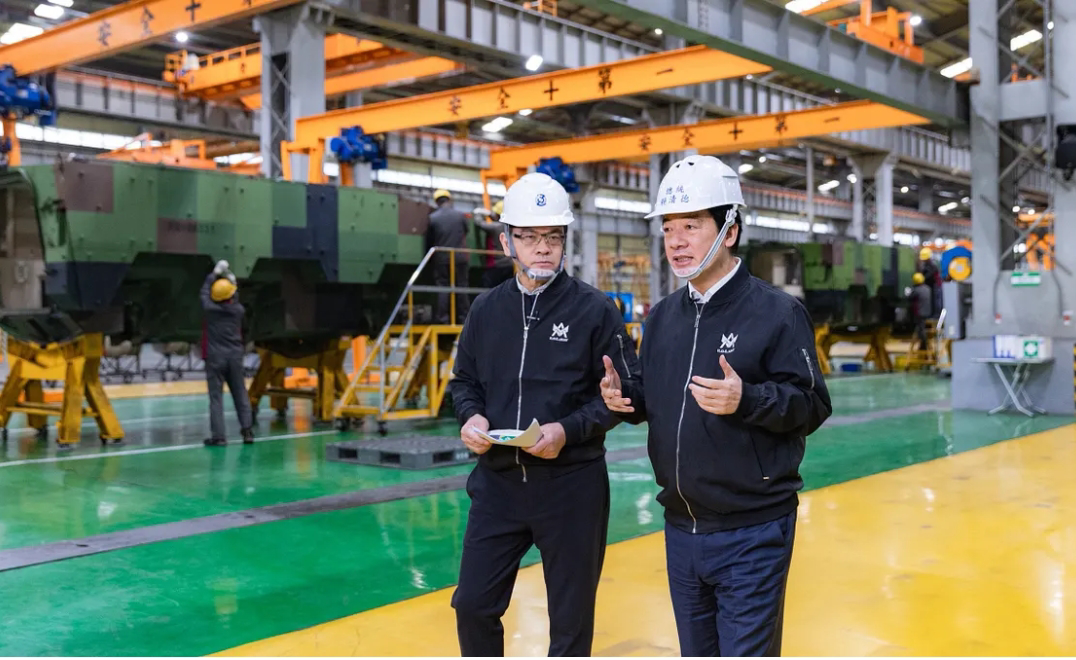
The Lai administration is using national security amendments to expand its powers. The “armed-reunification clause” may turn into an online gag order. |
|
|---|
|
Internet Martial Law in Name of National Security Emerging
The most striking aspect of proposed amendments under the “10 National Security Laws” put forth by the administration of President Lai Ching-te is Article 4 of the National Security Act, which explicitly prohibits “publicly advocating, promoting, or supporting foreign countries, the Mainland, Hong Kong, Macau, or hostile overseas forces in waging war against our country or taking non-peaceful measures to eliminate our sovereignty.” Violators face fines of up to NT$1 million (about US$31,000)—commonly referred to as the “Unification Clause.”
|
|
|---|
|
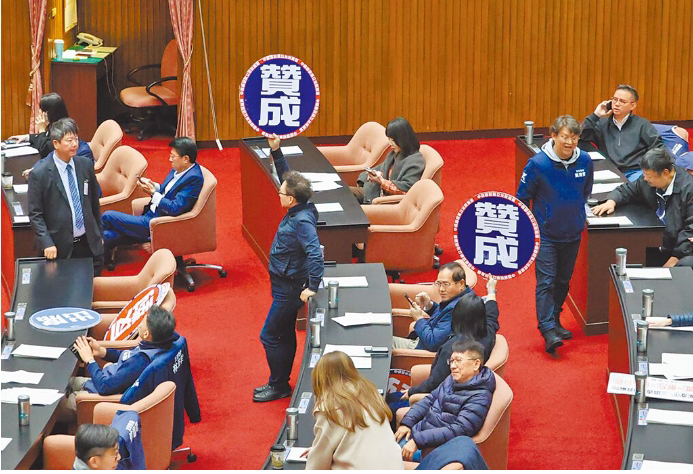
The Legislative Yuan passed a motion of censure, criticizing Premier Cho Jung-tai for dereliction of duty and Secretary-General Joseph Wu of the National Security Council over alleged espionage controversies, prompting a sharp rebuttal from the Executive Yuan. |
|
|---|
|
January 2:
The Legislative Yuan passed motions of censure against Premier Cho Jung-tai and Secretary-General Joseph Wu of the National Security Council. Cho was accused of failing to respect constitutional boundaries, causing political confrontation between ruling and opposition parties; Wu was censured because a close aide was implicated in a mainland Chinese espionage case, allegedly harming national interests. The Executive Yuan countered that the opposition was creating political division. |
|
|---|
|
January 2:
Five grand justices of the Constitutional Court again issued a ruling—this year’s first controversial judgment—on regulations related to defendant attorneys appealing detention decisions, while excluding justices who held dissenting views. Three grand justices who consider the court’s composition unconstitutional once again refused to participate in deliberations and submitted separate opinions. |
|
|---|
|
January 2:
President Lai Ching-te appointed former Vice President Chen Chien-jen as the new president of Academia Sinica, with his term beginning in June. The appointment was widely anticipated. The opposition argue that although Chen is qualified, he is already 75 years old, whereas previous Academia Sinica presidents were under 60 when they took office, which they say goes against generational transition. |
|
|---|
|
January 3:
Democratic Progressive Party (DPP) Legislator Lin I-chin, considered part of President Lai’s political circle, proposed amending the Act Governing Relations Between the People of the Taiwan Area and the Mainland Area by renaming it the so-called “Act Governing Relations Between the People of Taiwan and the People’s Republic of China,” removing the phrase “before national reunification” and eliminating terminology that treats both sides as “regions” of one country. The move was viewed as a step towards de jure Taiwan independence. After controversy erupted, Lin quietly withdrew the bill. A similar amendment proposed by DPP lawmakers in 2020 was also withdrawn. |
|
|---|
|
January 4:
Former President Chen Shui-bian, who has been on medical parole for 10 years, announced he would host a new television program but abruptly halted the plan before the first broadcast. Chen claimed Premier Cho ordered the show not to air and threatened to send him back to prison if it did. His son, Kaohsiung City Councilor Chen Chih-chung, questioned whether this constituted intimidation. |
|
|---|
|
January 6:
An F-16AM single-seat fighter jet crashed during a night training mission, suspected to be caused by a malfunction in the mission computer (MMC) and spatial disorientation. The pilot ejected, but the “golden 72-hour” search window ended without success. The Air Force grounded all aircraft of the same model. According to a retired military officer, the jets have been in service for 28 years, only 10 percent of components have been upgraded, and an automatic collision avoidance system has not been installed. |
|
|---|
|
January 7:
The Taiwan Affairs Office of mainland China’s State Council announced that Minister of the Interior Liu Shyh-fang and Minister of Education Cheng Ying-yao were added to its list of “diehard Taiwan independence advocates,” banning them from entering the mainland, Hong Kong, and Macau, and restricting cooperation with mainland organizations or individuals. Prosecutor Chen Shu-yi of the Taiwan High Prosecutors Office was labeled an “accomplice” of Taiwan independence forces. This brings the total number of individuals on the list to 14. |
|
|---|
|
January 9:
Taiwan has officially entered a “super-aged society.” According to the Ministry of the Interior, as of the end of 2025, the population was 23,299,132, continuing its decline. The population aged 65 and above reached 4,673,155, exceeding 20 percent, meeting the World Health Organization (WHO) definition of a super-aged society. |
|
|---|
|
|