The People’s Liberation Army launched an encirclement drills around Taiwan without prior warning, approaching Taiwan’s territorial waters and conducting live-fire exercises. |
|
|---|
|
Lai Administration Dismisses PLA Exercises as "Cognitive Warfare"
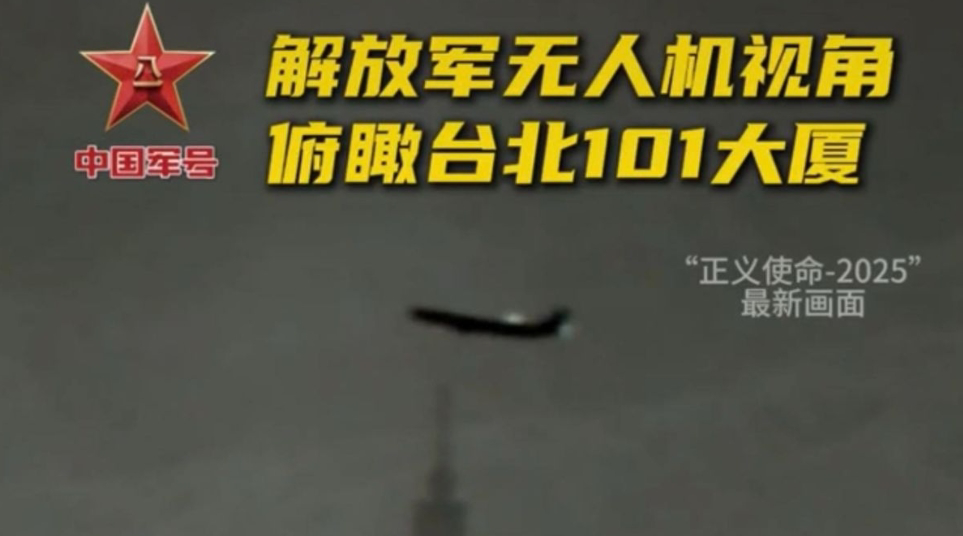
The People’s Liberation Army (PLA) launched the “Justice Mission–2025” encirclement drills around Taiwan without prior warning, approaching Taiwan’s territorial waters and conducting live-fire exercises. In response, President Donald Trump of the United States downplayed the threat posed by the PLA drills, while the Japan maintained a low-key silence. What came as a surprise was that a photograph released by CCTV showing a PLA drone overlooking Taipei 101 unexpectedly became a topic of widespread speculation surrounding the drills. Yet the Ministry of National Defense (MND) claimed this was “cognitive warfare” and urged the public not to be manipulated—does it truly regard “exercises” as merely “acting”?
|
|
|---|
|
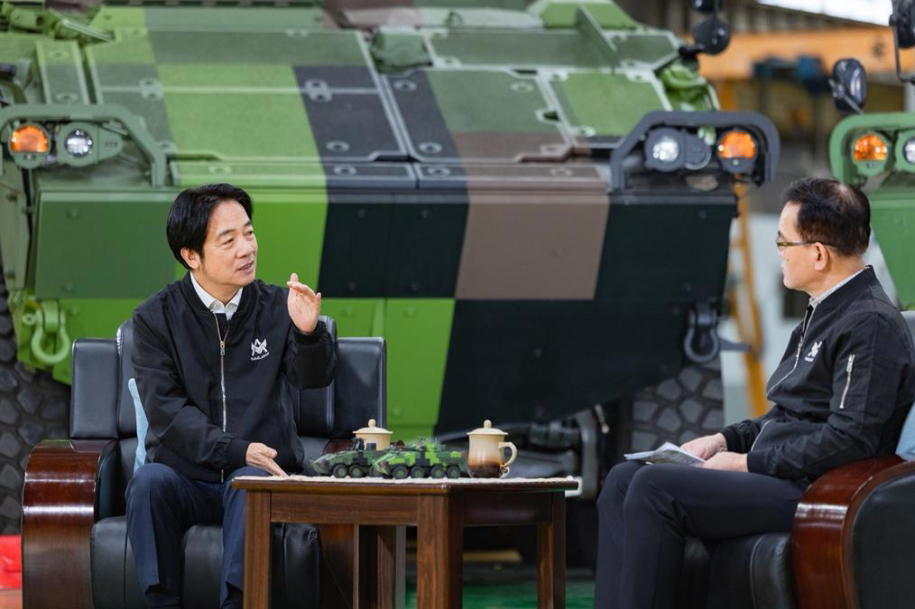
The PLA’s island-encirclement drills are real, yet the Lai administration not only fails at crisis management but also tries to gloss things over. |
|
|---|
|
Buoyant Stocks Used to Mask Crisis Posed by PLA Drills
Mainland China has conducted the “Justice Mission–2025” encirclement drills against Taiwan. From a crisis-management perspective, this already constitutes a substantive Taiwan Strait crisis. While Taiwanese stock investors remain largely indifferent, chasing surging stocks, the government must not assume that a lack of public reaction means the crisis does not exist; otherwise, Taiwan will be in grave danger.
|
|
|---|
|
While he tells others to focus on real work, President Lai himself keeps avoiding real work, continuing instead to provoke partisan confrontation and cross-strait collision. |
|
|---|
|
President Lai's New Year Address Keeps Inflaming Political Divisions
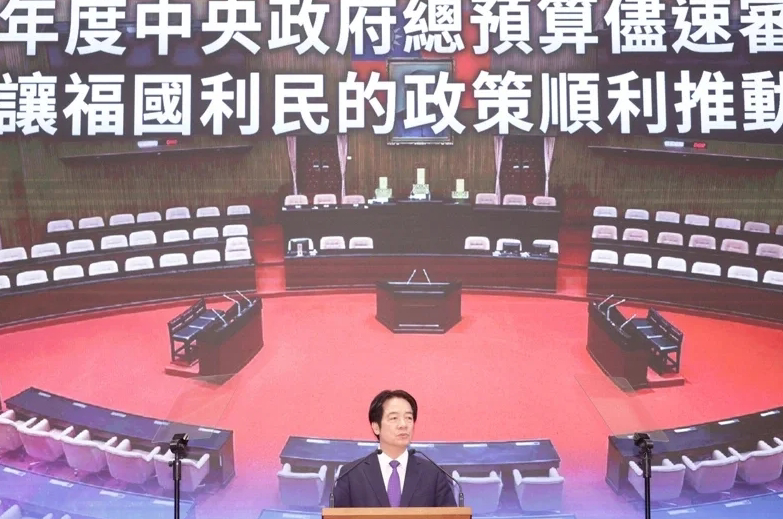
In his New Year’s Day address, President Lai Ching-te laid out four overarching goals, including “building a safer and more resilient Taiwan” and “fostering a democratically united Taiwan.” Yet when asked whether he would go to the Legislative Yuan to explain himself in response to impeachment motions proposed by the opposition Kuomintang (KMT) and Taiwan People’s Party (TPP), he dismissively said the legislature was “wasting time,” and told the opposition that it “should start taking care of some real business.” Little does he realize that the one who should start taking care of real business is President Lai himself.
|
|
|---|
|
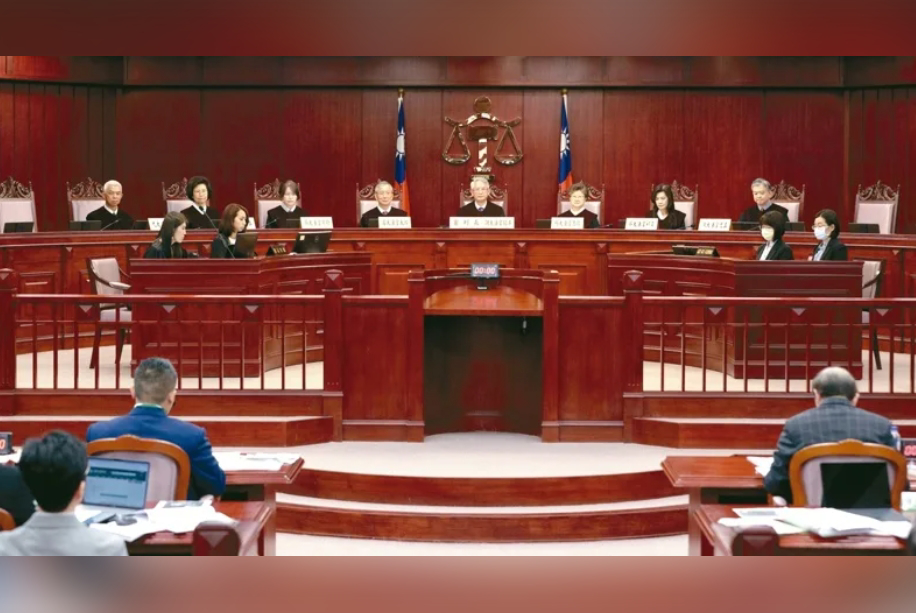
Sixty (60) percent of the public do not trust the executive branch to veto legislation on its own; nor do they trust the neutrality of the Constitutional Court. |
|
|---|
|
December 27:
The Ministry of National Defense announced a procurement project for a total of 76 million rounds of ammunition, with a total budget exceeding NT$1.5 billion (about US$49.3 million). The largest item is 5.56 mm rifle rounds, the type most commonly used by frontline units. In the past, the Armaments Bureau not only produced these domestically but also exported large quantities to the United States. Now, however, Taiwan must purchase them from abroad—and in a quantity equal to a year and a half of domestic production capacity, sparking public debate. |
|
|---|
|
December 28:
After multiple setbacks, the Taipei-Shanghai Twin-City Forum finally opened in Shanghai. Mayor Chiang Wan-an of Taipei and Mayor Gong Zheng of Shanghai stated in their pre-meeting discussion that the forum serves as a “stabilizing force,” showing that as long as people on both sides of the strait are willing to communicate, peace and stability are possible. In his forum remarks, Mayor Chiang also made special reference to the Republic of China calendar and democracy. |
|
|---|
|
December 28:
The Ministry of Health and Welfare proposed amendments to the Genetic Health Act, removing the requirement for spousal consent for abortion. The goal is to prevent situations in which marital conflict turns pregnancy into bargaining leverage for the husband. However, opinions on the amendment are sharply divided, and the legislative process may trigger further confrontation. |
|
|---|
|
December 29:
Following controversies over Premier Cho Jung-tai’s refusal to countersign a bill and a constitutional ruling issued by only a few grand justices, the latest poll from Formosa E-Newsletter shows that only 26.7 percent agree that the president and premier may independently decide whether to accept laws passed by the Legislative Yuan; 60 percent disagree. Only 24.7 percent believe grand justices can exercise their powers independently, an 11.3-point drop from July 2024. A majority 59.9 percent do not believe the grand justices are independent, an 8.4-point increase. The results suggest that the public has become more conservative regarding executive and judicial authority and is increasingly skeptical of the neutrality of grand justices. |
|
|---|
|
December 30:
The Eastern Theater Command of the People’s Liberation Army (PLA) launched the Justice Mission 2025 encirclement exercise around Taiwan, firing 27 live rockets, which landed in Taiwan’s 24-nautical-mile contiguous zone, the closest PLA exercise to Taiwan’s main island to date. Lee Hsiang-chou, former director-general of the National Security Bureau, warned that peace in the Taiwan Strait has never been so fragile. Meanwhile, senior officials of the Coast Guard Administration, Ocean Affairs Council (OAC), were found dining and drinking during the crisis; after strong public criticism, Minister Kuan Bi-ling of the OAC issued an apology. |
|
|---|
|
December 30:
President Lai Ching-te alleged that the Taiwan People’s Party (TPP) praised Russian President Vladimir Putin and embraced Chinese President Xi Jinping. The TPP countered that President Lai was openly spreading falsehoods and smearing the opposition. The party filed a civil lawsuit seeking NT$1 million (about US$31,800) in damages and demanded that the ruling be published in three major newspapers. |
|
|---|
|
January 1:
Chairwoman Cheng Li-wun of the Kuomintang (KMT) attended the Office of the President New Year’s Day flag-raising ceremony, interpreted as an olive branch to promote cross-partisan reconciliation. However, in his New Year’s address, President Lai criticized the opposition for pushing an impeachment motion against the president despite knowing it could not pass, calling it a waste of time. He urged the Legislative Yuan to focus on real work, including reviewing the special national defense budget and central government budget. The opposition responded that the mass recall campaign was the true waste of time that disrupted society for an entire year and questioned whether President Lai should apologize to the public. |
|
|---|
|
January 1:
Citing rising security risks for civil servants traveling to mainland China, the Ministry of the Interior announced that starting in 2026, political appointees, local government heads, and civil servants involved in national security will have their permitted degree of kinship for travel to mainland China (for family visits or funerals) narrowed down from within four degrees to three. |
|
|---|
|
|