|
| | |
Taiwan Enters Constitutional Gridlock |
|
|---|
|
|
|
|
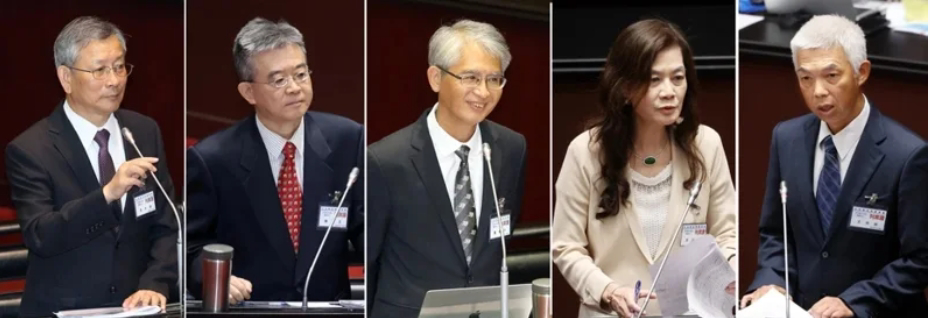
Five grand justices forcibly altered the rules to issue a constitutional interpretation, drawing criticism for shielding the ruling party and severely damaging the credibility of Taiwan’s constitutional system and judiciary. |
|
|---|
|
Few Grand Justices Issue Constitutional Interpretation, Allegedly to Serve Ruling Party
Five grand justices of the Constitutional Court handed down the earth-shaking Constitutional Judgment No. 1 of 2025, declaring in a single stroke that “the amendment to the Constitutional Court Procedure Act is unconstitutional and immediately void,” instantly reviving a paralyzed Constitutional Court at full strength. This sensational ruling is steeped in political overtones, forcibly reducing procedural justice to a mere technicality and effectively making clear that the Constitutional Court intends to act as the ruling party’s best assisting hand. It not only shakes the foundations of constitutional governance but also drags democratic rule of law down with it.
|
|
|---|
|
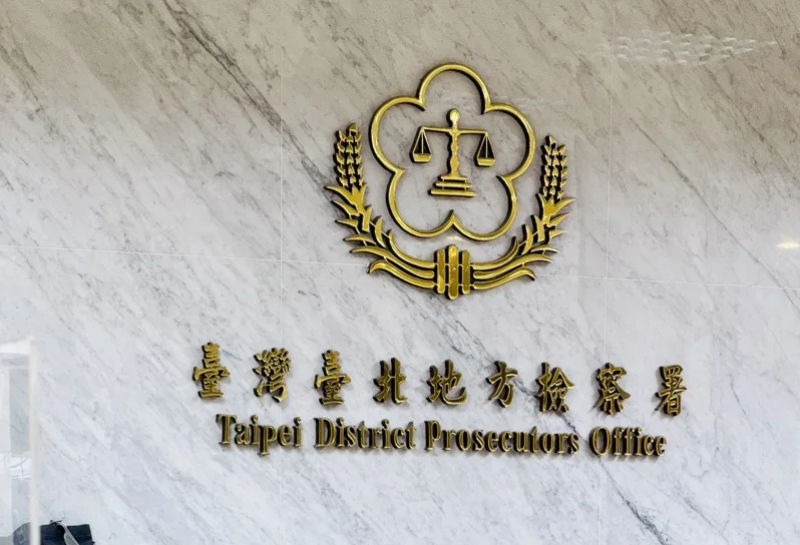
Reports claim that senior officials approached grand justices to “settle matters.” The Taipei District Prosecutors Office is criticized for watching from the sidelines and not daring to investigate. |
|
|---|
|
Lai Administration Attempts to Influence Grand Justices
Five grand justices of the Constitutional Court excluded the opinions of three fellow justices and ruled that the amendments to the Constitutional Court Procedure Act were unconstitutional and void. Media reports have alleged that senior party and government figures had previously “communicated” with Grand Justice Tsai Tsung-chen. Chairman Huang Kuo-chang of the Taiwan People’s Party (TPP) criticized this, stating that if such lobbying did occur, it would constitute a criminal offense, and called on the Office of the President and the Executive Yuan to provide a public explanation. He also went today to the Taipei District Prosecutors Office to file a complaint. What is abnormal is that both the Office of the President and the Constitutional Court have said they will not respond, while the prosecution has adopted a stance of “no complaint, no action.” What exactly has gone wrong with this government?
|
|
|---|
|
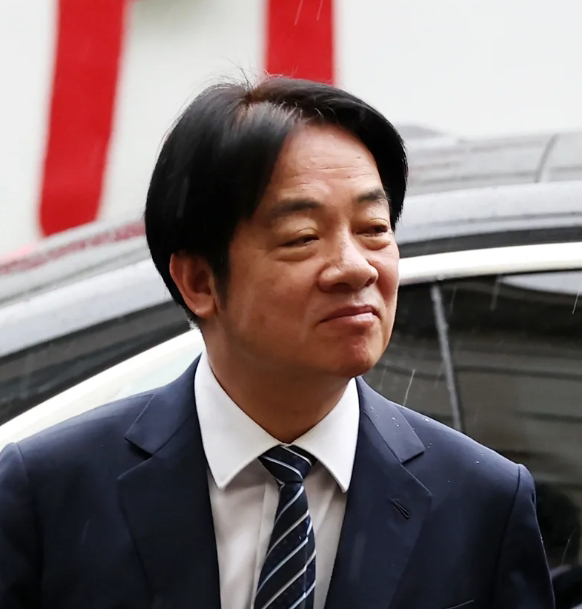
A wave of controversies, including mass recall efforts, refusal to counter-sign, and controversial constitutional interpretation, has led to accusations that President Lai Ching-te is pushing Taiwan towards constitutional crisis. |
|
|---|
|
President Lai's Three Steps Towards Dictatorship
When a nation’s highest leader turns the slogan of “defending democracy” into a weapon for eliminating dissent, and when grand justices who should safeguard the constitutional bottom line degenerate into servants and pathfinders for those in power, we must ask seriously: how far is President Lai Ching-te, the one directing these actions, from the “evil” of constitutional destruction?
|
|
|---|
|
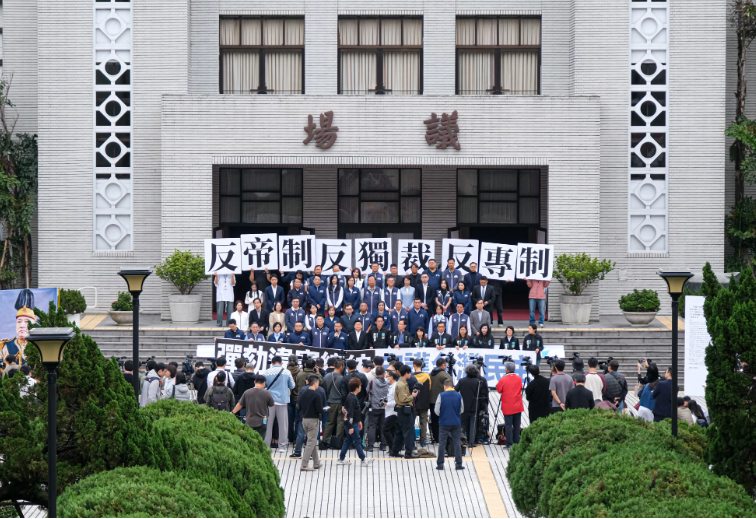
The opposition Kuomintang (KMT) and Taiwan People’s Party (TPP) moved to impeach President Lai. The Legislative Yuan will vote in May next year. |
|
|---|
|
December 20:
With only five justices participating, the Constitutional Court ruled the new Constitutional Court Procedure Act unconstitutional. The ROC Constitutional Law Society issued a statement warning that if this becomes routine, as few as one-third of the justices could strike down a law, creating a harmful constitutional precedent and undermining the legitimacy of constitutional adjudication and public trust. The Kuomintang (KMT) filed a complaint accusing the Constitutional Court of abuse of power and malfeasance. Chairman Huang Kuo-chang of the Taiwan People’s Party (TPP) also filed a complaint alleging illegal lobbying involving the Office of the President and Executive Yuan. |
|
|---|
|
December 22:
After more than four months of delay, nominees for members of the Central Election Commission (CEC) were finally announced, including Chairman You Ying-long of the Taiwan Public Opinion Foundation as CEC chair. This is a rare instance since President Lai Ching-te took office in which an important personnel nomination incorporated a recommendation from the opposition. The CEC currently has only four commissioners, making it unable to convene meetings or make decisions, which could affect election administration next year. |
|
|---|
|
December 22:
The Institute of Economics, Academia Sinica, revised its economic growth forecast for this year upward to 7.4 percent and projected 3.7 percent for next year—the highest among major domestic research institutions. Academia Sinica also warned that industrial structural divergence is becoming increasingly pronounced, which may affect future employment and consumer confidence. |
|
|---|
|
December 24:
A new poll by Shock Media shows a significant rise in dissatisfaction with the Lai administration, increasing by 4.1 percentage points to 47.4 percent. Satisfaction fell by 0.7 percentage point to 43.4 percent, marking another “death cross.” Whether this shift is linked to the Constitutional Court controversy or the recent random killing incident in Taipei has drawn public attention. |
|
|---|
|
December 25:
The Taiwan Semiconductor Manufacturing Company (TSMC) filed a lawsuit against Luo Wei-jen, former senior vice president, for breach of trust and violation of trade secrets. To prevent Luo, after joining Intel, from continuing to probe into TSMC’s sub-2-nanometer process development, TSMC has issued directives to suppliers and comprehensively changed all project code names. |
|
|---|
|
December 25:
On Constitution Day, President Lai criticized the Legislative Yuan for still failing to complete the review of next year’s national budget, saying it has no standing to speak of constitutional government. Opposition parties countered that the Executive Yuan failed to compile the budget in accordance with law, and that the president merely losing his temper does nothing to resolve the deadlock; they argued that the true violator of constitutional order—and the one least qualified to speak of “constitutionalism” is President Lai himself. |
|
|---|
|
December 26:
Opposition KMT and TPP caucuses of the Legislative Yuan jointly proposed an impeachment motion against President Lai. Review sessions are scheduled for January 21 to 22 and May 13 to 14, 2026, during which President Lai will be invited to appear before the Legislative Yuan to explain and answer questions. A roll-call vote on the impeachment motion is planned for May 19, the eve of the second anniversary of President Lai’s inauguration. |
|
|---|
|
December 26:
The Executive Yuan approved draft amendments to the Act Governing Relations Between the People of the Taiwan Area and the Mainland Area. In addition to requiring legislators to obtain permission before traveling to mainland China, all civil servants will now be subject to regulation. Even rank-and-file civil servants below grade 10 who do not handle classified information must obtain approval from their original agency before traveling to the mainland. |
|
|---|
|
|
|
|---|
|
| |
|
| |
|
|